Could a leaner operating model protect patient service without adding staff costs? For organizations serving limited-income areas, the answer may begin with smarter support behind the scenes.
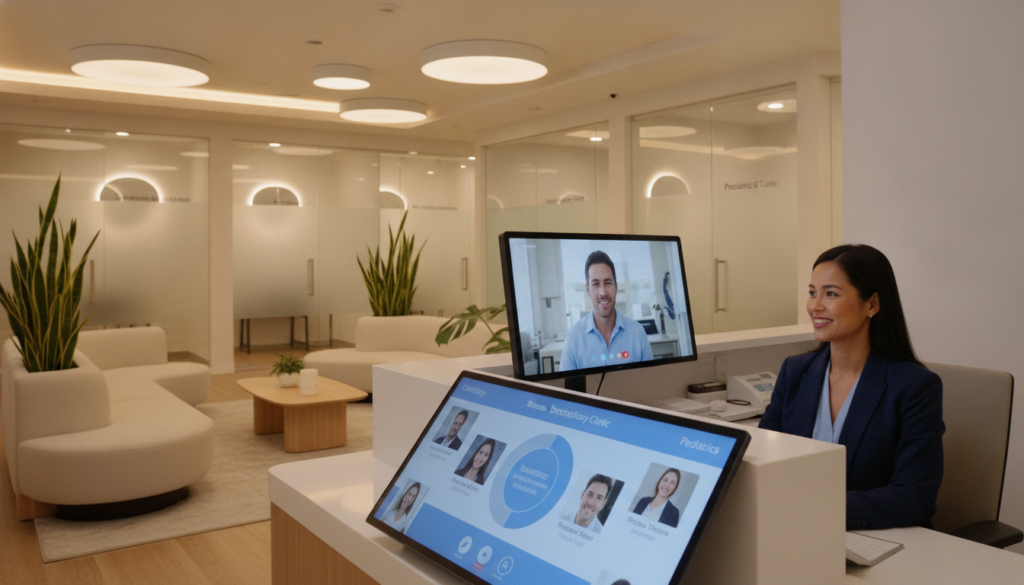
A virtual medical assistant FQHC community health center service can help manage routine tasks while your team focuses on care. Scheduling, intake, records, and follow-up work can move forward with dependable oversight. This approach helps protect valuable clinical time and keeps daily operations steady.
You will see how this model can serve patients in Philadelphia, Chicago, and Utah. Delaware Valley Community Health brings more than 55 years of mission-focused service in Greater Philadelphia. Chicago Family Health Center runs six clinics with a staff of over 200 people. Their work shows why flexible systems matter as demand grows.
The sections ahead cover practical services, rollout steps, privacy needs, and results for providers and staff. You will also learn how a medical assistant can strengthen workflows without stretching your budget.
Key Takeaways
- Remote support can extend limited operating budgets.
- Routine tasks can move forward with greater consistency.
- Providers can preserve time for direct patient needs.
- Flexible workflows can serve several locations.
- Privacy and implementation deserve careful planning.
Why Community Health Centers and FQHCs Need Flexible Support
Demand rarely follows a neat schedule. Your staff may handle more calls, forms, referrals, and check-ins while hiring remains slow. Flexible support can protect patient care without forcing your core team to rush.
Addressing Staff Capacity and Rising Patient Demand
Delaware Valley Community Health lists full-time medical assistant wages near $19–$20 per hour. That rate shows the investment needed to keep front-desk and clinical work moving at Norristown Regional Health Center and Fairmount Primary Care Center.
Open medical assistant jobs can still take time to fill. During gaps, trained remote support can help your team manage routine work and protect staff focus.
Supporting Underserved Communities With Consistent Care
Utah has 14 independent nonprofit organizations serving more than 70 clinics. Chicago Family Health Center operates six sites across South Chicago, East Side, Roseland, Pullman, Chicago Lawn, and Chicago Vocational Career Academy. Each site sits about 20 minutes from downtown Chicago.
- Reduce delays during busy periods.
- Keep patient messages organized.
- Give your team more time for direct care.
This model supports a respectful experience across locations while helping your organization respond to changing demand.
Virtual Medical Assistant FQHC Community Health Center Services
Your clinic can assign routine work to a remote service while on-site staff protect direct care. This model covers front-desk tasks, chart preparation, and provider support. It also fits organizations exploring health center outsourcing or remote practice support.
Administrative and Clinical Support From a Remote Team
Based on DVCH workflows, a trained medical assistant can help with check-in, check-out, appointment scheduling, and high call volume. The role may also track lab and X-ray results, review recent visits, and prepare charts. On-site staff keep control of procedures and phlebotomy.
“Clear role boundaries keep remote support safe and useful.”
Dedicated Assistance for Providers and Health Center Staff
Certified staff may record vital signs, pain scores, allergies, and chart updates when the workflow allows. They support providers, team members, and the manager without replacing clinical judgment. Strong communication skills help patients receive consistent care across locations.
- Set clear duties, access rules, and escalation steps.
- Match skills to approved workflows and jobs.
- Review performance with your team each week.
| Workflow | Remote Support | On-Site Responsibility |
|---|---|---|
| Front desk | Calls and scheduling | Patient check-in |
| Chart review | Results and visit history | Clinical decisions |
| Clinical tasks | Documentation support | Procedures and phlebotomy |
How Virtual Medical Assistants Extend Limited Budgets
Budget planning becomes clearer when you compare staffing costs with daily workload. Delaware Valley Community Health lists several Philadelphia-area medical assistant roles at about $19–$20 per hour. That figure offers a useful baseline when you assess added capacity.
Remote coverage may help direct funds toward essential care without expanding fixed on-site staffing. Predictable service costs can also reduce expenses tied to recruiting, equipment, paid training, and employee development. You can then protect time for patient-facing work while preserving clear task ownership.
DVCH’s employee package includes medical, dental, and vision coverage, life insurance, retirement matching, tuition reimbursement, and paid leave. These benefits show why salary alone does not measure the full cost of hiring. A focused assistant model can complement existing investments rather than replace your team.
- Compare hourly wages with total employment costs.
- Assign repeatable tasks through defined workflows.
- Track response times, accuracy, and workload changes.
- Scale coverage as demand shifts.
Administrative Work Your Team Can Delegate
Clear task boundaries help your staff protect time for direct care. At a local health center, a trained medical assistant can handle repeatable duties while your manager keeps oversight of quality and privacy.
Patient Registration and Electronic Health Record Updates
Delegated support may include registration, demographic updates, and electronic health record templates. DVCH certified staff review charts for pending laboratory and X-ray results, recent visits, and missing details. This process gives each patient a cleaner record before the appointment.
Referral Coordination, Documentation, and Follow-Up
A second medical assistant role involves referral tracking, follow-up calls, and organized notes. Structured records help you spot open requests, pending procedures, and unresolved patient needs. They also make scheduling changes easier to review.
“Good documentation turns scattered tasks into a clear next step.”
Insurance Verification and Operational Support
Insurance checks can reduce delays before patients enter the examination room. Support staff can handle calls, confirm details, and maintain supply requests. DVCH lists Norristown Regional Health Center at 1401 DeKalb Street, Norristown, Pennsylvania 19401, where organized workflows can strengthen daily operations.
Patient Care Coordination Across Community Health Settings
Reliable coordination gives each patient a clearer path from an initial visit to follow-up. A virtual medical assistant can organize primary care requests, specialty referrals, laboratory needs, and return calls. This support helps your team act on open tasks before they create delays.

Utah includes 14 independent nonprofit organizations and more than 70 clinics. Shared worklists and documentation rules can create steady healthcare practices across distant locations. Chicago Family Health Center offers another useful example, with six clinics serving South Chicago, East Side, Roseland, Pullman, Chicago Lawn, and Chicago Vocational Career Academy.
DVCH operates sites in Norristown and Philadelphia, Pennsylvania. A shared process can help each health center track referrals, lab results, and follow-up steps. Clear escalation rules protect provider time and support safer transitions.
“One shared task list can keep many locations moving in the same direction.”
| Care Stage | Organized Task | Team Benefit |
|---|---|---|
| Primary visit | Review open requests | Fewer missed steps |
| Referral | Track status and records | Faster handoffs |
| Laboratory need | Monitor pending results | Timely follow-up |
Support for Behavioral Health and Integrated Care
Integrated services give patients a clearer route to support. With the right workflow, your team can connect emotional concerns with primary care needs while protecting privacy and provider time.
Connecting Patients With Behavioral Health Resources
Chicago Family Health Center employs behavioral health providers who serve patients in a primary care setting. A virtual medical assistant can organize referral details, update resource lists, and record outreach without making clinical decisions.
This support helps patients find local counseling, crisis lines, and other healthcare resources. It also gives licensed professionals a clearer view of open requests and follow-up needs.
- Organize referral information by location and service type.
- Document calls, messages, and patient responses.
- Route urgent concerns to qualified professionals at once.
Delaware Valley Community Health provides primary medical, dental, and behavioral health care for underserved populations in Greater Philadelphia. Its integrated mission shows how coordinated patient care can support the whole person.
“Clear communication helps every patient reach the right resource at the right time.”
Your support team handles logistics and communication. Licensed providers remain responsible for assessment, treatment, and safety decisions.
Scheduling and Communication for Accessible Care
Easy access often starts with a clear phone call and a well-managed calendar. Your team can use one process for appointment requests, confirmations, cancellations, and reminders. This approach helps each patient understand the next step.
Appointment Scheduling and Confirmation Workflows
DVCH medical assistants schedule visits, complete check-in and check-out, and manage high call volume. A dedicated remote task support role can record requests, confirm details, and flag openings. Standard scripts help reduce errors and protect front-desk time.
Use a simple queue for new requests, reschedules, cancellations, and reminders. Each entry should include the patient’s name, preferred time, reason for contact, and next action. Staff can then review open items without searching through scattered notes.
Calls, Messages, and Patient Communication
Chicago Family Health Center operates six clinics across South Side Chicago communities. Shared scripts and message rules can create a consistent experience at every location.
- Document every call and message clearly.
- Route urgent concerns to qualified staff quickly.
- Confirm completion before closing each request.
Clear records help providers focus on direct care while patients receive timely answers.
Experience and Skills to Look for in a Medical Assistant Team
Strong hiring criteria help you choose a support partner that fits your care model. Start with verified experience, clear communication, and practical knowledge of healthcare workflows.
DVCH notes that qualifications vary by position. Some entry-level jobs may require a high school diploma or school diploma equivalent. That credential differs from clinical certification, professional licensure, and documented medical assistant experience. Ask which standards apply to each role.
Review skills in vital signs, patient interviews, procedures, phlebotomy, chart review, clinical notes, electronic records, and insurance tasks. Also ask how each candidate handles privacy, language needs, and patient care for underserved populations. These details show whether training matches daily duties.
When comparing medical assistant jobs, look for development plans, supervision, and quality checks. Chicago Family Health Center employs more than 200 people and offers dental and vision benefits. This context can help you assess a mission-driven employer, staffing partner, or career path.
Use this remote staffing guide to learn how the model works. Choose a team that can explain job standards, document results, and adapt to your position.
How Virtual Support Fits Your Existing Team
Clear ownership lets added coverage strengthen daily work without disrupting established routines. You can connect remote help with providers, managers, and team members through shared tools and simple rules.
Collaboration With Providers, Managers, and Team Members
At Chicago Family Health Center, six clinics and more than 200 employees show why each role needs a clear purpose. A medical assistant can manage assigned tasks, while providers retain clinical decisions. Your manager can review open items, response times, and quality results each day.
Use one message channel, one task list, and clear escalation steps. This structure reduces missed requests and gives your team more time for patient care. Regular training also builds confidence. CFHC supports ongoing professional development focused on care and compliance standards.
Flexible Coverage for Changing Community Needs
Utah includes 14 nonprofit organizations that operate more than 70 clinics. Flexible coverage helps each site adjust to call volume, staffing gaps, and seasonal demand. You can expand or reduce assigned work without changing every local process.
- Match skills to approved duties and jobs.
- Review workload with your manager.
- Use daily feedback to guide development.
| Need | Shared Approach | Result |
|---|---|---|
| Busy periods | Adjust task coverage | Faster responses |
| Open requests | Review one task list | Clear ownership |
| Quality goals | Use training and audits | Reliable support |
Privacy, Compliance, and Reliable Healthcare Workflows
Privacy starts with clear rules, not informal habits. Your virtual support workflow should use role-based access, secure sign-ins, and written procedures. Defined escalation paths help protect sensitive information when a request falls outside an assigned role.
DVCH medical assistants use electronic record templates to document patient details. Your team should follow the same standards for entering, reviewing, and routing information. Manager review and written quality checks can catch errors before they affect care.
- Limit access to the records each role needs.
- Document insurance checks, messages, and referrals.
- Route urgent concerns to qualified staff.
- Review samples for accuracy and completeness.
Chicago Family Health Center provides professional development and training on healthcare and compliance standards. Continuing education keeps an assistant current as rules and workflows change. It also supports safer work in scheduling, documentation, and prior authorization outsourcing.
| Workflow | Required Control | Review Method |
|---|---|---|
| Insurance | Verify approved access | Manager audit |
| Messages | Use secure routing | Daily queue review |
| Records | Follow templates | Accuracy sampling |
Benefits for Providers, Staff, and Patients
When routine work moves into a clear support process, your organization can gain more than lower workload. Providers receive better preparation, staff face fewer task backlogs, and patients get a smoother path through each visit.
More Time for Direct Patient Care
Delegating registration, insurance checks, scheduling, and documentation gives your team more time for direct care. Staff can focus on clinical procedures, patient questions, and follow-up needs instead of repeated data entry.
Chicago Family Health Center shows why employee support matters. Its benefits include medical, dental, and vision coverage, 401(k) matching, disability coverage, life insurance, and tuition reimbursement. These offerings can strengthen retention and morale.
Improved Access and Patient Experience
Organized call queues and timely records can reduce delays. Patients receive clearer updates, while providers can review needed details sooner. CFHC also includes behavioral health providers in its primary care setting. DVCH delivers medical, dental, and behavioral services for underserved Greater Philadelphia populations.
- Shorter waits for routine requests
- Clearer referrals and follow-up
- More consistent support across locations
Learn more about patient check-in support to see how organized intake can improve the care setting.
A Practical Path to Launching Virtual Medical Assistant Services
Start with a workflow review before you assign a new role. List each step in scheduling, insurance checks, referrals, chart updates, and patient care. Note delays, repeat calls, and tasks that consume staff time.
Next, select duties with clear outcomes. DVCH examples include calls, chart documentation, vital signs, procedures, and patient interviews. Begin with administrative work when your team needs faster access support. Add clinical tasks only when training, supervision, and access rules are ready.
“A measured launch creates safer progress than a rushed rollout.”
- Assign each task to one owner.
- Set access permissions and introduce the support team.
- Review accuracy, response times, and scheduling results each week.
- Use development checkpoints to adjust duties and training.
Qualification standards may differ by position. Some entry-level jobs require a high school diploma or equivalent, while other assistant jobs need specialized skills. A high school credential, school diploma, or related career background does not replace training for a specific job. Compare medical assistant jobs by duties, experience, and position needs before you choose a partner.
This step-by-step plan helps your health center protect care while building dependable support.
What to Expect From Your Dedicated Support Team
Your dedicated support team should bring structure, respect, and steady communication to each workday. DVCH describes a friendly, dynamic, and diverse workplace. That standard offers a strong model for working with remote staff.
Before recurring tasks begin, your medical assistant should learn your terminology, schedules, preferences, and service priorities. Daily check-ins can confirm assignments, while shared task lists show progress. Clear escalation steps help urgent issues reach the right person without delay.
Accountability also depends on regular review. Track response times, accuracy, open requests, and completed work. These measures keep providers informed and help patients receive timely care. They also show where training or workflow changes may help.
“Consistent feedback turns daily support into a stronger working relationship.”
Chicago Family Health Center uses Bonusly, a peer-to-peer recognition platform. This example shows how appreciation can strengthen trust among team members. A respectful culture helps every support role contribute to better health services.
- Confirm priorities during daily check-ins.
- Review task ownership and results.
- Recognize reliable work and useful ideas.
| Expectation | Daily Practice | Value |
|---|---|---|
| Communication | Check-ins and shared updates | Fewer missed requests |
| Accountability | Task reviews and quality checks | Clear ownership |
| Responsiveness | Defined escalation steps | Faster action |
Why Choose Total Medical Solution for FQHC Support
Total Medical Solution helps mission-driven organizations extend reliable support without losing focus on patient needs. Its model fits the purpose shown by Delaware Valley Community Health, which has served underserved Greater Philadelphia for more than 55 years.
Mission-Focused Assistance for Community Healthcare
Your health center can connect with trained staff who support scheduling, records, insurance tasks, and patient care. This approach complements managers, providers, and existing teams. It also supports medical assistant jobs by reducing routine pressure and creating room for skill development.
Total Medical Solution can help you onboard a medical assistant with clear duties and practical training. Staff may bring a high school diploma, school diploma equivalent, or related experience. Each position should match approved skills, job needs, and career goals.
Professional Support Available Around the Clock
Coverage beyond standard office hours helps your team respond to calls, messages, scheduling needs, and open requests. This service can complement healthcare jobs while supporting consistent care. Chicago Family Health Center highlights training, recognition, 401(k) matching, and tuition reimbursement as valuable benefits.
- Support for daily administrative jobs
- Flexible coverage for changing demand
- Clear reporting for each manager
| Support Area | Practical Value | Coverage Benefit |
|---|---|---|
| Scheduling | Organized appointment requests | Faster responses |
| Insurance | Timely detail checks | Fewer delays |
| Communication | Tracked calls and messages | Extended access |
Contact Your Virtual Medical Assistant Support Team
Ready to improve scheduling, records, or patient communication? Contact Total Medical Solution to discuss your needs. A direct conversation can help you choose the right coverage, workflow, and service plan.

Call Us at (352) 516-3972
Call (352) 516-3972 to review staffing needs, patient volume, appointment flow, or insurance tasks. You can also ask how this service may complement current jobs and reduce daily pressure.
Text Me for Immediate Assistance
Text Me when you need a quick response about coverage, open requests, or administrative priorities. This option works well when your team needs timely guidance during a busy shift.
Email Us at info@totalmedicalsolution.com
Email info@totalmedicalsolution.com to request service details. Share your preferred schedule, task list, and goals so the support team can prepare a useful response.
Support Hours Available Twenty-Four Hours a Day, Seven Days a Week
Support is available 24 hours a day, seven days a week. Tell us about your job needs, scheduling demands, and preferred service model. A focused plan can help your organization move forward with confidence.
Conclusion
Lean operations can help you protect patient care while meeting daily demand. A trained medical assistant can support scheduling, records, messages, and follow-up. This role gives your staff more time for patients and essential care.
Delaware Valley Community Health shows how mission-led service can last, with 55 years of work for underserved populations. Chicago Family Health Center coordinates six clinics and more than 200 employees. Utah’s 14 nonprofit groups and 70-plus clinics also show why flexible support matters across wide areas.
Whether you are reviewing medical assistant jobs, hiring for assistant jobs, or filling one position, compare training, coverage, and benefits. The right job model can strengthen healthcare access without adding avoidable strain.
Contact Total Medical Solution at (352) 516-3972 or info@totalmedicalsolution.com. Ask about support available 24 hours a day, seven days a week, and find a plan that fits your health center.