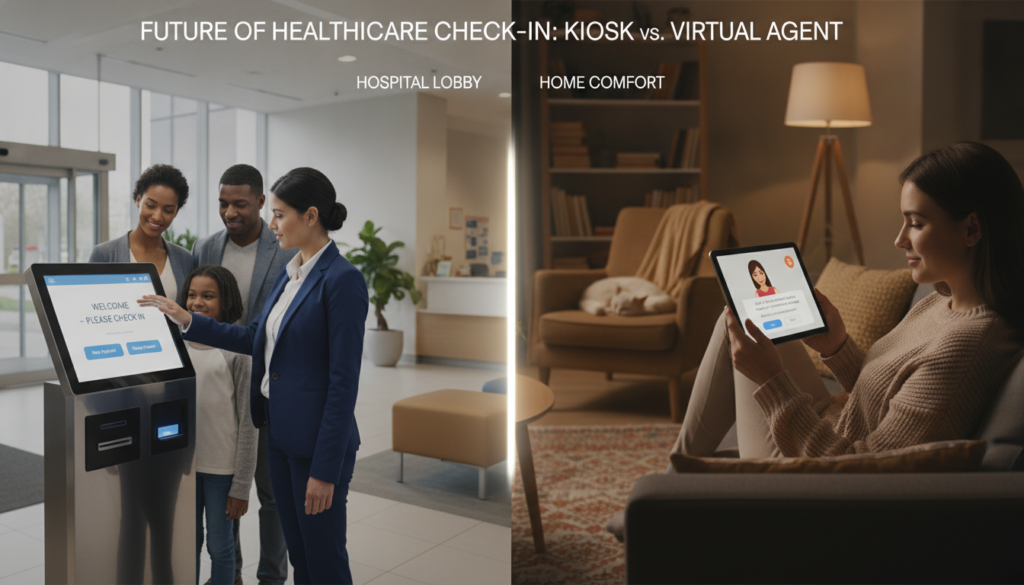
Nearly 60% of patients would switch doctors for a better digital experience. This comes from a 2023 survey by Cedar, a healthcare billing platform. It shows how important a good online welcome is.
Telehealth has changed healthcare in the United States. Patients want speed, clarity, and ease in their visits. But the check-in process often falls short.
Virtual patient check-in changes this. It lets patients fill out forms from anywhere. This makes visits smoother, cuts down on no-shows, and keeps schedules on track.
In this guide, we’ll cover everything your medical practice needs to know about digital patient check-in. We’ll talk about how it works, why it’s important, and how to set it up right. This guide is for everyone, from small clinics to big health systems.
Key Takeaways
- Virtual patient check-in lets patients complete forms, verify insurance, and confirm appointments from their own devices before a visit.
- A streamlined remote healthcare check-in process reduces wait times and lowers no-show rates across medical practices.
- Digital patient check-in improves data accuracy by collecting complete information before the appointment begins.
- HIPAA-compliant software is essential to protect patient data during every step of the check-in process.
- Successful implementation requires the right software, trained staff, and clear patient communication.
- Practices that adopt virtual check-in tools often see higher patient satisfaction scores and stronger engagement.
What Is Virtual Patient Check-In?
Virtual patient check-in is changing how we see medical visits. Now, patients can talk to their doctors from home. This makes things like signing up online and follow-up care easier and faster.
Definition and Overview
A virtual check-in is a quick, 5 to 10 minute talk between a patient and doctor. It can be by phone, video, or online portal. The main goal is to see if a face-to-face visit is needed.
Doctors might look at photos, videos, or written symptoms during these chats. This is not the same as a full telemedicine session, which is longer and more detailed.
We can categorize virtual interactions into a few types:
| Type | Communication Style | Common Use |
|---|---|---|
| Virtual Check-In | Synchronous (real-time phone or video) | Quick symptom evaluation |
| E-Visit | Asynchronous (patient portal or secure email) | Non-urgent follow-ups |
| Remote Monitoring | Continuous device tracking | Chronic condition management |
How It Works
It starts with online sign-up on the doctor’s website or app. Then, patients share their concerns or upload images.
A doctor reviews this and calls or video chats with the patient. Based on this, they decide what to do next:
- Schedule an in-office appointment
- Prescribe medication or recommend home care
- Set up a full telemedicine appointment scheduling session for a deeper evaluation
The American Medical Association says virtual check-ins grew a lot during and after COVID-19. Practices saw a 50% increase in using them. This growth is exciting and we’ll see more benefits soon.
Benefits of Virtual Patient Check-In
Switching to a digital front door changes everything about how your practice runs. About 74% of patients now say they’re happy to use telehealth and virtual visit services. Even more impressive, 85% feel virtual care addresses their concerns just as well as in-person visits. Let’s break down the key wins your practice can expect from virtual clinic registration.
Improved Patient Experience
First impressions matter a lot. When patients do telehealth intake from home, stress goes down. Automated reminders and AI guides help them finish check-in before they arrive.
Real-time updates and notifications keep everyone informed. This reduces worries about wait times or missed steps.
Patients who feel informed and prepared are patients who come back.
Reduced Wait Times
Traditional check-in takes 8–12 minutes per patient. With a virtual check-in workflow, it’s under 2 minutes. This is a big change for busy clinics.
Patients spend less time waiting, and providers stay on schedule.
Increased Efficiency
Virtual clinic registration doesn’t just help patients—it transforms your back office. Here’s a snapshot of what we’ve seen across practices:
| Metric | Before Virtual Check-In | After Virtual Check-In |
|---|---|---|
| Average Check-In Time | 8–12 minutes | Under 2 minutes |
| Insurance Verification Errors | Frequent | Reduced by 90%+ |
| Front Desk Overhead | Full staffing costs | Reduced 40–60% in 90 days |
| Patient Satisfaction | Baseline | Up 18–24 percentage points |
Real-time insurance checks during telehealth intake eliminate coverage-related claim denials. Copay collection improves too, recovering 20–30% of total collectible revenue. Most practices see full ROI within 90 days. That kind of return speaks for itself—and sets the stage for the technology we’ll explore next.
How Virtual Patient Check-In Works
Understanding digital patient check-in is key. It’s why many practices switch to it. Let’s look at the tech and features behind these systems.

Technology Behind Virtual Check-Ins
Most systems use cloud-based platforms. This means no big software or expensive hardware needed. We just subscribe and start using it right away. Costs are clear, based on providers or practices.
These systems are secure and follow HIPAA rules. Patients use a web browser or app. They get high-definition video and safe data. AI helps with questions and tech issues.
Common Features
Today’s platforms have many useful tools. Here are some key ones:
- Online intake forms — patients fill out medical history and insurance from home
- Auto-fill to avoid re-entering the same info
- Reminders by text, email, or app
- Secure patient portals for tasks before the visit
- Follow-up surveys after the visit
| Feature | Benefit for Patients | Benefit for Staff |
|---|---|---|
| Online Intake Forms | Complete paperwork at home | Less manual data entry |
| Automated Reminders | Fewer missed appointments | Reduced no-show rates |
| AI Virtual Assistants | Instant help during check-in | Fewer support calls |
| Patient Portals | 24/7 access to records | Streamlined communication |
With these features, the telemedicine process is easy. Our practice can focus on caring for patients.
Implementation Steps for Medical Practices
Starting a virtual patient check-in system needs careful planning. We should break it into easy steps. First, get all important people together and set clear goals with measurable results. Make a detailed plan of all steps, from scheduling to payment and surveys.
Choosing the Right Software
Finding the right platform is key. Look for software that lets patients check in fully online, including registration and messaging. Make sure it works with your current EHR and scheduling systems. Also, check if your internet is fast enough and if patients can access it easily.
Here are important features to look for:
- HIPAA-compliant data handling
- Mobile-friendly patient portal
- Automated appointment reminders
- Built-in payment processing
- Customizable intake forms
Training Staff
Getting everyone on board early is important. Show staff how the system works step by step. Do test runs before you start. Have a plan for any internet problems on the first day.
Setting Up Patient Communication
Good communication helps patients get used to the new system. Send them easy-to-follow instructions. Use texts, emails, and signs to tell them about it. Offer a phone or chat for those who need help.
A successful rollout isn’t just about technology—it’s about making sure every person involved feels prepared and supported.
Addressing Privacy and Security Concerns
Patient trust is key. We must earn it when asking for personal health details online. Keeping data safe is a must, not just a choice.
Ensuring HIPAA Compliance
Our telemedicine systems must follow HIPAA rules. The U.S. relaxed some rules during COVID-19. But now, full compliance is needed again.
We must sign agreements with vendors handling health info. Check local laws for consent rules. CMS allowed verbal consent once a year, but check with lawyers for current rules.
Best Practices for Data Protection
Strong security keeps patients and our practice safe. Here are some steps:
- Use end-to-end encryption for all online patient registration forms
- Enable multi-factor authentication for staff accounts
- Conduct regular security audits and vulnerability assessments
- Train every team member on phishing awareness and data handling
- Ensure seamless integration between scheduling systems, billing platforms, and electronic medical records to reduce manual entry errors
| Security Measure | Purpose | Priority Level |
|---|---|---|
| End-to-End Encryption | Protects data in transit during telemedicine appointment scheduling | Critical |
| Business Associate Agreements | Ensures third-party vendors meet HIPAA standards | Critical |
| Multi-Factor Authentication | Prevents unauthorized access to patient records | High |
| Regular Security Audits | Identifies vulnerabilities before breaches occur | High |
| Staff Training Programs | Reduces human error in handling online patient registration data | High |
Building a strong security base now helps with future system integration.
Integration with Existing Systems
A virtual check-in tool works best when it connects well with your current systems. It should fit right into your tech stack without adding extra work. The goal is to share data in real-time, helping our teams make quicker decisions.

Electronic Health Records (EHR)
Seamless EHR integration is critical. Our telehealth intake should send patient info, insurance, and consent forms straight to the EHR. This cuts down on double work and keeps medical records up to date.
When a vendor’s team works directly in your EHR, it feels like they’re part of your team. A HIPAA Business Associate Agreement is a must for any partner handling patient data. Practices that outsource key intake and revenue cycle often see claim acceptance rates jump to over 97%.
We should look for integration points that include:
- Patient risk profiles pulled from existing medical and diagnostic history
- Pharmacy feeds for medication compliance tracking
- Real-time lab and imaging results synced at check-in
Scheduling Software
Virtual clinic registration works best when it talks directly to our scheduling engine. This helps create the best appointment lists through the patient portal.
| Integration Feature | Without Integration | With Integration |
|---|---|---|
| Appointment Sync | Manual entry, frequent errors | Auto-populated, real-time updates |
| Capacity Planning | Guesswork-based staffing | Data-driven throughput analysis |
| Telehealth Patient Intake Time | 12–15 minutes per patient | 3–5 minutes per patient |
A capacity planning engine tied to time-study data lets us predict daily throughput with confidence. This kind of interoperability ensures continuity of care across every touchpoint in our practice.
Patient Engagement Strategies
Getting patients to use new tech is more than just giving it to them. We need smart plans that make digital check-ins easy and friendly. Let’s find ways to get more patients involved and overcome common hurdles.
Encouraging Use of Virtual Check-In
Automated reminders can change the game. Tools like InteliChart send reminders when patients forget to set up. These reminders help patients create accounts faster and use the tech more.
Set-and-forget campaigns teach patients about their health and guide them through the telemedicine process at their own speed.
Automated surveys help us know how well patients follow their care plans. This builds a strong relationship with patients, encouraging them to keep using the digital platform.
Providing Clear Instructions
Patients need to know what to expect before their visit. We should tell them the visit type and how to participate. Direct links and help resources help avoid confusion and missed visits.
We must also address practical concerns during the telemedicine process:
- Technology needs (camera, microphone, browser)
- Internet speed and reliability
- Privacy tips for a quiet, secure spot
- Options for patients with disabilities
| Engagement Strategy | Purpose | Expected Impact |
|---|---|---|
| Automated registration reminders | Prompt account creation | 30–40% increase in sign-ups |
| Educational campaigns | Build patient confidence | Higher platform usage over time |
| Pre-visit instruction emails | Reduce confusion and no-shows | Up to 25% fewer missed appointments |
| Automated outcome surveys | Track care plan adherence | Better clinical decision-making |
Clear communication paired with proactive outreach makes the digital patient check-in feel effortless. This is key to long-term use in our practice.
Case Studies: Successful Implementations
Real-world results speak louder than promises. Across the United States, medical practices of all sizes are seeing gains. They’ve adopted virtual patient check-in systems. Let’s look at how different specialties use these tools and what patients say about it.
Examples from Various Specialties
Practices like InteliChart send patients a simple reminder text. It has a secure link. No app download or complex login needed. Patients tap the link and go straight to their visit.
In endocrinology and primary care, providers use tools like Patient Activate. They enroll patients in support plans. Automated surveys track care plan adherence, and routine education goes out without effort. This frees up physicians from administrative overload to focus on clinical care.
- Patients complete intake forms before arrival, cutting front-desk bottlenecks.
- Staff check in patients virtually and hand off directly to the provider.
- Follow-up appointments are booked online after lab results appear in the patient portal.
Patient Feedback and Results
“I didn’t have to repeat my information three times. I filled everything out on my phone, walked in, and saw my doctor in five minutes.”
That kind of feedback is common. Practices report shorter wait times, higher satisfaction scores, and fewer no-shows after launching virtual patient check-in.
| Metric | Before Virtual Check-In | After Virtual Check-In |
|---|---|---|
| Average Wait Time | 22 minutes | 9 minutes |
| Patient Satisfaction Score | 74% | 91% |
| No-Show Rate | 18% | 8% |
| Front-Desk Staff Time per Patient | 12 minutes | 4 minutes |
These numbers show why remote healthcare check-in is no longer optional — it’s becoming the standard patients expect.
Future Trends in Virtual Patient Check-In
The world of virtual check-in is changing fast. New technologies are changing how we schedule telemedicine and register patients. Let’s look at what’s coming and how it might change your work.
Innovations and Advancements
Machine learning is changing the game. It analyzes patient data to create personalized risk profiles before a visit. It’s like a smart assistant that spots issues during online registration.
Decision support systems are also making a big impact. They use predictive analytics and tools for planning. They help manage patient flow and find problems like connectivity issues or scheduling conflicts.
Personalized digital workflows are becoming popular too. They adjust to each patient’s history, age, and tech comfort. This leads to better completion rates and smoother check-ins for everyone.
Predictions for the Next Few Years
Several trends will shape virtual check-in by 2027:
| Trend | Expected Impact | Timeline |
|---|---|---|
| AI-Powered Triage During Check-In | Faster prioritization of urgent cases | 2025–2026 |
| Voice-Activated Online Patient Registration | Improved accessibility for elderly patients | 2025–2027 |
| Integrated Wearable Data Sync | Automatic vitals upload before appointments | 2026–2027 |
| Predictive Telemedicine Appointment Scheduling | Reduced no-shows by up to 35% | 2025–2026 |
A 2024 report by McKinsey says up to 40% of healthcare interactions will be virtual by 2026. Practices that start using these new tools now will lead in patient satisfaction and efficiency.
The best time to prepare for the future of patient check-in was yesterday. The second best time is right now.
Conclusion: Adopting Virtual Patient Check-In
Virtual patient check-in is changing how doctors meet patients. A good virtual clinic registration makes the first visit great. It builds trust and makes patients want to come back.
We think every doctor’s office, big or small, should try this. It’s a big change, but it’s worth it.
Final Thoughts for Medical Practices
Starting is about setting clear rules for virtual visits. We need lasting changes, not quick fixes. It’s important to track how well things are going.
Look at visit numbers, patient happiness, and how staff feels. Also, check what providers say and how much money we make from virtual visits. These numbers help us know what’s working and what’s not.
A good telehealth process should feel easy for everyone. It should be natural for the care team and the patients.
Encouraging Adoption
Success in the long run means choosing solutions that work for telehealth long after the pandemic. We should train every team member well. This includes schedulers, billing staff, nurses, and doctors.
Teach them everything: how to do it, clinical rules, coding, billing, and how to act online. When everyone is confident, adopting new ideas happens quicker.
The future of healthcare is digital, and virtual clinic registration is a big part of it. By starting with telehealth now, we can give better care, make things easier, and grow with our patients. It’s time to start.