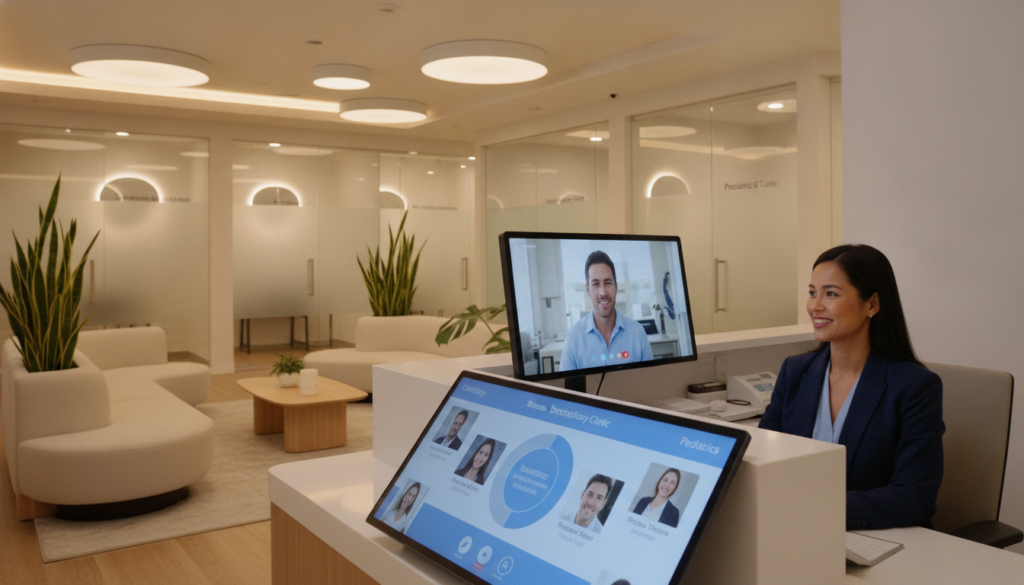
What if your next growth barrier is not capital, but the time it takes to build a reliable workforce? For an investor-backed PE-backed healthcare group virtual staffing can improve capacity, consistency, and execution across multiple locations.
Physician shortages, tight local labor markets, and provider skepticism can slow expansion. Fusion Healthcare Staffing sees these pressures across early-stage roll-ups and large MSOs. Site-by-site hiring often creates uneven processes, higher costs, and slower launches.
A centralized model gives you a more consistent way to support scheduling, revenue cycle work, patient communication, and other key functions. This approach can help your team respond faster while keeping operating standards aligned across states. Explore this growth strategy for investor-backed organizations for added context.
Dan Nandan, Staffingly’s founder and CEO, brings more than 25 years of experience in IT consulting, BPO operations, and AI automation. His perspective highlights a vital point: technology works best when paired with trained human support. Learn more about remote workforce cost reduction and its effect on daily operations.
Key Takeaways
- Centralized support can improve capacity across multiple locations.
- Local labor shortages can delay growth and new-site launches.
- Consistent processes strengthen operating discipline.
- Technology and skilled people work best together.
- Remote support can help control costs as demand changes.
Why Private Equity-Backed Groups Need Portfolio-Wide Staffing Efficiency
Labor pressure now reaches beyond the exam room. When you manage practices across multiple markets, one open role can disrupt coverage, patient care, and growth at every location. A physician shortage also makes it harder to build reliable support for primary care and specialty services.
Provider shortages and tight local labor markets
MGMA reports that 92% of medical group practices hired or reassigned staff for prior authorization work. In 35% of practices, each request takes at least 35 minutes. Sixty percent need three or more employees to complete one request.
That workload can multiply across an investor-owned network. The MGMA 2026 Regulatory Burden Report found that 95% of practices faced more regulatory strain over the past three years. “Efficiency becomes a growth requirement when every site carries the same administrative weight.”
Operational fragmentation across practices and locations
CMS counted 476 ACOs in the 2025 MSSP. Its ACO REACH rule also sets primary care at 100% capitation and 0% fee-for-service. Meanwhile, Mordor Intelligence reports that PE-backed MSOs hold 39.58% market share and may grow 11.74% through 2030.
These shifts raise the value of consistent operations. Standardized staffing can help operators protect access, reduce duplicated work, and support scalable health services. Read about the risks of private equity and explore medical assistant support for a leaner model.
PE-Backed Healthcare Group Virtual Staffing as a Centralized Workforce Model
Growth becomes easier to govern when your operating model supports each site through one coordinated workforce. Staffing For Doctors serves more than 150 multi-location groups, MSOs, and DSOs with a consistent enterprise structure.
One master service agreement across multiple practices
One Master Service Agreement, one invoice, and site-level chargebacks simplify procurement. Your network can also use shared standards for credentialing, access, and account management. Volume-based pricing applies to deployments of 10 or more virtual medical assistants.
Unified dashboards for utilization, productivity, and quality
Enterprise dashboards show utilization, productivity, and quality assurance across every location. This gives you clearer revenue and care metrics than separate spreadsheets. AAPC-credentialed specialists support eClinicalWorks, athenaOne, Epic Community Connect, NextGen, and AdvancedMD. You can also review tasks for virtual medical assistants when defining each role.
Dedicated customer success management for every rollout
A named customer success manager guides onboarding, escalation, and quarterly improvement. Specialty pods can support primary care, dental, behavioral health, and specialty workflows. Larger deployments may exceed 80 assistants. BAAs, audit logs, SSO, and SOC 2 Type II controls strengthen security and compliance.
Standardize Virtual Staffing Across Every Practice
Your operating model should fit each site without creating separate rules for every location. A clear design gives your team shared standards while preserving the details that shape patient care.

Specialty pods built around your workflows and case mix
Specialty pods can reflect service lines, payer rules, electronic health records, and shifts. A primary care pod may focus on routine scheduling and referrals. A behavioral health or dental pod may need different forms, authorizations, and follow-up steps.
Staffing For Doctors supports primary care, specialty, dental, and behavioral health enterprise deployments. Staffingly specialists work in eClinicalWorks, athenaOne, Epic Community Connect, NextGen, and AdvancedMD. This approach lets each practice use proven workflows without forcing identical clinical processes.
Consistent front desk, medical assistant, and revenue cycle coverage
Standard operating procedures help physician practices deliver comparable service levels. Medical assistants can support intake, eligibility, patient messages, and documentation. Front desk staff can follow the same escalation path, while revenue tasks remain measurable across sites.
| Pod focus | Common work | Local adjustment |
|---|---|---|
| Primary care | Scheduling and referrals | Provider shifts |
| Dental | Intake and eligibility | Payer rules |
| Behavioral health | Patient support | Documentation needs |
Expand Coverage Without Adding Equivalent Local Headcount
Capacity can grow faster when shared teams absorb repeatable work across your network. A virtual pod can handle scheduling, patient messages, intake, and follow-up without adding equal local headcount at every location.
Reported results show a 30% to 45% reduction in administrative payroll after enterprise groups consolidate tasks into virtual pods. This model also lets local clinicians focus on direct care while trained staff manage daily workflows.
The largest deployments operate more than 80 assistants across primary care and other specialties. Staffingly’s multi-state MSO workflow supports coverage from 6:00 a.m. to 11:00 p.m. ET, helping your workforce serve patients across time zones.
Budget planning becomes clearer with enterprise pricing. Staffingly lists a custom rate of $299 per week per FTE for organizations using at least 25 FTEs. Your account team can match the right mix of roles, hours, and support to each practice.
- Lower payroll pressure
- Broader operating hours
- Flexible support by location
Lower Administrative Costs and Improve Revenue Cycle Performance
Your financial results often depend on how well routine tasks move from intake to payment. A coordinated support model can reduce delays, improve data accuracy, and give your physician team more time for patient care.
Virtual medical assistants for scheduling and patient support
Virtual medical assistants can manage scheduling, intake, patient messages, front desk overflow, and follow-up. Staffingly supports affiliated practices with trained medical assistants and a dedicated manager. This helps your network maintain a steady patient experience across every location.
Learn more about medical assistant services and review how automation can lower administrative costs.
Credentialing, eligibility, prior authorization, and revenue cycle support
Staffingly supports credentialing, eligibility checks, prior authorization, and revenue cycle work. MGMA reports that 92% of medical group practices hired or reassigned staff for prior authorization. AAPC-credentialed specialists work in eClinicalWorks, athenaOne, Epic Community Connect, NextGen, and AdvancedMD.
- Front-desk coverage: $399 per week per FTE
- Full MSO stack: $349 per week per FTE
- Enterprise custom program: $299 per week per FTE
Clearer authorization and denial workflows can protect revenue while supporting compliance across your practice network.
Protect Your Portfolio With Healthcare Staffing Security and Compliance
Strong controls help you protect patient data while your network expands. This matters as 95% of practices report rising regulatory burden, according to the MGMA 2026 Regulatory Burden Report. A governed workforce gives your team clearer ownership and fewer gaps.

HIPAA, BAA, audit logs, and SOC 2 Type II controls
Enterprise programs can include a Business Associate Agreement, audit logs, SSO, and SOC Type II safeguards. One agreement can cover affiliated practices, with addendums for each new entity. That approach reduces paperwork compared with separate contracts for every account.
Staffingly maintains a SOC Type II audited program aligned with HITRUST and ISO 27001. These frameworks support a documented security posture for protected health information and daily operations.
Role-based access, secure connectivity, and centralized vendor oversight
Role-based access limits each staff member to approved systems and tasks. Credentialing checks help confirm qualifications before a physician practice grants access. A manager can review activity, permissions, and exceptions across the workforce.
- Secure connectivity supports controlled system access.
- Central oversight strengthens compliance across the network.
- SOC Type II evidence supports ongoing security reviews.
A clear control model protects health data while keeping operations accountable.
Roll Out a Governed Virtual Workforce Across Your Network
Start with a measured launch instead of changing operations across multiple sites at once. Select your highest-volume practice, set clear baselines, and use a two-week free trial to test fit before broader deployment. This approach helps operators confirm value with less disruption.
Pilot the highest-volume practice before broader deployment
Staffingly’s scorecard tracks prior authorization approval, eligibility hit rate, accounts receivable reduction, and denial recovery. You can also compare coverage, response times, quality, and revenue cycle results. Review prior authorization support when this task needs added capacity.
Coordinate onboarding, EHR access, and site-level training
After the agreement is signed, the first enterprise cohort typically launches in 7–10 business days. The process covers the BAA, site scope, security, EHR access, credentialing, communication, and training. One MSO-level BAA can include covered affiliates and practice-specific exhibits.
Measure results across locations
A named customer success manager and support team guide readiness, issue resolution, and consistent procedures. After launch, programs often add three to five sites per week. Your manager can compare performance across every location, including primary care and specialty pods.
Get Twenty-Four-Seven Support for Your PE-Backed Healthcare Group
When an urgent need affects your network, a direct contact can help you act faster. Identify your highest-volume practice or busiest workflow, then connect with a team that can review your goals, systems, and timeline.
Call Us: (352) 516-3972
Call (352) 516-3972 to discuss front desk tasks, a virtual medical assistant, revenue cycle work, or multi-location coverage. Your customer success contact can help shape an enterprise plan around patient care and daily demand.
Text Me or Email Us: info@totalmedicalsolution.com
Text us or email info@totalmedicalsolution.com for staffing scope, pricing, implementation steps, or account questions. MSOs can also ask about flexible schedules and rates listed per week.
Support Hours Available Around the Clock
Support is available 24/7 for urgent requests and extended-hour needs. Staffingly’s illustrated MSO workflow provides coverage from 6:00 a.m. to 11:00 p.m. ET, helping distributed operations respond with greater consistency.
- Share your highest-volume workflow.
- Request a tailored workforce review.
- Plan the next practical step.
Conclusion
Centralized virtual staffing gives PE-backed healthcare groups a practical way to align practices, add workforce capacity, and see portfolio results. One agreement, an enterprise dashboard, and a governed team can limit duplicate work across MSOs and affiliated physician practices.
Specialty pods can support primary care, scheduling, credentialing, revenue, and patient care. A customer success manager helps each account move from pilot to wider rollout. Use Washington ownership insights and value-based revenue cycle guidance to sharpen your business plan.
Protect health data with BAAs, audit logs, SSO, and SOC 2 Type II security controls. Review pricing and launch options with our team.
Call Us: (352) 516-3972. Text Me or email info@totalmedicalsolution.com. Support is available 24/7. Start with one practice, then build a reliable network-wide workforce.