Medical facilities in America spend 30-50% more than needed on admin costs. This takes away from improving patient care. Your practice has high operational costs from salaries, benefits, and more.
Remote work solutions can greatly reduce these costs. By outsourcing non-clinical tasks, you can save up to 40%. This is because professionals work outside traditional offices.
Numbers show a clear benefit. A full-time medical receptionist costs $45,000-$60,000 a year, plus benefits. But, remote teams do the same job for much less. Healthcare BPO services have become a $380 billion market because they work well.
This guide will help you reduce healthcare overhead through smart outsourcing. You’ll learn which tasks to outsource, how to keep patient data safe, and why virtual staffing is key. Understanding your options is the first step to better budgeting.
Key Takeaways
- Medical practices save 30-50% in the first year with remote workforce solutions for admin tasks
- Outsourcing reception and scheduling is cheaper than hiring full-time staff with benefits
- Revenue cycle management through BPO providers boosts claim acceptance rates to over 97%
- The global market for outsourced medical services is over $380 billion and grows 8% each year
- HIPAA compliance and Business Associate Agreements are key for any outsourcing partner
- Dedicated remote professionals work directly with your systems for smooth operations
- Telehealth and remote admin support are the fastest-growing areas of medical outsourcing
Understanding Virtual Staffing in Healthcare
Virtual staffing in healthcare is more than just remote work. It’s a way to build your team with professionals who don’t need to be in an office. This approach is popular as healthcare places look for new ways to save money without losing quality.
This model starts with how tech and healthcare have grown together. Digital solutions let your facility find talent anywhere, not just locally. This change opens up new skills for your team.
What Virtual Staffing Means for Your Facility
Virtual staffing includes three main types of remote workers. Remote healthcare professionals do tasks like coding and billing from home. They use secure systems to work with patient data without being in your building.
Telehealth practitioners are the second group. They give direct care through video calls and remote monitoring. Your patients get care from doctors and nurses who are not in the same room.
The third group is outsourced administrative personnel. They handle tasks like scheduling and data entry. They work for your team but are employed by someone else.
Virtual staffing helps cut costs. You save on office space, equipment, and salaries. You only pay for what you need without the usual costs.
Why Your Healthcare Organization Needs This Model Now
Virtual staffing is key for modern healthcare. It’s not just about saving money. Your facility faces many challenges that make this model a must for survival and growth.
Financial viability is tough with steady costs and low pay. Virtual staffing helps cut costs without lowering service quality. Many places save 30-40% on staff costs with remote work.
Patient needs have changed a lot. They want care when it’s convenient for them, not just during office hours. Virtual staff lets you offer more hours without the high costs of after-hours offices. This makes patients happier and saves money.
- Access to specialized talent without geographic limitations
- Ability to scale your workforce quickly based on demand
- Reduced turnover rates among remote workers
- Enhanced work-life balance for your staff members
- Continuity of operations during emergencies or disruptions
Regulations keep getting stricter, needing more staff for paperwork. Virtual staffing brings in experts for rules and documents. They focus on keeping up with new rules.
Technology That Powers Remote Healthcare Teams
Success with virtual staffing needs strong tech for teamwork and safe data sharing. Key systems are the backbone of remote healthcare.
Electronic Health Records (EHR) systems are central for your team. Cloud-based EHRs let staff access patient info securely from anywhere. They keep records safe and complete.
Secure chat and video tools help your team work together. They have encrypted messages and video calls. Your remote staff can join meetings and talks as if they were there.
Telemedicine software is for remote care. It has virtual waiting rooms and e-prescribing. Your doctors can give care just as well as in person.
Cloud-based systems manage scheduling and billing for your whole team. They give remote staff the same access as in-office staff. This keeps everything running smoothly.
HIPAA-compliant tools keep patient info safe while your team works together. These apps meet federal security rules. Your team stays efficient and safe.
These technologies make virtual staffing cost-effective and lasting. Your facility gets the tools to manage remote teams well. It keeps care safe and follows healthcare rules.
The Financial Burden of Traditional Staffing Models
Traditional healthcare staffing is very costly. It threatens the future of medical facilities in the U.S. Your organization faces many expenses, not just salaries. These costs drain resources and limit growth.
Staffing models require big investments in infrastructure, benefits, and ongoing expenses. These costs add up quickly and often go over budget. This limits your ability to invest in technology, expand services, or improve patient care.
Breakdown of Operational Expenses
Your healthcare facility has many expense categories that increase overhead costs. Physical infrastructure requirements are a big part of your budget. This includes office space, parking, workstations, and equipment for each staff member. These costs stay the same, no matter how many patients you have.
Employee benefits packages are another big expense. You provide health insurance, retirement contributions, paid time off, and education allowances. Each full-time employee costs 30-40% of their salary in benefits.
Payroll taxes and insurance add more complexity to your costs. You have to pay for workers’ compensation, unemployment insurance, Social Security, and Medicare taxes. These costs make each hire more expensive than the salary suggests.
The following table shows the hidden costs of traditional staffing:
| Cost Category | Percentage of Base Salary | Annual Cost per Employee | Impact Level |
|---|---|---|---|
| Benefits Package | 30-40% | $18,000-$24,000 | High |
| Payroll Taxes | 7.65% | $4,590 | Medium |
| Workspace & Equipment | 15-20% | $9,000-$12,000 | High |
| Training & Development | 2-5% | $1,200-$3,000 | Medium |
| Administrative Overhead | 10-15% | $6,000-$9,000 | Medium |
Financial Impact on Organizational Health
Staffing expenses usually take up 50-60% of your total operating budget in traditional healthcare models. This makes your organization vulnerable and limits financial flexibility. When staffing costs dominate your budget, you can’t invest in innovation, technology, or improving patient care.
Payroll obligations are predictable and fixed. This makes it hard to manage cash flow. Unlike variable expenses, staffing costs don’t adjust with revenue changes. This creates financial stress during slow periods.
High overhead limits your ability to invest in important areas. Reducing healthcare overhead lets you reinvest in strategic priorities.
Budget constraints force tough decisions. You must choose between maintaining staffing levels and pursuing growth. High overhead prevents investment in cost-saving technologies or process improvements.
Recruitment and Retention Difficulties
The competitive healthcare labor market makes things harder. Qualified healthcare professionals demand high salaries, leading to bidding wars. Your organization competes with larger health systems for talent.
High turnover rates increase recruitment expenses. Replacing a healthcare employee can cost $40,000 to $64,000. This includes recruitment fees, onboarding, training, and productivity losses.
Onboarding new staff takes time. It can take three to six months for them to reach full productivity. During this time, you pay them fully while covering productivity gaps.
Vacancy costs add up quickly when positions are unfilled. You may use temporary staff, overtime, or limit services. These solutions are expensive and often don’t work well.
These factors create a financial storm. Your organization needs ways to reduce healthcare overhead without hurting care quality or employee satisfaction. Understanding these costs helps you find alternative staffing models.
How Virtual Staffing Can Cut Costs
Healthcare facilities in the U.S. find big savings with virtual staffing. It changes how resources are used. You save money right away in your staffing budget and more over time.
Virtual staffing isn’t just about saving money. It’s about how much you can save. Most find their savings are more than they thought. This is because many benefits add up, reducing healthcare overhead a lot.
Eliminating Traditional Employment Costs
Employee compensation changes a lot with virtual staffing. Benefits packages add a lot to salary costs. Virtual staff costs much less.
Health insurance is a big expense. For family coverage, it’s $500-$800 per month per employee. Virtual staff get their own insurance.
Retirement contributions also go away. 401(k) matching programs cost 3-6% of salary. Virtual teams don’t have these costs.
Other costs you no longer have include:
- Paid time off, costing 10-15% of salary
- Workers’ compensation insurance, $1-$3 per $100 of payroll
- Unemployment insurance taxes, 0.6-6% of payroll
- Payroll processing fees, adding up with each pay period
- Recruitment and onboarding costs, $4,000-$5,000 per hire
The virtual staff savings in these areas can be 35-45%. You pay for actual work without big benefits costs.
Shrinking Your Facility Footprint
Remote work means less space needed. This cuts down on costs like rent and utilities.
Commercial real estate costs $25-$50 per square foot a year. A desk and shared spaces cost $3,750-$10,000 annually. This is just for one employee.
Virtual staffing lets you use less space or avoid big expansions. Some places have cut their office space by 50% or more.
Utility costs also go down. Heating, cooling, and electricity bills drop with less space. Healthcare facilities spend $2-$4 per square foot on utilities.
IT needs change too. You don’t need as much equipment or support systems. This saves money on computers, phones, and furniture.
Other savings include:
- Office supplies and consumables, $500-$1,000 per employee annually
- Cleaning and maintenance for less space
- Security systems for smaller facilities
- Parking costs or subsidies in cities
- Break room supplies and coffee service
Maximizing Output and Performance
Virtual staffing brings big productivity gains. It’s not just about saving money. Virtual teams often do more with less.
They work longer hours without overtime. This means more work done without extra costs. You can work more hours without paying more.
Home offices have fewer distractions. Studies show remote workers are 40-60% less interrupted. This means they get more done faster.
Access to experts improves a lot. You can hire specialists from anywhere. This means you get the right skills when you need them, without wasting money.
Virtual staffing lets you adjust resources as needed. You can add staff for busy times or projects. And you don’t pay for idle employees when it’s slow.
Performance gets better with virtual teams. You pay for results, not just being there. This makes everyone work more efficiently.
Task completion rates go up with the right virtual staff. A coder does more claims per day than a multi-tasking employee.
Managing virtual staff is easier. You spend less time on employee issues and more on important tasks. This makes management more efficient.
Types of Virtual Staffing Solutions
Your healthcare facility can use many virtual staffing solutions. These can save a lot of money. They cover clinical and administrative roles, helping you meet your needs.
Choosing the right solution is key. Some jobs work well from home, while others need special planning. Let’s look at three main types of virtual staffing for healthcare.
Positions That Thrive in Remote Environments
Remote healthcare workers can save a lot of money. They do important jobs from home, cutting down on office costs. You can find talent from all over, not just locally.
Medical coders and billers are great for remote work. They review records and assign codes, needing only a computer and training. Remote coders often work better because they have fewer distractions.

Nurse case managers work from home too. They talk to patients and teams over phone and video. This job fits well with remote work, keeping patients connected.
Utilization review specialists check if healthcare services are needed from home. They look at records and plans, needing analytical skills more than being there in person. This makes them perfect for remote jobs.
Health information technicians manage electronic health records from anywhere. Your organization benefits from their skills without needing a specific place. Clinical documentation improvement specialists also review records from home, fitting well into remote work.
Virtual Clinical Care Delivery Models
Telehealth changes how you care for patients, saving a lot of money. It means no need for exam rooms and fewer staff for reception. Patients like it, and your facility saves a lot.
Remote consultations cover many specialties through video calls. Providers see more patients without the commute. This means more money without more costs.
Telepsychiatry is growing fast, with over 90% of patients happy with it.
Teledermatology lets specialists diagnose skin issues with photos and histories. It needs little physical touch, making it great for remote care. You can reach more patients without new offices.
Remote patient monitoring tracks health data all the time. Your team gets updates without patients coming in. This cuts down on emergency visits and hospital stays, saving money.
Virtual follow-ups keep patients engaged and free up rooms for new patients. Providers can check on recovery and medication changes over video. This needs less staff support, saving on costs.
Non-Clinical Functions You Can Delegate
Outsourcing admin tasks can save money for any healthcare facility. These jobs take a lot of resources but don’t need to be done in person. Working with experienced vendors can be more efficient than doing it yourself.
Scheduling appointments is a big job that can be outsourced. Virtual staff can manage your calendar and remind patients, working all the time. This means no missed appointments and less work for your staff.
Insurance verification checks if patients are covered before appointments. Outsourced teams handle this complex task, freeing up your staff. They focus on patient care instead.
- Medical transcription services turn voice recordings into written records
- Accounts receivable management handles billing and payments
- Patient communication teams answer routine questions
- Prior authorization specialists get approvals for procedures and meds
- Claims processing experts submit and track insurance claims
These services often charge per task or a percentage of the work. You only pay for what’s done, not for full-time staff. This model is flexible, saving money during slow times and covering busy times.
Using remote workers, telehealth, and outsourced admin can save a lot of money. Start with areas that save the most money first. Each type tackles different challenges, helping you cut overhead by 40% like top healthcare groups.
Metrics for Measuring Cost Reduction
You need concrete numbers to prove that virtual staffing saves money. Without the right tools, you can’t show value or find ways to get better. This section gives you the tools and formulas to track your healthcare outsourcing ROI accurately.
The right metrics turn virtual staffing into a real financial win. You’ll learn to calculate savings, see efficiency boosts, and use key performance indicators that matter to your bottom line.
Calculating Direct Cost Savings
Start by comparing the cost of traditional staff to virtual team members. Calculate the cost per full-time equivalent (FTE) by adding salary, benefits, taxes, and overhead. Traditional staff costs range from $65,000 to $95,000 a year for admin roles.
Virtual staff savings are clear when you cut out expenses. You save on physical space, equipment, parking, and amenities. Use this formula to find your annual savings per position:
Annual Savings = (Traditional FTE Cost + Facility Cost) – (Virtual Staff Cost + Technology Cost)
Also, track savings in recruitment and onboarding. Traditional hiring costs $4,000 to $7,000 per employee. Virtual staffing companies cut these costs by 60% to 80%.
Document savings in facility costs by measuring square footage and rent savings. Each virtual position saves $3,750 to $7,000 in facility costs alone.
Monitoring Productivity Improvements
Efficiency gains add to your financial benefits. Track patient encounters per staff member to measure clinical support improvements. Use a baseline before starting virtual staffing.
For billing and admin, track claims processed per billing specialist. Virtual teams process 25% to 40% more claims than traditional staff. This boosts your revenue cycle.
Measure response times for patient inquiries and requests. Virtual staff reduce response times by 30% to 50%. Use these benchmarks:
- Phone inquiries: Target response within 2 minutes
- Email requests: Target response within 4 hours
- Appointment scheduling: Target completion within 24 hours
- Insurance verification: Target completion within 48 hours
Task completion rates show if your virtual team is fast and accurate. Set standards for accuracy in documentation and data entry. Aim for 95% or higher accuracy rates.
Implementing Key Performance Indicators
Specific KPIs give you ongoing insight into your healthcare outsourcing ROI. These indicators help justify investment and find ways to improve. Choose metrics that match your goals and track them monthly.
Cost per patient encounter measures total staffing expense divided by patient volume. Virtual staffing should decrease this metric by 20% to 35%. Calculate it using:
Cost per Encounter = Total Monthly Staffing Costs / Total Patient Encounters
Revenue cycle time shows how quickly you turn services into payments. Virtual billing teams can cut this time from 45-60 days to 30-40 days. Faster payments improve cash flow and reduce accounts receivable costs.
| Key Performance Indicator | Traditional Staffing Baseline | Virtual Staffing Target | Expected Improvement |
|---|---|---|---|
| Cost per Patient Encounter | $28-35 | $18-25 | 25-35% reduction |
| Revenue Cycle Time | 45-60 days | 30-40 days | 25-40% faster |
| First-Pass Claim Acceptance | 75-82% | 88-95% | 13-15% improvement |
| Staff Utilization Rate | 65-75% | 82-90% | 17-25% increase |
Monitor claim denial rates to check billing quality. Virtual teams with specialized training achieve 88% to 95% first-pass acceptance rates. Each percentage point improvement saves thousands in rework costs.
Patient satisfaction scores reflect the quality of interactions with your virtual team. Survey patients about appointment scheduling, communication clarity, and responsiveness. Aim for scores of 4.5 or higher on a 5-point scale.
Staff utilization rates show how well your team uses working hours. Virtual employees achieve 82% to 90% productive time, compared to 65% to 75% for on-site staff. On-site staff face more interruptions.
Create a dashboard to display these metrics in real-time. Share reports with leadership quarterly to show continued value and justify program growth. Your system should capture both immediate cost reductions and long-term operational improvements to fully show virtual staffing benefits.
Success Stories from the Industry
Many wonder if virtual staffing really cuts costs in real life. Healthcare places all over the country have shown it does. Their stories prove virtual staffing can change how you work and save money.
Big and small healthcare places have seen great results from virtual staffing. From small clinics to big hospitals, the benefits are clear. Seeing how others have done it can help you see what’s possible for your place.
Small Practice Financial Transformation
A family clinic in Ohio was struggling with high costs. They spent $280,000 a year on staff and overhead. Their profits were just 12%, making it hard to keep going.
The clinic changed to virtual staffing in six months. They cut billing costs by $85,000 a year. Telehealth for follow-ups also saved $45,000 a year by not needing more staff.
A remote nurse helped with patient care for $52,000 a year. This replaced two part-time jobs that cost $78,000. The first year, they saved 38% and profits rose to 23%.
The clinic’s patients were happier with the change. Remote staff answered questions faster. Doctors spent more time with patients.
Enterprise-Wide System Efficiency
A health system in the Southeast had seven hospitals and 23 clinics. They used virtual staffing in many areas. Before, they had separate teams at each place, which was costly and inefficient.
They centralized coding with a remote team, cutting 42 jobs. They saved a lot on space, equipment, and benefits. Specialists could see patients everywhere without traveling.
They also outsourced billing and scheduling. This saved $4.2 million a year and made billing more accurate. Remote staff worked long hours without extra pay.
Administrator Perspectives and Results
Healthcare leaders talk about the benefits of virtual staffing. Their stories show the challenges and the big wins. These stories give real insights into virtual staffing’s impact.
We doubted remote coders could meet our standards. But after six months, our accuracy went up 11%, and costs dropped $180,000 a year. It took longer than we thought, but the results were better than expected.
A clinic manager said virtual staffing fixed their hiring issues. They used to lose staff often, costing a lot in training. Outsourcing solved this problem, saving $65,000 a year.
We worried patients wouldn’t like telehealth and remote staff. But 89% of patients were happy with it. We cut costs by 31% and could work longer hours.
A hospital manager said it’s key to look at all the savings from virtual staffing. They saved on space, IT, and benefits. They cut their admin costs by 43%.
These stories show virtual staffing can help any healthcare place. By learning from others, you can get similar results. Their success stories give you confidence in trying it yourself.
Overcoming Common Objections
Your worries about virtual staffing are real and need careful thought. Virtual staffing healthcare cost reduction is a big plus, but you want solid answers on security, quality, and how to make it work. This section tackles the main concerns and offers ways to tackle them.
Knowing these worries helps you make smart choices about remote work in healthcare. The industry has found ways to solve these problems while keeping patient care and data safe.
Security and Compliance Standards
Data security is a big worry with virtual healthcare staffing. You want to know patient info stays safe when accessed by remote team members.
HIPAA-compliant communication platforms are key for secure virtual staffing. These systems encrypt data, keeping health info safe. They meet strict federal rules.
VPNs create secure paths for remote access to healthcare systems. Remote staff use encrypted VPNs to keep data safe. These networks use top encryption, like AES-256.
Access controls limit what virtual staff can see based on their role. You use multi-factor authentication and set up time limits for access. This adds extra security.
Regular security checks make sure your virtual staffing partners follow rules. You should ask for security audits and penetration tests. Check their security certifications and how they handle breaches before you sign.
Maintaining Clinical Excellence
Some worry about the quality of care with remote staff. You want to be sure virtual staff is as good as your on-site team.
Credentialing for virtual clinicians is strict. Your partner checks their licenses, education, and work history. They also do background checks and confirm malpractice insurance.
Quality checks keep an eye on virtual staff all the time. You set clear rules and check how well they follow them. This helps keep care consistent.
Tools track how well virtual staff does their job. You watch things like how fast they respond and how happy patients are. This lets you see how they compare to on-site staff.
Tracking what patients think shows if virtual care is good enough. Surveys and online reviews help measure patient happiness. Studies show virtual care can be just as good as in-person care.
Looking at health outcomes shows virtual care works. You compare things like how often patients get readmitted. The data shows virtual staff can do just as well as on-site staff.
Implementation and Team Integration
Getting remote staff up to speed can be tough. You need ways to train them well and make them part of your team.
Good onboarding programs teach new staff about your values and systems. They get video introductions, system training, and shadowing. Digital platforms help track their progress.
Building a team culture takes effort. You have video meetings to bring everyone together. Virtual team-building activities and shared projects help remote staff feel part of the team.
Training on your systems and rules helps remote staff start strong. You provide guides, video tutorials, and live sessions. Mentors help during the first few weeks.
Clear ways to communicate prevent problems. You use different tools for different needs. Regular check-ins make sure remote staff get the support they need.
These strategies show there are solutions to security, quality, and integration issues. Your healthcare facility can save money with virtual staffing while keeping care top-notch.
Best Practices for Implementing Virtual Staffing
Your healthcare facility’s journey toward virtual staff savings starts with understanding and applying these essential best practices. Success doesn’t happen by accident. It requires a methodical approach that considers your organization’s specific challenges and goals.
The implementation process involves three critical phases that work together to create lasting change. Each phase builds on the previous one, creating a foundation for sustainable cost reduction. When you follow this framework, you minimize risks while maximizing the financial benefits of transitioning to a virtual workforce.

Evaluating Your Organization’s Workforce Requirements
Before you contact any virtual staffing provider, you need a clear picture of your current situation. Start by conducting a thorough audit of every position in your facility. This assessment reveals which roles can transition to remote work and which must remain on-site.
Your evaluation should examine several key factors. Look at how much time each position spends on tasks that require physical presence versus activities that can be done remotely. Administrative roles, billing specialists, and scheduling coordinators typically show high remote work potentials.
Create a detailed cost analysis for each position type. Include not just salaries, but also benefits, office space, equipment, training expenses, and turnover costs. This breakdown helps you identify where virtual staff savings will be most significant.
Next, identify your capacity gaps and inefficiencies. Are certain departments consistently understaffed? Do you struggle with coverage during specific shifts or seasons? Virtual staffing can address these pain points more flexibly than traditional hiring.
Prioritize your virtualization targets based on two criteria: cost reduction and ease of implementation. The positions that score high on both metrics should be your first focus. This strategic approach delivers quick wins that build momentum for broader changes.
“The most successful virtual staffing implementations begin with honest assessment of current costs and realistic evaluation of which functions can transition effectively to remote work.”
Document your findings in a clear framework that stakeholders can review and approve. Include specific metrics that will measure success, such as cost per position, time to fill vacancies, and quality indicators. This documentation becomes your roadmap for the entire implementation process.
Choosing the Right Remote Workforce Provider
Not all virtual staffing partners deliver the same value. Your selection process should be thorough and systematic. The right partner becomes an extension of your team, while the wrong choice creates new problems instead of solving existing ones.
Healthcare experience matters significantly. Look for providers who specialize in medical settings and understand industry-specific requirements. They should be familiar with HIPAA regulations, medical terminology, and the unique workflows of healthcare organizations.
Evaluate their technology platforms carefully. The systems they use should integrate seamlessly with your existing electronic health records and practice management software. Poor integration creates inefficiencies that undermine the cost savings you’re trying to achieve.
Security certifications are non-negotiable. Your provider must demonstrate compliance with healthcare data protection standards. Ask for documentation of their security audits, encryption protocols, and incident response procedures.
- Request detailed information about their pricing models and contract terms
- Verify their ability to scale services up or down based on your changing needs
- Contact at least three client references and ask specific questions about their experience
- Assess their training programs and quality assurance processes
- Review their backup plans for technology failures or staff absences
Watch for red flags during your evaluation. Providers who make unrealistic promises, lack transparent pricing, or cannot provide verifiable references should raise concerns. Also, be cautious of companies without established track records in healthcare settings.
The questions you ask reveal whether a partner is truly qualified. Inquire about their average staff retention rates, typical implementation timelines, and how they handle performance issues. Their answers should be specific and backed by data.
Compare multiple providers using a standardized scoring system. Create a matrix that weights different criteria based on your priorities. This objective approach prevents emotional decisions and ensures you select based on your actual needs.
Developing Your Implementation Roadmap
A well-crafted transition plan transforms virtual staffing from a concept into operational reality. Your roadmap should outline specific steps, timelines, and responsibilities. Start by setting realistic expectations about how long each phase will take.
Most successful implementations follow a phased approach. Begin with a pilot program involving one or two positions. This limited scope allows you to identify and resolve issues before expanding further.
Communication is critical throughout the transition. Your existing staff may feel threatened by virtual workers or uncertain about how changes affect their roles. Address these concerns proactively through transparent dialogue and clear explanations of how virtual staffing benefits everyone.
| Implementation Phase | Timeline | Key Activities | Success Metrics |
|---|---|---|---|
| Planning and Preparation | 4-6 weeks | Finalize partner selection, establish protocols, train managers | Completed documentation, staff readiness |
| Pilot Program Launch | 8-12 weeks | Onboard first virtual staff, monitor performance, gather feedback | Quality scores, cost tracking, satisfaction surveys |
| Evaluation and Adjustment | 4 weeks | Review pilot results, refine processes, address challenges | Achievement of target metrics, issue resolution rate |
| Full Implementation | 12-16 weeks | Scale to additional positions, optimize workflows, measure savings | Total virtual staff savings, efficiency improvements |
Establish clear performance expectations from day one. Your virtual staff need to understand quality standards, productivity targets, and communication requirements. Document these expectations in writing and review them regularly.
Create detailed backup plans for any disruptions. What happens if technology fails? How will you handle unexpected absences? These contingency plans prevent minor issues from becoming major crises.
Phase in virtual staff gradually to minimize disruption to patient care and operations. This measured approach gives your team time to adapt and allows you to maintain service quality throughout the transition. Each successful phase builds confidence and demonstrates the tangible benefits of your new staffing model.
Monitor your progress against the metrics you established during the assessment phase. Regular reviews help you identify what’s working well and what needs adjustment. This ongoing optimization ensures you achieve maximum virtual staff savings while maintaining the high standards your patients expect.
The Future of Virtual Staffing in Healthcare
Looking ahead, technology and changing workforces will help cut healthcare costs. The healthcare world is moving from old staffing ways to new, tech-based ones. Your team can save money by keeping up with these changes.
The next decade will change how you staff your healthcare place. Experts say virtual staffing will soon be the norm, not just for some jobs. This change means big savings for your team without sacrificing patient care quality.
Emerging Developments Shaping Healthcare Staffing
The healthcare staffing world is changing fast. The COVID-19 pandemic made remote work more common, including in healthcare. Now, remote healthcare professionals are widely accepted and trusted by everyone.
Rules are also changing to help virtual staffing grow. Governments are making it easier to get paid for telehealth services. This makes it cheaper to hire remote workers.
There’s also a big shortage of doctors and nurses coming. The U.S. might need up to 124,000 more doctors and 3.8 million more nurses by 2030. Virtual staffing is key to keeping enough staff without breaking the bank.
Younger workers want jobs that let them balance work and life. By hiring remote, you attract the best talent and save on office space.
Expert Forecasts on Cost Savings
Experts say you can save even more money with virtual staffing. Right now, many places save 40% but could save 50-60% in five years. This is because new tech and better practices will come along.
More companies will offer virtual staffing, which will make it cheaper. This competition will also make services better. You’ll pay less and get more for your money.
Not all healthcare areas will save the same amount. Admin tasks could save up to 65%. But, clinical roles like telehealth will save 35-45% compared to in-person staff.
| Healthcare Function | Current Cost Reduction | Projected 5-Year Savings | Key Technology Driver |
|---|---|---|---|
| Administrative Support | 40-45% | 60-65% | AI-powered automation |
| Telehealth Services | 35-40% | 45-50% | Advanced virtual platforms |
| Medical Coding & Billing | 45-50% | 55-60% | Machine learning algorithms |
| Patient Monitoring | 30-35% | 40-48% | IoT and wearable devices |
Some healthcare areas will save more than others. Primary care and mental health services can save a lot because they work well with telehealth. This means better care for patients and lower costs for you.
Where you are also matters. Places in the country can save more because they don’t have to pay high wages to get workers. Cities can save on buildings and space.
Technology-Driven Innovation and Cost Optimization
AI is changing how you handle admin tasks. AI-powered chatbots can schedule appointments and answer questions. This lets your team focus on more important work.
Telemedicine is getting better with new tech. Now, you can do physical therapy with virtual reality. This lets remote doctors give care that’s just as good as in-person visits.
Blockchain is making health records safer and easier to share. This helps your remote team get the info they need fast. It also makes your team more efficient and saves money.
Automation is making routine tasks easier. Robots can handle claims and reminders. This lets your team do more important work without getting bogged down.
Predictive analytics help you plan your team better. These tools look at data to figure out when you need more staff. This means you can save money by not overstaffing.
Investing in virtual staffing now will save you more money later. As tech gets better, you’ll be able to cut costs even more. The future of healthcare staffing is all about being flexible, cost-effective, and better for patients and staff.
Potential Challenges with Virtual Staffing
Starting your virtual staffing journey might face some hurdles. But knowing them early helps you tackle them easily. By understanding these challenges, you can plan ahead instead of fixing problems as they come up. Healthcare organizations across the country have successfully navigated these hurdles, and their experiences can guide you.
Every challenge is a chance to make your virtual staffing program stronger. By tackling regulatory, security, and management issues early, you’ll build a resilient remote team. Let’s look at the three main challenge areas you’ll face.
Navigating Regulatory Requirements
The rules for virtual healthcare workers can seem overwhelming at first. You’ll need to handle many compliance layers that traditional in-office staffing didn’t have. State licensing rules get complex when your virtual staff works across state lines.
Each state has its own licensing board with specific rules for healthcare workers. A nurse in California might need extra credentials to work in Texas. Your plan for reducing healthcare costs must include comprehensive license tracking systems to keep everyone qualified.
Credentialing and privileging for telemedicine providers add another layer of compliance. You’ll verify qualifications with medical staff offices, just like for on-site providers. This includes background checks, education verification, and ongoing competency checks.
Medicare and Medicaid billing rules for virtual services keep changing. These rules vary by service type and patient location. Working with compliance experts and legal counsel helps protect your cost reduction efforts from regulatory risks.
Here are key steps for regulatory compliance:
- Establish relationships with licensing boards in all states where you provide virtual services
- Create automated systems for tracking license renewals and continuing education requirements
- Develop credentialing protocols specific to virtual staff members
- Maintain updated documentation on telehealth regulations by state
- Schedule regular compliance audits with external consultants
Addressing Patient Privacy and Data
HIPAA compliance gets more complex with remote work. You’re responsible for protecting patient info that flows through home offices and devices. The security perimeter extends far beyond your physical facility walls.
Ensuring virtual staff have secure home office setups requires detailed policies and regular checks. You’ll need to provide guidelines for physical workspace security and visual privacy. Virtual staff must position their workstations to prevent unauthorized viewing of patient information.
Managing business associate agreements with virtual staffing vendors is critical. Any third-party provider accessing patient health information must sign agreements outlining their security responsibilities. Your legal team should review these contracts to ensure they meet current HIPAA standards and clearly define liability in case of breaches.
Handling data breaches involving remote workers presents unique challenges. Your incident response plan must address scenarios where breaches occur outside your direct control. This includes stolen laptops, compromised home networks, or unauthorized access by household members.
Maintaining audit trails across distributed teams requires robust technical infrastructure. You need systems that log every access to patient records, regardless of location. These audit capabilities should include real-time monitoring to detect unusual access patterns that might indicate security issues.
| Privacy Challenge | Risk Level | Mitigation Strategy | Implementation Cost |
|---|---|---|---|
| Unsecured home networks | High | Provide VPN access and network security training | Low to Medium |
| Physical document security | Medium | Implement paperless workflows and secure shredding protocols | Low |
| Device theft or loss | High | Enable remote wipe capabilities and full disk encryption | Medium |
| Unauthorized access by others | Medium | Require biometric authentication and automatic screen locks | Low to Medium |
Managing Remote Teams Effectively
Leading a distributed workforce requires different skills than managing on-site teams. You’ll face challenges keeping team cohesion when members rarely meet face-to-face. The informal connections that naturally develop in physical offices don’t happen automatically in virtual environments.
Ensuring consistent communication becomes your top priority. You need structured communication channels that replace hallway conversations and impromptu meetings. Regular video conferences help maintain personal connections, but you’ll also need asynchronous communication tools for different time zones and work schedules.
Monitoring productivity without micromanaging strikes a delicate balance. You want to ensure accountability while respecting the autonomy that makes remote work attractive. Focus on outcomes instead of hours logged, and establish clear performance metrics that align with your virtual staffing healthcare cost reduction goals.
Providing career development for remote workers prevents them from feeling disconnected from advancement opportunities. Virtual staff need access to training programs, mentorship relationships, and clear career paths. Without intentional development programs, remote employees may feel like second-class team members.
Integrating virtual and on-site staff into a unified culture represents perhaps your biggest management challenge. You can’t allow a two-tier system where remote workers feel excluded from decision-making or team activities. Your leadership must actively bridge the physical divide through inclusive practices and policies.
Effective remote team management strategies include:
- Schedule regular one-on-one check-ins with each virtual team member
- Create virtual social opportunities that mirror in-office interactions
- Establish core collaboration hours when all team members are available
- Invest in collaboration technology that facilitates seamless communication
- Recognize and celebrate remote worker achievements publicly
- Provide equipment stipends to ensure professional home office setups
These challenges shouldn’t discourage you from pursuing virtual staffing healthcare cost reduction. Thousands of healthcare organizations have successfully addressed these issues and now enjoy the financial and operational benefits of virtual teams. With proper planning, expert guidance, and commitment to best practices, you’ll navigate these obstacles and build a thriving virtual workforce that delivers exceptional patient care while significantly reducing your overhead costs.
Resources for Healthcare Administrators
Getting the right tools and learning materials helps you use virtual staffing well. It turns theory into action. You feel more confident and know where to find help.
Healthcare leaders face big challenges with new staffing models. Having the right resources makes it easier. They help with tech, rules, and managing teams.
Implementation Tools That Drive Success
You need good tech to manage virtual teams well. Tools like Asana for Healthcare and Monday.com’s Healthcare Edition are made for medical teams. They help with tasks and keep things private.
Good communication tools are key for virtual teams. Zoom for Healthcare and Doximity are safe for talking and video calls. They meet strict privacy rules.
Tools for tracking time and work help keep remote teams on track. Time Doctor for Healthcare and Toggl Track watch work hours without risking patient data. They give detailed reports on work habits.
Cost calculators show how much you can save with virtual staffing. The Healthcare Staffing ROI Calculator compares costs. Just enter your current costs and see your savings fast.
Learning to reduce burnout with virtual assistants helps too. It shows ways to make your team better.
Learning Opportunities for Skill Development
Webinars and online courses teach you about virtual staffing. Experts share their knowledge in real-time. The American Telemedicine Association has monthly webinars.
Online courses teach you how to manage remote teams. Coursera’s Healthcare Management Specialization has modules on virtual teams. LinkedIn Learning has courses on saving money with digital changes.
White papers give deep insights into staffing. They offer valuable data:
- McKinsey Healthcare Reports – Quarterly updates on virtual staffing trends
- Deloitte Healthcare Insights – Studies on cost savings
- MGMA Research – Data on traditional vs. virtual staffing
- Advisory Board Publications – Guides on how to start
Certification programs boost your skills and knowledge. The Certified Professional in Healthcare Quality (CPHQ) includes virtual care. The Fellow of the American College of Healthcare Executives (FACHE) covers digital team management.
Professional Networks That Provide Support
Joining groups of peers who’ve used virtual staffing helps a lot. Professional groups offer networking, conferences, and resources. They support you as you improve your strategies.
The American College of Healthcare Executives (ACHE) has over 48,000 members. They share research and experiences. Annual conferences have tracks on virtual staffing.
The Medical Group Management Association (MGMA) focuses on medical practice operations. They have data on virtual jobs, benchmarks, and rules. Members can discuss challenges in forums.
The Healthcare Financial Management Association (HFMA) specializes in saving money. Members get analyses on cost savings. HFMA chapters have local events for networking.
The American Telemedicine Association (ATA) leads in telehealth. They offer best practices, updates, and tech comparisons. Special groups focus on specific areas.
These groups offer mentorship. You get help from experienced leaders. Regularly joining keeps you updated on new things.
Using these resources helps your healthcare succeed with virtual staffing. You turn challenges into chances with the right tools, knowledge, and support.
Conclusion: Embracing Virtual Staffing for Cost Savings
Your healthcare facility is at a turning point. Old ways of staffing don’t fit today’s budget needs. You must make smart choices that keep care quality high and costs low.
The Compelling Case for Virtual Solutions
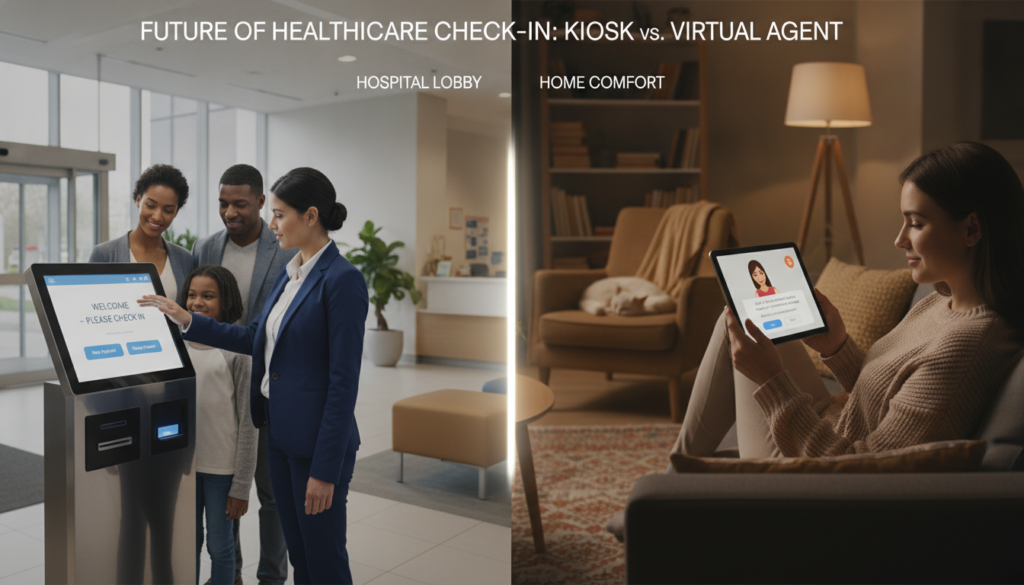
Virtual staffing brings big savings to your bottom line. You can cut healthcare costs by 40-60% in just three months. Front desk work gets better with virtual check-in programs.
These programs cut patient wait times from 8-12 minutes to under 2. You get skilled staff without location limits. Plus, you can grow services as needed.
Moving Forward Despite Uncertainty
Change takes courage, but old staffing ways are risky. Virtual staffing helps all kinds of healthcare places save money. It cuts costs, boosts efficiency, and makes patients happier.
Your rivals are looking into these options too.
Actionable Implementation Steps
Begin your virtual staffing journey this month. First, do a full cost analysis of your staff. Pick three roles to move online. Talk to at least two virtual staffing companies for advice.
Make a plan with expected savings and efficiency boosts. Share it with your leaders. Plan to start a pilot program in 90 days.
Your financial health depends on today’s staffing choices for tomorrow.