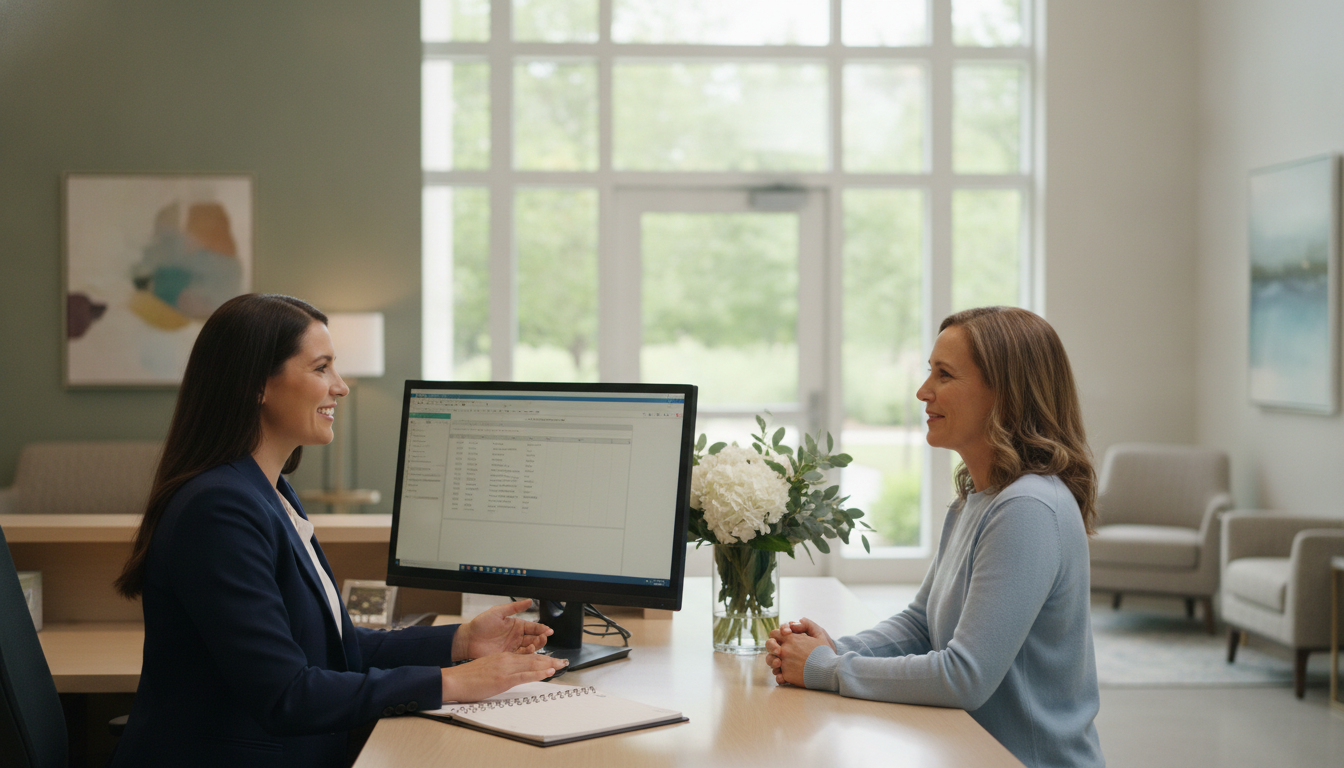
A Press Ganey study found that front-desk interactions can boost patient satisfaction by up to 30%. This shows how important your welcome is when someone comes to your practice.
Your front desk is where patients first meet you. How you greet them and how fast you check them in matters a lot. These moments tell patients if you meet their expectations.
Key Takeaways
- First impressions at the front desk influence a patient’s overall view of your practice.
- Efficient check-ins and clear instructions can boost satisfaction scores significantly.
- Scores give insight into where you shine and where improvement is needed.
- Trust grows when staff handle paperwork and questions with care.
- This feedback guides you in crafting a better patient experience from the start.
The Importance of Front Desk in Patient Satisfaction
When you enter a clinic, the first face you see is often the front desk staff. Their greeting can shape your perception and ease any stress about upcoming procedures. Thoughtful phone etiquette, quick responses, and empathetic listening can all boost patient satisfaction.
First Impressions Matter
You want to feel valued as soon as you walk in. A kind welcome sets a positive tone and eases anxiety. Staff at places like Mayo Clinic train to create a calm atmosphere right when you step inside.
The Role of Communication
Clear explanations help you avoid confusion about appointments or bills. You might get reminders or follow-up calls that make scheduling easier. These direct points of contact boost confidence and encourage you to stay engaged with your care plan.
Efficient Check-In Processes
Online forms and well-organized reception desks keep lines short. This planning speeds up your visit and lets medical staff focus on quality care. A smooth check-in approach can elevate patient satisfaction and motivate you to return.
Key Metrics for Measuring Patient Satisfaction
Tracking numbers gives you clear insights. Compare your HCAHPS front desk data with others. Learn more about patient experience metrics here.
This shows where satisfaction is high and where it’s low.
Patient Satisfaction Surveys
Surveys show how patients feel about your staff. They check friendliness, quickness, and professionalism. Feedback often points to small actions that make a big difference.
Net Promoter Score (NPS)
NPS shows if patients would recommend you. Scores are from 0 to 10. High scores mean loyalty, low scores mean issues.
Online Reviews and Ratings
Digital reviews shape your reputation. Positive feedback on Google, Yelp, or Healthgrades helps. But, negative comments show areas for improvement. Tracking these helps improve your service.
Understanding Patient Expectations
You want clear guidance the moment you arrive. A warm greeting and quick check-in can make you feel at home. Even small gestures, like eye contact and a friendly tone, shape your visit’s perception.

What Patients Look for at the Front Desk
Your front desk is where paperwork and insurance details happen. A quick, polite welcome shows respect for your time. It helps when team members know common forms and answers, giving you clear answers without confusion.
- Courteous greetings
- Easy-to-follow instructions
- Knowledgeable responses
The Impact of Wait Times
Waiting can feel longer when you’re anxious about a procedure. Even a short delay can worry you if there’s no communication. A simple explanation can lower frustration and show you that your needs are important.
| Wait Time (Minutes) | Typical Satisfaction Level |
|---|---|
| Under 5 | High |
| 5–10 | Moderate |
| Over 10 | Low |
The Importance of Empathy
Empathy makes you feel valued. A genuine phrase that acknowledges your feelings comforts you. Showing patience and respect boosts trust and improves your overall impression of care.
Common Front Desk Challenges
Running a smooth front desk can be tough. Your team faces many unexpected problems. These issues can make patients unhappy over time.
High Staff Turnover
Team members leave and new ones join. This makes keeping service steady hard. Hiring and training take time, causing stress and confusion.
Limited Training Resources
Your team needs good training to meet patient needs. Without enough training, they might struggle with communication or scheduling. This can hurt the patient experience.
System Inefficiencies
Old software or bad record integration can cause long waits. Instead of quick, friendly care, you might end up shuffling papers.
To fix these problems, you need ongoing education and new tech. This makes your front desk welcoming and helps your team connect better with patients.
How to Gather Patient Feedback Effectively
Getting honest feedback from patients is key for your front desk. Use clear questions and easy ways to get answers. This opens the door for real improvements.
Designing Effective Surveys
Short and timely surveys catch the latest thoughts. Think about using:
- Three to five targeted questions that hit the main points
- Simple language that’s easy to understand
- A mobile-friendly design to make it easy to finish
Utilizing Technology for Feedback
Using tech to send out surveys saves time for everyone. Text or email links make it easy to reply. Dashboards that highlight bad feedback help you fix problems fast.
Engaging in Direct Conversations
Talking briefly can reveal a lot, like how staff sounds. Some like sharing thoughts in person. These talks add valuable info to what surveys say.
| Method | Benefit |
|---|---|
| Online Surveys | Reach more people and send easily |
| Phone Calls | Get a personal touch for detailed feedback |
| In-Person Chats | Get answers right away and get deeper insights |
Strategies to Improve the Front Desk Experience
Every visitor should feel important from the start. Some clinics have seen great results by using organized steps, training staff, and adding a personal touch. These steps help reduce wait times and build trust over time.
Streamlining Check-In Procedures
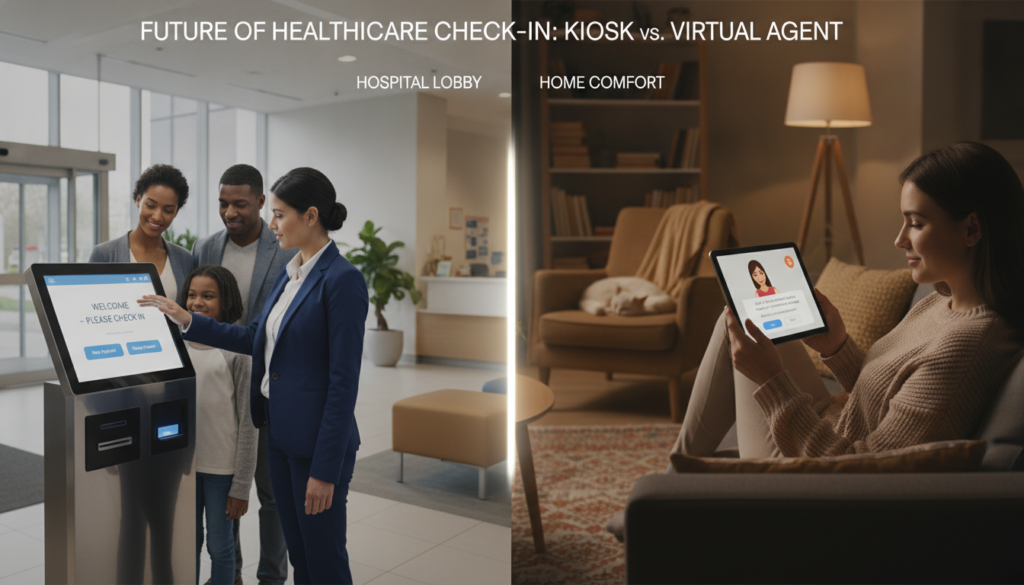
Digital forms and self-service kiosks let patients share info before they arrive. This cuts down wait times and keeps the area calm. It also helps in keeping patient records accurate.
Enhancing Staff Training Programs
A well-trained team can handle sudden changes or insurance questions better. Regular training and feedback make staff more confident and attentive. This creates a supportive environment for patients.
Personalizing Patient Interactions
Knowing and greeting returning patients by name shows you care. Personal touches make patients feel valued and appreciated. These small actions can make patients more likely to recommend your practice.
The Role of Technology in Patient Satisfaction
Digital solutions are changing healthcare. They make the front desk work better by automating tasks and improving patient interaction. Many clinics use electronic check-in, online scheduling, and portals.
These tools help staff work less and make fewer mistakes. Patients get more time for important talks, whether in person or online.
Implementing Electronic Check-In
Electronic check-in makes waiting rooms less crowded and paperwork less. Your team can check info fast, keeping things moving and saving time.
Online Appointment Scheduling
Online scheduling is available anytime. Patients can book at any time and choose dates that fit their schedule. They also get reminders to avoid missing appointments.
Patient Portal Benefits
Patient portals let people see lab results and ask for refills online. They can send messages to doctors safely. Paying bills online also helps the front desk and makes patients happier.
Analyzing Patient Satisfaction Data
Getting feedback from many places makes your checks more accurate. Surveys, how many people answer, and online comments give you real tips. These tips help you make your patient service better.
Identifying Trends and Patterns
Look for common comments or big changes in good or bad feedback. See if phone manners issues pop up on specific days. Or if a new way of working makes patients wait less.
Using charts and timelines helps you find these changes. It shows you how they relate to real things.
Benchmarking Against Competitors
Comparing yourself to others in your area can show new chances. See how your ratings stack up against top clinics. This lets you set goals and push your team to be the best in patient care.
Actionable Insights for Improvement
Make every number into a goal. If people say greetings are tough, teach your team to be friendly. If there are delays, look into new tech.
By focusing on patient experience, you turn numbers into steps forward.
Best Practices from High-Rated Clinics
Top clinics do well by listening to patients, empowering staff, and following up well. They see more loyal patients when their front desk teams really care about each person they meet.
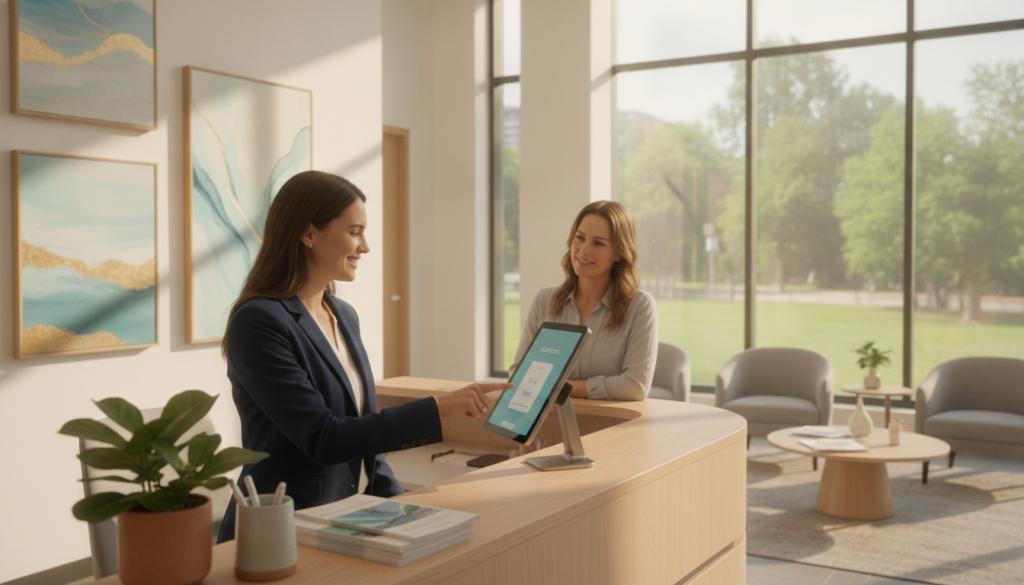
Studies show that friendly and helpful front desks make a big difference. They listen and help, not just say hello. Patients love the quick, accurate service they get, which makes them feel safe and happy.
Case Studies of Successful Front Desks
Look at clinics where patients are really happy. You’ll see teams that answer questions clearly and quickly. They make forms and payments easy, saving time for everyone.
Elements of a Patient-Centric Culture
Good leaders make sure everyone works together towards the same goal. They make sure billing is clear, listen well, and check in often. This becomes a daily habit.
Consistent Staff Training and Support
Regular training keeps staff motivated and skilled. It helps them use new tools well, even when it’s busy. Patients notice the difference in every visit.
| Strategy | Benefit |
|---|---|
| Proactive Communication | Improves trust and reduces confusion |
| Staff Empowerment | Encourages quick problem-solving |
| Transparent Follow-Up | Fosters patient confidence and loyalty |
The Financial Impact of Patient Satisfaction
When patients feel heard, they come back for more. This loyalty means more money for you. Bad online reviews can hurt your growth, but good ones can help it soar.
Poor first impressions can cost you a lot. Studies show that slow responses or missed calls can lead to big marketing bills. To avoid this, consider telehealth front desk solutions. They make things run smoother and save you money.
Link Between Satisfaction and Retention
Happy patients like easy communication and quick visits. When your front desk is on point, they come back more often. This means more money for you.
Cost of High Patient Turnover
Getting new patients costs money, through ads and special deals. These costs add up quickly. But, by improving your front desk, you can save these dollars.
Value of Positive Word-of-Mouth
One happy patient can bring in many more. Their good word can lead to more patients. It’s a smart way to grow your business.
| Factor | Financial Advantage |
|---|---|
| Reduced Admin Costs | 20-30% Savings |
| Improved Retention | 15-25% Growth |
| Positive Reviews | Higher Patient Acquisition |
Future Trends in Patient Satisfaction
Your patients now want things to be easy online. Telehealth lets them skip some visits, but it adds new tasks for your team. Good tech and support keep them happy and coming back.
The Rise of Telehealth and Its Effect
More people choose telehealth for simple check-ups. A clear online system and helpful tips can make patients happier. Your team can focus on making remote visits better with reminders and quick fixes.
Evolving Patient Expectations
Being open and quick with answers is key. Patients want to know about costs and what to expect. They also want flexible times and personal care that goes beyond the usual.
The Growing Role of AI in Healthcare Services
AI can help with scheduling and answering basic questions. This lets your team handle more important tasks. AI can even help with quick checks, making things faster and more accurate. Keeping up with these changes helps you succeed.