Did you know that 30% of claim denials happen because of mistakes during patient intake? This means billions lost for healthcare and lots of frustration for everyone.
Your front desk team has a tough job every day. They need to check insurance without making patients wait too long. But, old ways cause delays and errors, and your costs keep going up.
Virtual agents are changing how we handle patient checks. They are very accurate and don’t make your team work too hard. They work all the time and catch things humans might miss.
This article will show you how new tech solves old problems in patient intake. You’ll see how virtual agents are key for today’s healthcare. You’ll get tips on how to make patient visits smooth from start to finish.
Key Takeaways
- Virtual agents cut down on eligibility mistakes by up to 30%, stopping costly denials early
- Automated systems do complex checks fast, cutting down patient wait times at registration
- Intelligent automation works all the time, giving consistent accuracy without staff getting tired
- Healthcare places lower their admin costs while making patients happier
- Modern virtual agents fit well with current systems for managing patients and health records
- Real-time checks let your team focus on caring for patients instead of paperwork
Understanding the Importance of Insurance Verification
Accurate insurance verification is key to successful healthcare revenue management. It keeps your practice safe from financial risks. It also makes sure patients get the care they need without surprise costs.
When verification goes wrong, problems spread far beyond simple mistakes. Your facility and patients face big issues.
Modern healthcare needs precision at every step. Your front office sets the tone for the whole patient experience. It affects how smoothly the revenue cycle works.
Good verification makes everything flow smoothly from scheduling to payment.
What Is Insurance Verification?
Insurance verification checks if a patient’s coverage is active before you start services. Your team calls insurance companies to confirm coverage and what services are covered. It’s more than just checking if a patient has insurance.
An eligibility check clinic does many important things. They check if the patient is covered, verify policy details, and know what services are covered. They also figure out how much the patient will have to pay.
To verify, you need to collect certain information. This includes the patient’s insurance card, ID, and the codes for the services. Your eligibility check clinic must also check if the services need authorization and if your facility is in the network.
Insurance plans have different rules. Some need pre-authorization for certain services, and others need referrals. Your verification process must handle these differences to avoid claim denials.
Why It Matters for Patients and Providers
Good insurance verification helps both patients and healthcare providers. It’s important to understand why it’s so critical. If verification is not done right, it can cause problems for everyone involved.
For patients, accurate verification means no surprise bills. They know how much they’ll have to pay before getting services. This helps them make better healthcare choices.
Patients also avoid stress from unexpected bills. They know their procedures are covered. This reduces the chance of claim denials and big financial surprises.
For providers, accurate verification keeps your money flowing and makes things run smoothly. You avoid claim denials and appeals. You also collect the right amount from patients upfront.
Verification also keeps you in line with insurance rules. Different insurance companies have different rules. Following these rules keeps your facility in good standing with insurance networks.
When verification works well, you can predict your money better. You can forecast your income more accurately. This means you can invest in better care for your patients.
| Stakeholder | Primary Benefits | Risks of Poor Verification | Financial Impact |
|---|---|---|---|
| Patients | Cost transparency, no surprise billing, coverage confirmation | Unexpected bills, claim denials, financial stress | Potential out-of-pocket expenses of $500-$5,000+ |
| Healthcare Providers | Revenue protection, reduced denials, improved cash flow | Claim rejections, administrative appeals, revenue loss | 15-20% revenue loss from denied claims |
| Insurance Payers | Accurate claims processing, fraud prevention, cost control | Incorrect payments, claim disputes, administrative burden | Increased processing costs and error corrections |
| Administrative Staff | Streamlined workflow, clear processes, fewer corrections | Rework, patient complaints, job stress | 30-40% time spent on claim corrections |
Poor verification causes many problems for your practice. You might get delayed payments because of coverage issues. Your staff will spend too much time on appeals instead of caring for patients.
Patient unhappiness grows when they get unexpected bills. This hurts your reputation and makes patients less likely to come back. It also damages your relationship with patients.
Your practice could lose 15-20% of your income. This is because of denied claims, unpaid balances, and write-offs for services without verification. Using denial management strategies is key when verification fails.
The extra work isn’t just for your front office. Your billing team has to spend more time on denied claims. This increases costs and takes away time for other important work.
Insurance companies expect your eligibility check clinic to do its job well. Mistakes can lead to audits or penalties. Your facility’s standing with insurance networks could be at risk.
The Role of Virtual Agents in the Process
Every successful insurance verification system uses smart technology. This tech works hard to make sure everything is accurate and fast. Virtual agents are key for healthcare providers who need to check coverage quickly.
These smart systems talk to insurance companies for you. They cut down on delays that slow down old ways of checking.
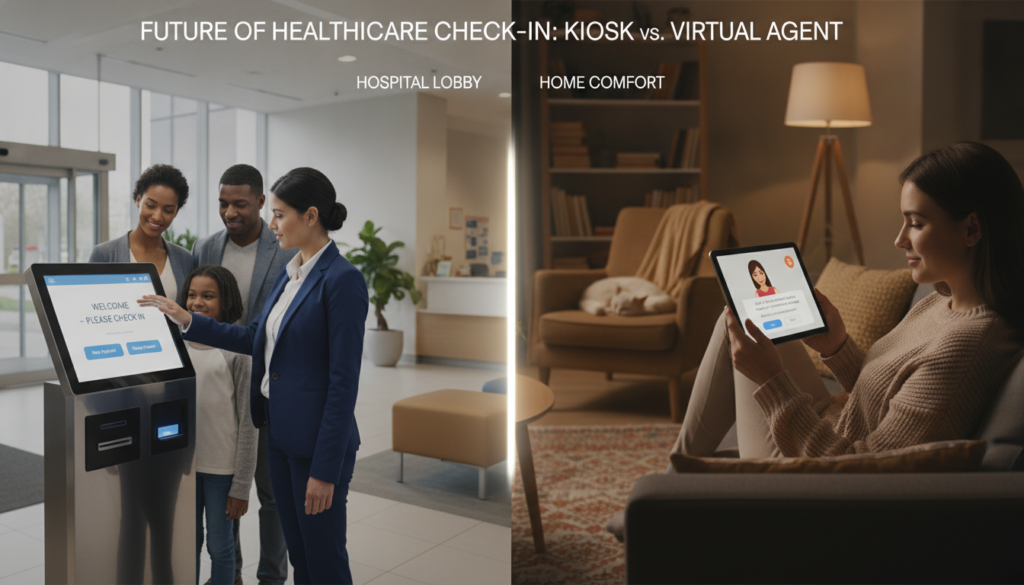
Virtual agents fit right into your current work flow. They make the virtual check-in patient experience better. They work in the background while your team takes care of patients.
How Virtual Agents Operate
Virtual agents start working when patient info comes into your system. They connect with your electronic health records (EHR) to get the needed info. Then, they talk to insurance companies to check coverage.
They send out automated checks for many things at once. Your system asks about eligibility, coverage limits, and more. This happens without your staff needing to do anything.
These systems use smart tech to understand insurance answers. They can handle different formats and complex policy language. This means they get the info you need for billing and treatment.
If there’s a problem, the system flags it for a human to look at. But it keeps checking the usual things. This way, your team only deals with the tricky cases.
These agents work all the time, even when it’s not busy. They start checking coverage before patients arrive. This helps your front desk answer questions right away.
Benefits of Using Virtual Agents
Using virtual insurance verification brings many benefits. It changes how your team handles insurance checks.
They work all the time, sending requests day and night. This means you can check insurance even when your office is closed.
They also make fewer mistakes. Manual errors go down a lot when systems do the work. This means fewer claims get denied or delayed.
Here are more ways virtual agents help your day-to-day:
- They’re fast: You get answers right away, saving time.
- They scale: They handle lots of checks without getting slower.
- They follow rules: Every check is done the same way, keeping things consistent.
- They free up staff: Your team can focus on harder tasks and patient care.
- They save money: You spend less on staff for routine tasks and have fewer denied claims.
These benefits make patients happier. They wait less and get fewer surprises. Your team can focus more on patients and less on paperwork.
Using virtual agents makes your practice better in many ways. You’ll see faster checks and happier patients. It’s why smart healthcare providers use them.
Streamlining Check-In with Technology
Virtual agents change how patients arrive at healthcare places. They do complex tasks before patients arrive. This makes the experience smoother and faster for everyone.
Technology cuts down on manual steps that slow down patient access. Your place can now handle arrivals with less staff help. This is a big step forward for healthcare.
Advanced Automation Capabilities That Drive Efficiency
Modern virtual agents use many automation features. They work together to make verification smooth. They make decisions without needing constant human help.

The tech checks patient info from many sources at once. It checks names, dates of birth, and insurance IDs. This helps avoid errors that could delay care.
Pre-arrival checks are a big plus. The system checks insurance 24 to 48 hours before. Patients get a message about their coverage, so there are no surprises.
Intelligent routing sends tasks based on their complexity. Simple tasks go through quickly. More complex ones go to the right team for review.
Real-time insurance verification checks with payers instantly. Your staff doesn’t have to call or wait. The agent gets info in seconds.
Automated records save every verification result. The system logs every action for compliance. This makes record-keeping easier and keeps standards high.
Smart escalation handles issues that can’t be solved alone. It flags problems and tells staff. This ensures issues get fixed quickly without delays.
Integration with patient systems sends messages about verification. Patients get texts or emails about their insurance and costs. This makes them feel more secure.
Measurable Improvements in Patient Flow
Automation cuts down wait times a lot. Traditional check-in takes 15 to 20 minutes per patient. Most of that time is waiting for confirmation.
Places with virtual agents see check-in times drop to 3 to 5 minutes. This is because verification is done before patients arrive. They can go straight to their appointment.
Staff don’t have to make calls while patients wait. The system does this work ahead of time. This lets staff focus on greeting and helping patients.
Patients get to see their coverage and costs right away. The system shows copay amounts and estimated costs. This helps them make better choices about their care.
Less paperwork makes check-in even faster. Virtual agents fill out forms with info from previous visits. Patients just need to check and confirm.
Getting to care faster is the biggest win. Patients wait less and get more care. This makes them happier and improves the healthcare experience.
Places that track these things see a 25 to 40 percent jump in satisfaction. Shorter waits, clear info, and less hassle make patients happier.
Best Practices for Smooth Insurance Verification
Your virtual agent system works best with proven verification practices and clear communication. Having standard procedures ensures accuracy and reduces frustration. This makes verification a smooth part of the check-in process.
Good verification needs complete information and clear patient communication. When you get all the data and talk clearly with patients, you protect your revenue cycle and make patients happy.
Essential Data to Collect
Getting all the right information is key for reliable verification. Your virtual agents need specific data to check insurance correctly and avoid delays.
Patient demographics are the first important information. You need the patient’s full legal name, date of birth, address, and contact info. Even small mistakes can cause problems, so be precise.
Insurance details are also very important. Your system must get the insurance carrier name, policy number, and subscriber info. An eligibility check clinic makes sure this data is complete without overwhelming patients.
Clinical information is also key for authorization. You need diagnosis and procedure codes, and the treating provider’s details. This helps check if the services are covered.
Don’t forget about prior authorization. Your virtual agents should spot services needing approval early. This helps avoid scheduling problems and claim denials.
- Complete patient demographics with verified spelling and formatting
- Comprehensive insurance details including all policy numbers and subscriber information
- Relevant clinical data for authorization purposes
- Prior authorization status and requirements
- Secondary insurance information when applicable
Checking data for errors is important. Your system should check formats and flag any issues right away. This way, you can fix problems early on.
It’s also important to avoid duplicate records. Your virtual agents should merge or alert staff about duplicates. This keeps the verification process clear.
Checking data consistency across different points strengthens accuracy. Your system should look for any contradictions, like a birthdate that doesn’t match the patient’s age. This helps catch and fix errors early.
Communicating with Patients Effectively
Clear communication makes insurance verification easier. How you talk to patients affects how well they cooperate and how accurate the information is.
Telling patients why you need their info helps them understand. Explain how verification protects them from unexpected bills. This makes them more willing to help.
Make sure to tell patients what insurance info to bring. Send reminders before appointments with clear instructions. This helps avoid delays and incomplete verifications.
| Communication Method | Best Use Case | Patient Benefit |
|---|---|---|
| Patient Portal Pre-Registration | Scheduled appointments with advance notice | Complete forms at convenience, review carefully |
| Text Message Reminders | Quick prompts for document preparation | Immediate notification, easy access |
| Email Detailed Instructions | Complex procedures requiring multiple documents | Reference material, printable checklists |
| Phone Consultations | Patients needing personalized assistance | Direct answers, clarification of confusion |
Use patient portals and pre-registration systems for early data collection. This lets patients enter info at their own pace, improving accuracy. Your eligibility check clinic should use these methods whenever possible.
Offer different ways to communicate based on what patients prefer. Some like text messages, others email or phone calls. Your virtual agent system should support this without adding complexity.
Be clear about verification results and financial responsibilities. If you find coverage issues or financial obligations, talk about them right away. Delaying can cause more frustration and payment problems.
Talk about financial matters with care and understanding. Acknowledge the stress of healthcare costs while explaining the patient’s financial situation. This protects your revenue cycle and keeps the patient relationship strong.
Showing payment options and financial help programs shows you care about more than just medical services. Helping patients understand their choices can make treatment more accessible.
Keep a record of all patient communications. Your virtual agent system should document discussions, including shared information and questions. This helps both parties and ensures follow-up is smooth.
Common Challenges in Insurance Verification
Your clinic faces many verification hurdles. These challenges need smart solutions. Even with new tech, real-world problems can slow down your process. Knowing these challenges helps your team stay efficient.
There are technical and administrative hurdles in verification. Your team deals with these issues every day. They affect patient flow and how you manage money.
Virtual agents offer smart ways to solve these problems.
Coverage Confirmation Obstacles
Patients often give wrong insurance info. This causes verification problems. It delays the check-in process.
Insurance can end without patients knowing. Virtual agents find these issues quickly and warn your team.
Insurance plans can limit what’s covered. Your system finds these gaps right away. This lets your team talk about payment options.
Patients might think their insurance covers you, but it doesn’t. Virtual agents check provider networks to find coverage issues.
Patients with many insurance plans cause extra work. Your system checks all plans to figure out who pays first.
Insurance company servers can go down. This stops real-time checks. Your clinic needs backup plans for these times.
Virtual agents solve these problems with smart plans. They try again and again until they succeed. If that fails, they use other sources for info.
When tech can’t solve the problem, virtual agents ask for help. They document all steps taken. This ensures nothing is missed.
Managing Incomplete Patient Data
Missing or wrong patient info is a big problem. Patients might not have cards or give wrong numbers. This stops checks and slows things down.
Your system needs to find missing info before checking. Virtual agents check data quality before starting. This stops failed checks and saves time.
Virtual agents send messages to get missing info. They reach patients before their visit, giving time to get the info.
Old patient data helps when new info is missing. Virtual agents use past records to find insurance details. This works well for patients with the same coverage.
External databases help when patient info is missing. Virtual agents check these databases for more info. This fills gaps when patients can’t provide it.
Decision rules help when checks can’t be done. You need clear rules for when to go ahead with care. Algorithms look at cost, patient history, and partial info to help decide.
Managing money is key when patients aren’t fully checked. Your clinic should set limits for services without checks. Virtual agents track these amounts to alert staff.
Keeping records of checks protects your clinic. Virtual agents log all checks, including when and what was checked. This helps with claims and disputes.
Talking to patients about checks keeps trust. If checks can’t be done, explain the situation. Virtual agents can make standard messages for patients.
Compliance and Security Considerations
Handling patient data during insurance checks is a big deal. Your organization must follow strict rules and keep data safe. Not following these rules can lead to big fines, legal trouble, and harm to your reputation.
Virtual insurance verification systems must meet many rules and keep data safe. These rules help ensure your organization follows the law and protects patient data. How you handle these rules affects your ability to check insurance correctly and quickly.

Meeting Legal and Regulatory Standards
Your virtual insurance verification must follow the Health Insurance Portability and Accountability Act (HIPAA). This law sets strict rules for handling patient data during checks. You must make sure every step of your check process follows HIPAA’s privacy and security rules.
HIPAA requires specific safeguards for accessing and sharing patient data. Your system must have administrative, physical, and technical protections to stay HIPAA compliant. Working with HIPAA compliance virtual staff helps your team follow these rules.
Payer rules add more complexity to your checks. Each insurance company has its own rules for checking eligibility. You must set up proper authorization before your virtual agents can access these systems.
State insurance rules may have extra check requirements. Your virtual insurance verification system must handle these differences. Some states need specific documents or have unique check timelines.
The Affordable Care Act brought new rules for checking coverage. These rules set standards for confirming health benefits and coverage levels. Your check procedures must get this information right to support billing and payment.
Keeping detailed records is key to showing checks were done right. You need to keep records of when checks happened, what info was found, and who did the check. These records help during payer audits and reviews.
| Compliance Requirement | Key Obligations | Verification Impact |
|---|---|---|
| HIPAA Privacy Rule | Obtain patient authorization, limit data access, maintain confidentiality | Controls what information can be collected and who can view it during verification |
| HIPAA Security Rule | Implement technical safeguards, encryption, access controls, audit logs | Determines how virtual insurance verification systems must protect data transmission and storage |
| Payer Credentialing | Complete authorization processes, maintain valid credentials, follow access protocols | Establishes who can query eligibility systems and under what conditions |
| State Regulations | Meet state-specific verification timelines, documentation requirements, patient rights | May require additional verification steps or information collection for certain states |
Your virtual insurance verification system must have strong audit trail features. These features automatically log every check action. This creates a detailed record of all data access, which is very helpful during audits or investigations.
Access controls ensure only authorized people can do checks. You should use role-based permissions to limit system access based on job duties. This approach reduces the number of people who see sensitive patient info during checks.
Data retention policies decide how long you keep check records and when you can delete them. Your policies must balance keeping records for audits with privacy rules that limit data storage. Most healthcare groups keep check records for at least six years to meet audit needs.
Consent management systems track patient permissions for using their info during checks. Your processes must show patients gave the right consent before you access their insurance data. This protects patient rights while allowing necessary checks.
Not following rules can have serious consequences for your organization. HIPAA violations can lead to big fines, from thousands to millions of dollars. You also risk damaging your reputation and losing patient trust.
Claim denials often happen because checks don’t meet payer rules. If you don’t document checks properly or miss important data, insurers might reject claims. These denials cause problems in your revenue cycle and increase costs for your practice.
Safeguarding Sensitive Patient Data
Protecting patient info requires many security steps in your check workflow. Your virtual insurance verification system must have strong safeguards against different security threats. These protections work together to create a strong defense against data breaches.
End-to-end encryption keeps data safe as it moves between systems during checks. This technology makes patient info unreadable to unauthorized parties, even if intercepted. Your verification platform should use industry-standard encryption protocols for all data exchanges with payer systems.
Secure login methods check the identity of users before giving system access. You should use multi-factor authentication that requires something the user knows (password), something they have (security token), and possibly something they are (biometric). This approach greatly lowers the risk of unauthorized access to check systems.
Role-based access controls limit data visibility based on job functions and responsibilities. Not everyone in your organization needs to see all patient information during checks. By restricting access to only necessary data, you minimize exposure and reduce the impact of a security incident.
Regular security audits and penetration testing help find vulnerabilities before attackers exploit them. Your organization should do periodic assessments of your virtual insurance verification systems to ensure controls are effective. These proactive steps strengthen your security and show you’re doing your best.
Breach detection and response protocols set up procedures for quickly finding and handling security incidents. Your systems should include monitoring tools that alert you to suspicious activities or unauthorized access attempts. Having a documented incident response plan helps you contain breaches and minimize damage.
Secure connections with external payer systems need careful setup and ongoing monitoring. Each connection to an insurance company’s eligibility system is a security risk. You must ensure these integrations use secure channels and maintain proper authentication throughout the session.
Virtual agents can actually enhance security compared to manual checks in several ways. Automated systems eliminate unsecured paper documents that might be lost or viewed by unauthorized people. Digital workflows create natural security boundaries that physical documents can’t provide.
The number of people accessing sensitive information decreases with virtual insurance verification. Manual checks often involve many staff members handling patient data at different points. Automated systems limit human touchpoints, reducing chances of accidental disclosure or intentional data theft.
Comprehensive audit trails automatically track all data access during check activities. Unlike manual processes where actions may go unrecorded, virtual systems document every check attempt and data view. This detailed logging supports security investigations and helps identify possible insider threats.
Your security measures must keep up with new threats and changing rules. Regular training ensures your team knows current security protocols and recognizes risks. Investing in strong security infrastructure protects your patients, your practice, and your compliance standing.
Impact on Patient Experience
Patient experience starts before you see a doctor. Insurance checks at the door set the mood for your visit. If it goes well, patients feel valued and trust your care.
Today’s patients want quick service like they get elsewhere. A slow check-in can ruin a good doctor visit. Virtual agents make things faster, meeting patient expectations.
Creating Satisfaction Through Streamlined Operations
How fast you check insurance affects how happy patients are. Quick checks show you respect their time and reduce stress.
Shorter waits are a big win for patients. Virtual agents work fast, so you get to your appointment sooner.
Clear financial info avoids surprises that hurt trust. Knowing what insurance covers upfront makes patients feel secure. This clarity helps them trust your billing.
A smooth check-in sets a positive tone for your visit. Patients who check in quickly feel better and communicate better with doctors. This leads to better health outcomes.
Less stress from easy paperwork is huge. Patients already worried about health don’t need paperwork stress. Quick insurance checks let them focus on their health.
Consistent, good service builds trust and loyalty. Virtual agents always provide top-notch service. This makes patients expect the same quality in all care.
Studies link quick check-ins to happier patients. Places using automated systems see a 20-30% boost in satisfaction. This leads to more patients coming back and telling others about their good experience.
Leveraging Patient Input for Continuous Enhancement
Listening to patients helps you improve. Their feedback shows you how to make things better.
Post-visit surveys get feedback right away. Ask about insurance checks, wait times, and how easy it was. This helps you know what to fix.
Real-time feedback tools give you instant feedback. Patients rate their experience right then. This helps you fix problems fast.
Patient groups give deeper insights. They explain what your data shows. Their advice often points out specific problems in your process.
The following table outlines effective feedback collection methods and their primary benefits:
| Feedback Method | Primary Advantage | Best Use Case | Implementation Complexity |
|---|---|---|---|
| Post-Visit Digital Surveys | Detailed quantitative data | Tracking satisfaction trends over time | Low to moderate |
| Kiosk Real-Time Ratings | Immediate actionable feedback | Identifying daily operational issues | Moderate |
| Patient Advisory Councils | Deep qualitative insights | Understanding complex experience factors | Moderate to high |
| Complaint Analysis | Highlights critical failures | Addressing urgent process problems | Low |
Looking at complaints helps you fix big problems. Patterns in complaints show where you need to improve. Fixing these issues keeps patients trusting you.
Online reviews share honest thoughts on your service. Patients talk about how easy it was to check in and pay. These comments show how your service affects their whole visit.
Turning feedback into better service needs a plan. Set up a way to review feedback, find patterns, and make changes. Regular meetings on patient experience data help keep improving your service.
Changing your system based on patient feedback shows you care. When you fix common problems, you show you value patient needs. This builds stronger relationships and improves your reputation.
Training Virtual Agents for Accuracy
Creating reliable virtual agents for insurance checks is a big task. It needs systems that grow with the healthcare world. Your success in using virtual checks depends on how well these systems learn and keep up with new scenarios.
Unlike old software, new systems learn and get better over time. They mix rules with learning to handle both simple and complex checks. Knowing how to use these systems is key to making them work well.
Core Competencies for Verification Systems
Your virtual check system needs a strong base of knowledge. It’s not just about matching data. It must understand the complex world of healthcare insurance.
Insurance terms and how benefits work are basic but important. Your agents must know the difference between copays, coinsurance, and deductibles. They also need to understand out-of-pocket maxes and different plan types like HMOs and PPOs.
Knowing how each insurance company checks for coverage is also key. Each one has its own way of doing things. Your system must handle these differences well to get the right info.
The ability to read complex policy documents is a big plus. Your agents need to understand the fine print. They must find the right coverage for services and know what’s not covered.
Spotting common errors helps your system improve. Agents should flag wrong info, old insurance cards, and when a human check is needed. This makes checks more accurate.
Understanding medical terms helps link medical services with insurance. Your system must match procedure codes with insurance categories. This ensures checks cover the right services.
Knowing the rules helps keep your checks in line with laws. Your agents must know about HIPAA, state insurance rules, and payer standards. This keeps your organization safe from legal trouble.
There are two main ways to build these skills into virtual agents. Rule-based systems use set rules to handle standard checks. But they struggle with unusual cases.
AI-powered agents learn from past data to improve over time. They can handle new situations better than rule-based systems. But they need lots of training data and regular checks to stay reliable.
| Capability Area | Rule-Based Systems | AI-Powered Systems | Optimal Approach |
|---|---|---|---|
| Standard Verifications | Excellent consistency with predetermined logic | Good performance after sufficient training | Either approach works well |
| Exception Handling | Limited to programmed scenarios only | Can recognize patterns in unusual cases | AI-powered with human oversight |
| Adaptation Speed | Requires manual updates for changes | Learns from new data automatically | Hybrid with controlled learning |
| Implementation Time | Faster initial deployment possible | Longer training period required | Rule-based for quick start |
Maintaining Peak Performance Through Ongoing Development
Training your virtual insurance system is an ongoing task. It’s not just about setting it up. You need to keep it sharp as insurance rules change.
Regular checks are key to getting better. Compare your system’s results with manual checks. This shows where you need to improve.
Looking at mistakes helps you get better. If your system makes errors, figure out why. This helps you tweak your system for the better.
Keeping up with new rules from insurance companies is important. Your system must learn these updates quickly to stay accurate.
Testing different ways of checking helps you find the best method. Try out different approaches and see what works best for your patients.
Feedback from staff is very valuable. When staff have to step in, use that info to train your system. This helps your system handle more on its own.
Being careful with updates is important. Test changes in a safe space before using them. This keeps your system working well and prevents mistakes.
Think of training your virtual agents as an ongoing investment. The best teams keep a close eye on how well their system is doing. They make changes regularly to keep it accurate. This dedication makes virtual checks reliable.
Case Studies of Successful Implementations
Looking at successful uses shows how virtual agents boost accuracy and speed in verification. Healthcare groups across the U.S. share their experiences with real-time insurance tech. Their stories offer useful lessons for your own journey.
Virtual agents work well in many healthcare settings. Big hospitals and small clinics see big changes. These changes show the tech’s value.
Real-World Success Stories from Healthcare Organizations
A big medical group in the Midwest had trouble with verification. They fixed this with virtual agents, getting 98% accuracy. This made things clearer for everyone.
They started small, testing in five places first. This helped them get better before going big. Staff was hesitant at first but soon saw the benefits.
Cleveland Clinic’s hospital system made patient portals better. Patients could check their coverage before visits. This cut down on wait times a lot.
They worked hard to make it work, facing some tech hurdles. But they solved these before they caused problems.
An urgent care in Texas used virtual agents to save money. They cut costs by 60% without losing quality. This let them grow without adding staff.
They made sure things were fast and accurate. Their agents checked coverage in under two minutes, down from 10 minutes before.
A surgery center in Florida stopped claim denials with automation. They checked everything before surgery. This stopped surprise bills and helped collect money better.
Surgery centers have special needs. The tech they used knew these and helped a lot.
A health center in California helped immigrants with virtual agents. They spoke many languages. This helped everyone, making things easier for staff too.
This showed how virtual agents can help everyone get the care they need. It made things fairer for all.
Quantifiable Results That Matter
Places using virtual agents saw big wins. Accuracy went up, with most places hitting 95-99%. This meant fewer denied claims and faster money.
Time saved was huge too. Verification time went from 8-12 minutes to 1-2 minutes. This freed up a lot of staff time.
Money matters too. Denials dropped by 40-70% for insurance issues. This meant cleaner claims and faster money coming in.
| Performance Metric | Before Virtual Agents | After Implementation | Improvement Rate |
|---|---|---|---|
| Verification Accuracy | 85-90% | 95-99% | 10-14% increase |
| Average Verification Time | 8-12 minutes | 1-2 minutes | 83-90% reduction |
| Eligibility-Related Denials | Baseline 100% | 30-60% of baseline | 40-70% decrease |
| Patient Satisfaction Scores | Baseline score | +15-25 points higher | 15-25 point gain |
| Return on Investment Timeline | N/A | 6-18 months | Positive ROI achieved |
Patient happiness went up by 15-25 points. People liked the faster service and fewer surprises. This made a good first impression.
Staff could do more important work. They spent less time on phone calls and more on patient care.
Getting a good return on investment was faster than expected. Most places saw positive ROI in 6-18 months. This was thanks to saving money and doing things better.
These results give you a good idea of what to expect. While results vary, the trend shows virtual agents are reliable and effective.
Future Trends in Insurance Verification
The future of insurance verification is exciting. Artificial intelligence and new insurance models will change how we verify coverage. Healthcare providers who get ready now will offer better patient care soon.
Knowing about these trends helps you make smart tech choices. The next five years will bring big changes to how we verify insurance at check-in.
Next-Generation Technology Capabilities
Artificial intelligence and machine learning are changing insurance verification. These technologies are smarter than simple automation. They learn and get better over time.
Predictive verification is a big step forward. It looks at past data to spot coverage issues before patients arrive. AI can find problems days early by analyzing past denials and policy changes.
This early warning lets staff fix issues before they delay care. Imagine knowing about coverage gaps three days early, not at check-in.
Natural language understanding will change how systems read policy documents. Advanced AI can understand complex policies and explain them in simple terms. This makes it easier for patients to understand their coverage.
Intelligent systems will assign tasks based on complexity and staff availability. Simple tasks are automated, while complex ones go to experts. This makes verification more efficient without losing accuracy.
Systems that learn from feedback will get better over time. When a human corrects an AI decision, the system learns. This way, the system becomes as good as an experienced verifier.
Linking verification with clinical decision support is another area to explore. Future systems will check if treatments are covered. This helps streamline healthcare BPO and prevents delays in treatment.
Voice interfaces will make verification easier for everyone. Patients can ask questions naturally, and agents will give clear answers. This helps those who are not tech-savvy or have vision problems.
- Predictive analytics identifying coverage issues before appointments
- Natural language processing explaining complex policies
- Dynamic task routing optimizing resources
- Machine learning improving accuracy
- Voice interfaces for conversational verification
Adapting to Evolving Insurance Structures
The insurance world is changing, and verification systems must adapt. Healthcare providers need to get ready for new ways of covering care.
More people are choosing high-deductible health plans. Your systems need to handle complex cost-sharing calculations. Patients want to know their costs before getting care.
Value-based care ties coverage to quality and outcomes, not just fees. Verification must check for these quality metrics. This ensures patients meet program requirements.
Direct contracts between providers and employers are becoming common. Your systems need to handle these non-standard agreements. They should be flexible without needing a lot of changes.
Real-time benefit tools are now expected, not just nice to have. Patients want to know about coverage and costs right away. Future systems will give answers quickly, not slowly.
Changes in healthcare reform could affect verification rules. Building flexible systems protects your investment. Look for systems that can easily adapt to new rules.
The best healthcare providers will have flexible verification systems. Choose solutions that can change with insurance models. This makes verification a dynamic process, not just a routine task.
Here are ways to future-proof your verification systems:
- Choose platforms with open APIs for easy integration
- Train staff to adapt to new processes
- Work with tech vendors who innovate
- Build data infrastructure for continuous improvement
- Have processes for quick updates to verification rules
Preparing now for these changes will help you use new tech effectively. The verification systems you use today should support future insurance models. This ensures your tech investments remain valuable over time.
Conclusion: Ensuring Success with Virtual Agents
Virtual agents are changing how we do insurance checks at the doctor’s office. They help make sure everything is correct and make patients happier. They also make your staff work more efficiently.
It’s time to start making changes. Look at how you do insurance checks now. Find out what’s slow or wrong.
Set goals for how fast and well you want to do things. Choose a virtual agent that fits your office. Start small so your team can get used to it.
Make sure your team knows how to use the new tools. They should focus on the hard stuff. Let the virtual agents handle the easy tasks.
Building Support for Digital Transformation
Start with small tests to show how well it works. Share good results with your team. This will make them more confident in the new tech.
Tell your team how this helps the office grow. Show them how it keeps patients coming back. Learn from others who have done it well.
By using virtual agents, your office will do better in the long run. Patients want easy online services. Virtual agents give you the right answers fast, helping your office grow.