Did you know that medical facilities can cut costs by 30-40% in just one year? This means more money for your budget. You can use it to improve patient care and fix important things.
Figuring out your healthcare outsourcing ROI is more than just looking at costs. It’s about the money you save and how it makes your whole organization better.
The first year is key. Your first-year savings set the stage for how well you’ll do in the future. They help you make smart choices about working with outside vendors.
When you look at outsourcing costs, think about many things. These include saving on labor, less overhead, better following rules, and happier patients. Small and big hospitals in the U.S. are finding that teaming up with others brings real value. They keep or even improve the quality of care they give.
Getting the numbers right for the first year helps you make better choices. You’ll use this info to grow, change, or fine-tune your partnerships with service providers later on.
Key Takeaways
- Medical facilities typically achieve 30-40% cost reduction within the first year of implementing strategic service partnerships
- Year-one calculations serve as the critical benchmark for measuring long-term success and justifying your investment to stakeholders
- Accurate financial analysis requires assessing both tangible savings like labor costs and intangible benefits such as improved compliance
- First-year performance data provides the foundation for optimizing your partnerships with external vendors in future years
- Organizations across the United States use strategic partnerships to control expenses while maintaining high service quality standards
Understanding Healthcare Outsourcing ROI
ROI is key when you look at healthcare outsourcing. It helps you make smart choices that help your business grow. By understanding ROI, you can see the real value of outsourcing.
How you measure ROI can make outsourcing a big win or just a cost. Knowing what to measure and how to use the results is important. This helps you make choices that benefit your business.
The Financial Framework Behind Outsourcing Returns
ROI shows the value of your outsourcing by comparing costs to benefits. It’s a percentage that shows how good your outsourcing deal is. You calculate it by subtracting costs from benefits, then divide by the total investment and multiply by 100.
ROI is more than just money. It includes savings, better efficiency, quality improvements, and avoiding risks. These all add up to the real value of outsourcing.
ROI looks at both money and non-money benefits. For example, saving $200,000 in staffing costs and improving claim accuracy by 15%. Each of these adds to your ROI.
The time frame for ROI matters. First-year ROI might seem low because of setup costs. But, it sets a baseline for future improvements.
Why Precise ROI Calculations Drive Success
Having clear financial data is key to proving outsourcing works. It shows your board and stakeholders that outsourcing is worth it. Your ROI numbers are the proof.
Tracking ROI makes it clear which outsourcing is worth it. You can see which partnerships are best and which need to change. This clarity helps in talks with vendors.
Organizations that track ROI well grow their outsourcing partnerships. They know what works and can do it more. Your tracking skills show how mature your outsourcing program is.
With solid ROI data, you make better decisions. You can compare vendors, focus on high-value projects, and show value to everyone. Your numbers help everyone speak the same language.
ROI insights help plan your future. You learn which services and vendors are best. This guides your plans for the next three to five years.
Essential Indicators for Complete Value Analysis
Your framework should track many aspects of outsourcing. Cost per transaction shows how efficient you are. This helps compare vendors.
Error rates and rework costs affect your revenue cycle and patient happiness. Tracking these shows how quality improvements can be worth more than cost savings. A 5% drop in claim denials can save millions.
Measuring how fast you do things shows how outsourcing speeds up your work. Track days in accounts receivable, call resolution time, and system downtime. Faster means more money and happier patients.
When your team does more important work, they’re more productive. Measure this by how much time they spend on patient care, overtime, and happiness. These show how outsourcing affects your team.
| Metric Category | Key Indicator | Measurement Frequency | Target Impact |
|---|---|---|---|
| Financial Performance | Cost per transaction | Monthly | 15-25% reduction |
| Quality Control | Error and rework rates | Weekly | 30-40% improvement |
| Operational Speed | Process completion time | Daily | 20-35% faster |
| Staff Efficiency | Productivity per FTE | Monthly | 25-30% increase |
Keeping up with compliance saves you from big fines. Watch for HIPAA violations, coding accuracy, and timely reports. Good compliance metrics mean you can trust specialized vendors.
Outsourcing your tech can save on IT costs. It turns big expenses into regular costs. This makes your budgeting easier.
Patient satisfaction shows if outsourcing helps your mission. Track how happy patients are with scheduling, billing, and overall care. Good outsourcing improves patient care.
Start with baseline data before you start outsourcing. This lets you see real changes. Use this data to compare before and after.
What you measure most depends on your business. If you focus on revenue, track accounts receivable and collection rates. If you’re tech-focused, watch system uptime and help desk times. If you care about patient care, track staff time. These choices help you see what matters most.
Factors Influencing Outsourcing Decisions
Before you decide to outsource, you must consider key elements. These include financial gains, better operations, and strategic benefits. These factors help you see if you’ll save money right away.
Understanding these elements helps you make a strong case for outsourcing. Each part plays a role in your return on investment. The best strategies use all three to get the most value.
Labor Costs and Savings
Labor costs are a big part of your budget, taking up 50-70%. These costs include more than just salaries. You also pay for recruiting, training, and benefits.
When you outsource, you save on these costs. You won’t have to spend on HR tasks, training, or covering absences. These savings add up fast.
High turnover rates also cost you money. The healthcare field sees turnover rates of 15-25% a year. Each time someone leaves, you spend on recruiting and training.
Outsourcing means you don’t have to worry about these costs. Your partner handles staffing, even when you’re short-handed. This keeps your operations running smoothly.
| Cost Category | In-House Annual Cost | Outsourced Annual Cost | Potential Savings |
|---|---|---|---|
| Base Salary (Medical Coder) | $52,000 | $35,000 | $17,000 |
| Benefits & Payroll Taxes | $18,200 | $0 | $18,200 |
| Recruitment & Training | $8,500 | $0 | $8,500 |
| Technology & Workspace | $6,800 | $0 | $6,800 |
| Continuing Education | $2,400 | $0 | $2,400 |
Outsourcing saves you a lot of money. You can use these savings to improve patient care or your facilities. This makes you more competitive in healthcare.
Operational Efficiency
Outsourcing partners bring expertise that’s hard for healthcare groups to get on their own. They invest in technology and systems that improve efficiency. This is something your team might struggle to achieve.
Claims processing gets faster with outsourcing. Vendors can process claims 40-60% quicker than in-house teams. This means you get your money faster and have fewer days in accounts receivable.
Denial rates also drop with outsourcing. Vendors can keep denial rates below 5%, compared to 10-15% for in-house teams. This saves you money and reduces the need for costly rework.
Scalability is another big plus. Your patient numbers change throughout the year. Outsourcing partners adjust their staff to match your needs. This saves you money when you’re not as busy.
Outsourcing also means you get to adopt best practices faster. Your partner works with many clients and knows what works. They can quickly share this knowledge with you.
Outsourcing revenue cycle management can improve efficiency by 25-35% in the first six months.
Access to Expertise
Outsourcing gives you access to specialized expertise in many areas. Healthcare rules change often, and in-house teams can struggle to keep up. Outsourcing vendors have dedicated compliance experts who stay on top of these changes.
Medical coding is complex and requires ongoing education. ICD-10 has over 70,000 codes, with new ones added every year. Keeping your team up to date is expensive and time-consuming.
Cybersecurity is also critical, as data breaches in healthcare are on the rise. Outsourcing vendors have security experts and advanced systems to protect your data. Building this level of security yourself would be very costly.
Revenue cycle analytics help you improve your finances. Outsourcing vendors use advanced tools to analyze data and suggest improvements. This helps you make better pricing decisions and reduce losses.
Outsourcing also helps with managing your team. You don’t have to worry about knowledge gaps when employees leave. The vendor keeps operations running smoothly through their team and systems.
Emerging healthcare technologies require specialized skills. Outsourcing partners have the expertise to implement these technologies, even if your IT team doesn’t.
Outsourcing offers big benefits in terms of cost savings, efficiency, and access to expertise. When choosing to outsource, consider how these factors align with your goals. The best partnerships optimize all three dimensions to deliver the most value in the first year.
Types of Services Commonly Outsourced
Your organization can outsource many healthcare services. These services offer financial benefits and improve operations. The main categories are revenue cycle management, technology support, and administrative functions.
Each category solves specific problems in healthcare. Some services improve cash flow quickly. Others save money on infrastructure costs over time. It’s important to choose the right services for your needs.
Revenue Cycle Management: Billing and Coding Services
Medical billing outsourcing is very common. Specialized companies can get claims accepted at a rate of 95-98%. This boosts your cash flow and reduces time money sits in accounts receivable.
Outsourcing billing and coding gives you access to certified experts. They keep up with payer rules. Accurate coding prevents revenue leakage and ensures you follow the law.

Medical billing outsourcing shows benefits in 3-6 months. You’ll see fewer claim denials and better collection rates. Outsourcing partners also give you analytics to find ways to make more money.
Your staff won’t have to chase unpaid claims anymore. They can focus on patient care. This improves satisfaction and makes your operations more efficient.
Technology Infrastructure and Support
Healthcare IT services are another big opportunity. Healthcare technology needs keep growing. Outsourcing these needs saves money and gives you access to the latest tech.
Your IT partner can handle help desk, security, and more. They work around the clock. This means your systems are always up and running without the cost of a full IT team. HIPAA rules make managing technology even harder, so outside help is very valuable.
Cloud computing and AI are new technologies that help care and efficiency. But, they cost a lot to implement. Outsourcing lets you use these technologies without a huge upfront cost.
IT teams can fix problems fast. This means less downtime and happier patients. It also keeps your revenue steady.
Administrative Operations and Patient Services
Patient management systems handle the work that connects you with patients. Outsourcing these services makes patients happier and reduces errors. Your staff can focus more on patient care.
Services like scheduling and insurance checks are key. They affect your money flow and patient happiness. Good scheduling cuts down on no-shows, and correct insurance checks avoid claim denials.
Prior authorization is a big problem. Outsourcing helps get approvals faster. This means patients get the care they need sooner.
Outsourcing patient communication helps too. It includes reminders and surveys. These improve patient relationships and help you get better. Automated reminders can cut no-shows by 20-30%.
| Service Category | Primary ROI Drivers | Typical Payback Period | Key Performance Metrics |
|---|---|---|---|
| Medical Billing and Coding | Increased claim acceptance rates (95-98%), reduced A/R days, improved collections | 3-6 months | Clean claim rate, days in A/R, collection percentage, denial rate |
| Healthcare IT Services | Reduced capital expenditure, 24/7 monitoring, enhanced security, technology access | 6-12 months | System uptime percentage, incident response time, security compliance scores |
| Patient Management Systems | Lower no-show rates (20-30% reduction), decreased registration errors, improved satisfaction | 4-8 months | No-show percentage, patient satisfaction scores, registration accuracy rate |
Choosing the right services to outsource depends on your challenges and goals. Many start with medical billing for quick ROI. Then, they add more services as they see the benefits. Think about your current problems, resources, and future goals to find the best services for your first year.
Calculating the Initial Costs of Outsourcing
Your ROI depends on knowing the upfront costs. Many healthcare groups underestimate these costs. This leads to disappointing results when comparing actual returns to expectations.
Every expense related to bringing an outsourcing partner into your operations is important. This includes the costs of services you’re transferring. Knowing these costs helps you calculate BPO savings accurately.
Understanding Your Investment Requirements
Healthcare outsourcing costs more than just monthly fees. Your investment starts with evaluating vendors. This includes site visits, reference checks, and security audits.
Contract negotiation is another big cost. You’ll need lawyers to review agreements. They ensure the contract meets healthcare standards.
Technology integration is a big part of the costs. Your systems must work with your partner’s. This requires custom development and testing.
Data migration is also a big expense. Moving patient records and billing data needs careful planning. You’ll need resources for mapping and validation.
Training your staff is important. They need to learn new workflows and protocols. This training takes time and resources.
Managing the transition requires dedicated resources. Someone must oversee the process and ensure quality. This role is critical during the transition.
The upfront investment can be $15,000 to $100,000 or more. It depends on the services. Knowing this helps you plan your BPO savings.
Vendors charge differently for implementation. Some include it in monthly fees. Others charge separately. Always ask for detailed proposals to compare costs.
Expenses That Frequently Get Overlooked
Many hidden costs affect your financial picture. These ongoing costs can surprise you. Identifying them early helps avoid budget overruns.
Managing the vendor relationship is an ongoing expense. Your team will spend time on this. For a director earning $120,000, this is about $28,800 a year.
Quality assurance is an ongoing investment. You can’t assume everything works perfectly. Regular audits and monitoring are necessary.
Security assessments and compliance reviews are also important. You’ll need to check your partner’s data protection and disaster recovery plans. This might involve third-party firms.
Change management helps your team adjust. They may feel anxious or frustrated. Supporting them through this is important.
Transitions can slow your operations. This affects your revenue. You should factor this into your first-year projections.
Having a backup plan is essential. What if your partner has a system failure? Keeping some internal capability is important for business continuity.
| Cost Category | Typical Range | Timing | Often Overlooked |
|---|---|---|---|
| Vendor Selection & Due Diligence | $5,000 – $15,000 | Pre-Contract | No |
| Legal Review & Negotiation | $3,000 – $10,000 | Pre-Contract | No |
| Technology Integration | $10,000 – $50,000 | Implementation | No |
| Ongoing Vendor Management | $20,000 – $40,000/year | Continuous | Yes |
| Quality Assurance Activities | $15,000 – $30,000/year | Continuous | Yes |
Creating a detailed cost list prevents surprises. It helps with accurate financial planning. This ensures you can calculate BPO savings accurately.
Thorough cost analysis is worth it. It helps you make better vendor choices and negotiate better. This way, you can achieve real savings.
Projecting Year One Savings
Figuring out your first-year savings is key to a strong case for healthcare outsourcing. It’s not just about simple math. You need a detailed plan that covers both cost cuts and better operations. Your first-year savings goal is your benchmark for measuring success and justifying your investment.
Many healthcare groups miss out on real savings by only looking at labor costs. But, real gains often come from better operations, not just lower payrolls. A structured approach to your savings estimates will reveal hidden savings across your operations.
Estimating Labor Cost Reductions
Your labor cost analysis must include more than just salaries. It’s a common mistake to only compare hourly wages or salaries when looking at outsourcing options. This overlooks other big expenses that go away with outsourcing.
First, calculate your total labor costs for the jobs you’re thinking of outsourcing. Start with base salaries, but don’t stop there. Benefits add 25-35% to your salary costs, covering health insurance, retirement, and more.
Don’t forget about payroll taxes, which add 7.65% for FICA, plus state unemployment and workers’ comp. Recruitment costs are $4,000 to $7,000 per job, including ads, fees, interviews, and background checks. Training and onboarding can cost $3,000 to $5,000 per employee, depending on the job.
Manager time is also a cost, with managers spending about 20% of their time on direct reports. Workspace costs, like desks, computers, and software, add $5,000 to $10,000 a year per employee in most healthcare settings.
Using a cost savings calculator makes these numbers clear. For example, if you have five billing specialists at $42,000 each, add 30% for benefits, payroll taxes, recruitment, training, and workspace. This brings your true cost per employee to $73,813.
Your total yearly cost for these five specialists is $369,065. If an outsourcing provider offers $215,000 a year for the same services, you save $154,065. This is a 42% cut in staffing costs for these roles.
Remember to adjust for partial-year savings. Outsourcing doesn’t always start on January 1. If you start in April, calculate savings for nine months. This approach helps avoid overestimating savings and builds trust with decision-makers.
| Cost Component | Current Internal Cost (5 Staff) | Outsourcing Cost | Annual Savings |
|---|---|---|---|
| Base Salaries | $210,000 | $0 | $210,000 |
| Benefits (30%) | $63,000 | $0 | $63,000 |
| Payroll Taxes | $16,065 | $0 | $16,065 |
| Recruitment & Training | $45,000 | $0 | $45,000 |
| Workspace & Equipment | $35,000 | $0 | $35,000 |
| Outsourcing Service Fee | $0 | $215,000 | -$215,000 |
| Total Annual Cost | $369,065 | $215,000 | $154,065 |
Analyzing Operational Improvements
Improvements in operations can bring more financial benefits than just cutting labor costs. These gains include faster revenue collection, fewer denials, lower compliance risks, and better productivity for your staff. It’s important to measure these improvements accurately.
Start with revenue gains from quicker claims processing. If outsourcing cuts your accounts receivable days from 45 to 35, you save a lot of working capital. For a $5 million revenue practice, a 10-day reduction in A/R days frees up about $137,000 in cash flow.
This cash flow boost isn’t just a one-time thing. You can use these funds to earn more, pay down debt, or strengthen your finances. The value of this improved cash flow should be included in your first-year savings estimate, using your organization’s cost of capital or interest rates on debt.
Denial reduction savings are another key part of your efficiency gains. Most healthcare groups have denial rates between 5% and 10%. If your current rate is 8% and outsourcing lowers it to 4%, you’ve cut denials in half.
Apply this improvement to your annual charges to find recovered revenue. A practice with $6 million in annual charges losing 8% to denials loses $480,000. Lowering denials to 4% recovers $240,000 annually. Even after accounting for reworking some denied claims, you’re looking at big savings.
Compliance risk reduction also has monetary value, though it’s harder to quantify. Outsourcing partners invest a lot in compliance, training, and monitoring that individual practices struggle to keep up with. The costs of audits, penalties, or legal issues can be devastating for smaller healthcare organizations.
Consider the average cost of a HIPAA violation, which ranges from $100 to $50,000 per violation. OCR settlements for healthcare organizations average $2.4 million. While you can’t directly assign a dollar value to avoided violations, reducing compliance risk improves your financial outlook a lot.
Productivity gains for your staff create value by letting them focus on more important tasks. When you outsource routine tasks, your staff can work on patient experience, care coordination, and strategic initiatives. Calculate the value of this time reallocation based on the revenue-generating or cost-saving activities these employees can now pursue.
For typical community hospitals, efficiency gains often match or exceed direct labor savings. A 10-day reduction in A/R days might free up $500,000 to $2 million in working capital, depending on your revenue. These operational improvements grow over time as your outsourcing partner optimizes processes and implements best practices.
Build your projections using verified industry benchmarks, not best-case scenarios. Ask your prospective vendor for performance data showing results with organizations similar to yours. Conservative projections build credibility and create opportunities to exceed expectations.
Your cost savings calculator should include both labor cost reductions and operational improvements. When you add efficiency gains to direct payroll savings, the total return on your outsourcing investment becomes very compelling. Most organizations find that year-one savings range from 25% to 45% of their current costs for outsourced functions.
Risk Management in Outsourcing
Every outsourcing deal has risks that can turn expected savings into losses. Good outsourcing risk management helps protect your money and ensures you get the ROI you hoped for. Without it, a single problem can wipe out years of savings.
When you choose healthcare outsourcing, you face new dangers. These risks include financial, operational, legal, and reputation problems. Knowing these risks helps you prepare before they happen.
The bright side is that most risks are predictable and can be managed. Top healthcare groups add 5-10% of the contract value for risk management to their ROI plans. This small investment is much cheaper than fixing problems after they happen.

Understanding Critical Risk Categories
Your vendor risk assessment should start with the main threats to your success. Data security and privacy breaches are the biggest financial risks for healthcare. With HIPAA rules and average breach costs over $10 million, security is key.
Vendor financial issues are another big risk. If your partner goes bankrupt, you face service stops and high transition costs. This risk grows with smaller or offshore vendors without clear financial reports.
Service quality drops when vendors don’t meet your expectations. This can lead to more errors, slower service, and lower coding accuracy. These issues hurt patient satisfaction and your revenue.
Compliance risks happen when vendors don’t follow rules or train their staff right. This can lead to big fines, legal trouble, and harm to your reputation. For healthcare, following rules is essential.
Communication problems often cause issues in outsourcing. Time zone, language, or poor communication can lead to delays and errors. This is worse when your vendor is the main contact for patients or providers.
When staff leaves, you lose valuable knowledge. This can be hard to get back if you need to bring services back in-house. Relying too much on external providers weakens your flexibility.
As you rely more on one vendor, your bargaining power drops. You might face higher costs, lower quality, or bad contract terms. This can take away the benefits of outsourcing.
| Risk Category | Potential Impact | Probability Level | Financial Exposure |
|---|---|---|---|
| Data Security Breaches | Severe penalties, patient trust loss, legal liability | Medium | $10M+ per incident |
| Vendor Financial Failure | Service disruption, emergency transition costs | Low to Medium | $500K-$2M |
| Service Quality Decline | Revenue delays, increased denials, patient dissatisfaction | Medium to High | $100K-$500K annually |
| Regulatory Violations | Fines, sanctions, contract termination | Low to Medium | $50K-$1.5M |
Building Complete Protection Strategies
Start with a thorough vendor risk assessment. Check their finances, security, and ask for references. Don’t just trust what they say—check it yourself.
Make strong contracts with clear rules. Your contract should set quality and service standards. Include penalties for not meeting these and ways to end the deal if needed.
Use detailed Business Associate Agreements (BAAs) for HIPAA rules. These agreements must say how to handle and protect health info. Make sure they cover breach notices, audits, and fixing problems fast.
Keep an eye on vendor performance with clear goals. Have regular checks and reviews to make sure they’re doing well. Use facts and figures, not just opinions.
Have a way to check vendor work yourself. Keep some knowledge in-house to judge vendor performance. This also helps if you need to bring services back.
Plan for when things go wrong. Find backup vendors and have a plan for quick changes. Having two vendors for key tasks helps avoid big problems.
Keep important knowledge safe during transitions. Document everything before you start outsourcing. Make plans for sharing knowledge and keep key staff up to date.
See risk management as an investment, not an expense. Companies that manage risks well spend 5-10% of their budget on it. This is much cheaper than fixing problems later.
Good risk management doesn’t mean no risks. It’s about knowing risks, understanding their impact, and taking steps to protect against them. By managing compliance risks and other dangers, you keep the benefits of outsourcing.
Tracking and Measuring ROI
Your outsourcing investment needs careful tracking from the start. This is key to showing cost savings and finding ways to get better. Without tracking, you can’t prove your investment’s worth or make needed changes.
Start by setting up baseline metrics before you begin outsourcing. This baseline helps you see how much you’ve improved. You’ll need to track costs, how long things take, and how often mistakes happen.
Technology Solutions for Performance Analysis
Today, tracking ROI is easier thanks to new tools. These tools give you real-time visibility into how your outsourcing is doing. This helps you make quick decisions and predict future results.
Tools like SAP Ariba or Coupa help track contracts and spending. They automatically collect data and compare it to what you expected. This gives you a clear view of where your money is going and what it’s getting you.
Tools like Tableau or Power BI turn data into easy-to-understand dashboards. They pull data from different places to show you how your outsourcing is doing. Visual dashboards make it simple to share results with others.
Special software tracks important healthcare metrics. It looks at how well claims are being processed. This helps you see if your outsourcing partner is doing a good job.
Many use cost savings calculators to figure out their ROI. These calculators use formulas but let you input your own numbers. They help you see different scenarios and understand the best and worst outcomes.
Tools like Monday.com or Smartsheet help you keep track of progress and costs. They make sure everyone knows what to do and when. This helps you keep everything organized and on track.
| Tool Category | Primary Function | Best For | Integration Level |
|---|---|---|---|
| Vendor Management Platforms | Contract tracking and spend analysis | Organizations with multiple outsourcing partners | Moderate to high |
| Business Intelligence Tools | Data visualization and dashboard creation | Executive reporting and trend analysis | High |
| Healthcare Analytics Software | Revenue cycle performance monitoring | Medical billing and coding outsourcing | Very high |
| Spreadsheet Calculators | Custom ROI calculations and projections | Smaller organizations or single-service outsourcing | Low |
The best approach mixes automated tracking with regular manual checks. Tools can collect data, but people can spot important trends. Schedule regular meetings to review data and make changes if needed.
Good healthcare organizations use scorecards to track ROI. These scorecards show financial, operational, and quality metrics. They help spot problems early, so you can fix them before it’s too late.
Essential Metrics for Measuring Success
Picking the right metrics is key to getting useful insights. Your metrics should match your outsourcing goals and warn you of any problems. Focus on metrics that help you make decisions, not just look good.
Cost per transaction or claim processed is a key financial metric. It shows if your partner is saving you money. Track this monthly to see if there are any trends or problems.
Claim acceptance rate and first-pass resolution rate show the quality of your partner’s work. High rates mean accurate coding and faster payments. This improves your cash flow and reduces costs.
Average days in accounts receivable and cash collection rates show how outsourcing affects your finances. These metrics help you see if your partner’s efficiency is improving your cash flow. Faster payments mean more money for your operations.
Denial rate and appeal success rate show how well your partner prevents and fixes mistakes. They should reduce denials and successfully appeal the ones that happen. This prevents false hopes and recovers lost revenue.
Coding accuracy and compliance scores protect you from audits and lost revenue. Regular audits check if your partner is meeting standards. Compliance excellence is essential, even if it costs more.
Patient satisfaction metrics show how outsourcing affects your patients. Look at complaints, call times, and surveys about billing. Happy patients are more likely to stay with you.
Measuring staff productivity shows how outsourcing frees up your team. When they’re not doing routine tasks, they can focus on more important work. This shows real ROI beyond just cost savings.
Vendor responsiveness and issue resolution time show the quality of your partnership. Track how quickly your partner responds and solves problems. Good communication and quick responses save you money and improve ROI.
Tracking KPIs needs a solid baseline before you start outsourcing. Without a baseline, you can’t measure improvements or savings. Take time to document your current performance to make year-one ROI calculations easy and clear.
Set realistic targets based on what others have achieved. Look at what similar organizations have done. Your targets should be challenging but achievable to keep everyone motivated and confident.
Look at trends over time, not just single data points. One bad month doesn’t mean your partnership is failing. Look for patterns over several months before making big decisions.
The best organizations treat measuring ROI as a continuous process. They track performance, find ways to get better, and adjust their strategies based on data. This dedication ensures your partnership delivers value throughout the year and beyond.
Case Studies: Successful Healthcare Outsourcing
Healthcare outsourcing ROI becomes real when you look at success stories. Across the U.S., many have seen big first-year gains by teaming up with experts. These stories give you a clear idea of what to expect from your own efforts.
Seeing how others reached their goals helps set your own targets. You’ll spot patterns that guide your choices. Plus, you’ll learn which strategies work and which to avoid.
Documented Examples of Financial Impact
A 250-bed hospital in the Midwest needed to boost its revenue cycle. They outsourced this to tackle collection issues. In a year, they cut accounts receivable days from 52 to 38.
The denial rate fell from 9% to 4.5% too. This led to first-year savings of $1.2 million against costs of $425,000. That’s a 182% return on investment in just one year.
A group of 45 doctors faced coding accuracy and compliance issues. They outsourced coding to experts. In eight months, coding accuracy jumped from 87% to 96%.
This boost brought in $780,000 more in reimbursement and cut compliance risks. The group saved money on better documentation and fewer claim rejections. They also stopped spending on training coders on changing rules.
A health system outsourced IT help desk and infrastructure management. This cut five jobs while improving service quality. System downtime fell by 60%, which was key for clinical workflow.
The system saved $340,000 in direct labor costs in the first year. The downtime drop also brought more productivity and patient satisfaction. IT staff could focus on strategic work instead of troubleshooting.
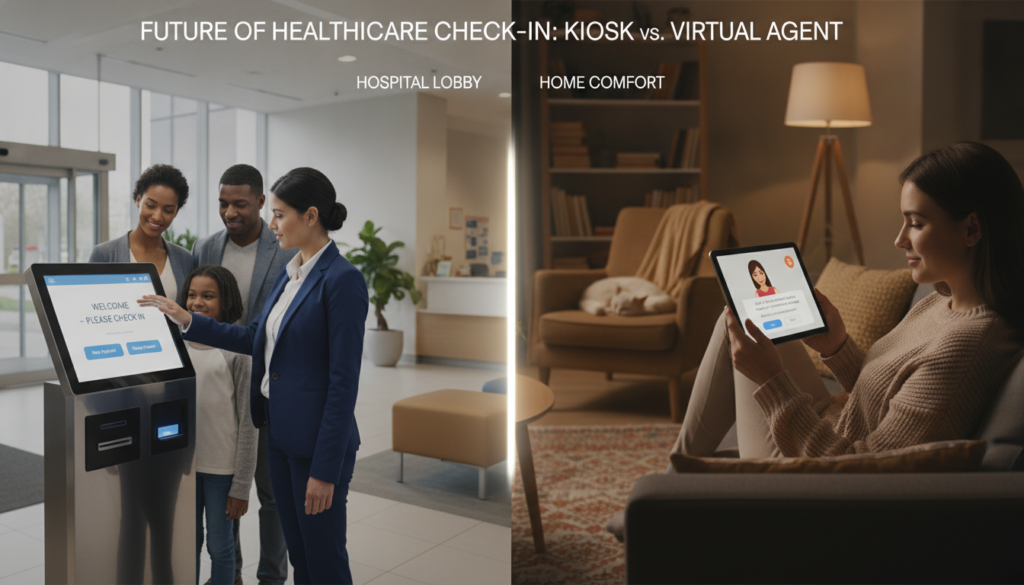
An ambulatory surgery center outsourced patient scheduling and insurance checks. This cut no-show rates from 12% to 6% with better communication. The virtual check-in patient experience also improved operations.
This led to $250,000 more in annual revenue. The center also reduced staff stress by avoiding constant phone calls. Staff could focus more on patient care.
| Organization Type | Service Outsourced | Key Metric Improvement | First-Year Savings | ROI Percentage |
|---|---|---|---|---|
| 250-bed Community Hospital | Revenue Cycle Management | A/R Days: 52→38, Denials: 9%→4.5% | $1,200,000 | 182% |
| 45-Provider Physician Group | Medical Coding | Coding Accuracy: 87%→96% | $780,000 | 163% |
| Regional Health System | IT Services | Downtime Reduction: 60%, 5 FTE Eliminated | $340,000 | 147% |
| Ambulatory Surgery Center | Patient Scheduling | No-Show Rate: 12%→6% | $250,000 | 189% |
Critical Insights from Implementation Experiences
These case studies show patterns for success or failure in healthcare outsourcing. Organizations that did well shared common strategies. You can apply these to get the best results for your facility.
Successful organizations carefully chose their vendors. They looked at expertise, fit, and track record. Price was important but not the only factor. Choosing the cheapest often led to poor results.
Having realistic expectations was key for satisfaction. Savings usually showed up in months 6-12. Early months were about learning and adjusting.
Having internal champions was vital for success. These leaders managed vendor relationships and solved problems quickly. They acted as a bridge between the outsourcing team and staff. Without them, issues often grew and hindered progress.
Good communication turned resistance into support. Facilities explained changes well to staff. They addressed concerns openly and involved staff in improvements. This reduced anxiety and built support for new systems.
The best organizations saw outsourcing as a partnership, not just a deal. They worked closely with vendors to keep improving. Regular reviews and open talks helped find ways to do better. This approach led to better savings over time.
Failures also taught valuable lessons. Poor research led to bad partnerships and unmet goals. Some didn’t set clear goals before starting. Others ignored the need for change management, causing staff resistance.
Bad communication between teams and vendors caused problems. Some set unrealistic goals that stressed everyone. Others tried to control outsourced work too much, losing benefits. Learning from these mistakes helps avoid similar problems.
Some found outsourcing didn’t fix deep process issues. If your workflows are flawed, vendors won’t help much. Fix these problems first to get the most from outsourcing. Document your current processes well so vendors understand your starting point.
These examples show big first-year gains are possible. Your results will depend on your situation and challenges. But these stories show strategic outsourcing can bring real value with careful planning and effective management.
Future Trends in Healthcare Outsourcing
Healthcare organizations need to know about new trends to get the most from outsourcing. The field is changing fast. Knowing these changes helps you find chances to make more money over time.
Being able to see and adapt to new trends is key. This lets you use partnerships better in the future. Early adopters can cut costs and work more efficiently.
How Technology Transforms Your Outsourcing Value
New tech is changing how outsourcing helps healthcare. These changes are big, not just small tweaks. They change how work is done and what you get from vendors.
Artificial intelligence and machine learning are making coding and billing better. They can code claims on their own and find mistakes before they happen. This means you can save money and make sure claims are correct.
Robotic process automation is taking over simple tasks. It does things like data entry and checking claim status without help. This makes things faster and more accurate.
Cloud-based systems make sharing data easier. They help you work with vendors without long delays. This makes it cheaper to start working with new vendors or add services.
Predictive analytics tools help vendors make better decisions. They predict how much money you’ll make and suggest the best staff levels. This means you can make smarter choices based on data.
Natural language processing makes it easier to understand medical documents. It helps with coding and following rules. With HIPAA compliance virtual staff, it keeps patient info safe while getting you more money.
When picking vendors, look at their tech plans. Partners who invest in new tech will offer more value over time. Ask about their use of AI and automation to see if they’re ready for the future.
Market Growth and Emerging Opportunities
The healthcare outsourcing market is growing fast. It’s expected to go from $300 billion in 2023 to over $500 billion by 2030. This growth is because of cost-cutting, more rules, and more people accepting outsourcing.
Several things are pushing this growth. Healthcare groups need to save money and meet new rules. Outsourcing is now seen as a good way to handle tasks that used to be done in-house.
New areas for outsourcing are opening up:
- Patient experience management: Handling communications and surveys across different points of contact
- Population health coordination: Managing care for patients with ongoing or complex conditions
- Telehealth support services: Helping with scheduling and support for virtual care
- Healthcare analytics: Analyzing data to find ways to improve and track results
These new areas are tasks that used to be done in-house but are now being outsourced. As vendors get better at these tasks, they offer more value and cost savings.
Value-based care models are opening up new outsourcing chances. These models focus on quality and patient outcomes, not just numbers. Vendors are getting better at measuring quality and tracking results. If you’re in value-based contracts, outsourcing can help you succeed while handling the extra work.
Automation will keep getting better as tech improves. Vendors will keep getting better at what they do, saving you money over time. This means your investment in outsourcing will keep paying off year after year.
Keeping up with trends lets you grab new opportunities as they come. Choose vendors who will grow with you, using new tech and adding services as needed. Your first-year gains are just the start of the value you can get from outsourcing.
Conclusion: Maximizing Your Healthcare Outsourcing ROI
Starting your journey in healthcare outsourcing means more than just looking at costs. The choices you make today will shape your financial future for years ahead.
Essential Takeaways for Success
First, you need to know your current costs to see real savings. Your current spending is the base for all future comparisons. Keep track of both direct costs and any lost productivity.
Choosing the right partner and services is key to a good ROI in healthcare. Pick areas where you struggle the most or spend the most. Medical billing, IT, and patient management often bring quick returns.
It’s not just about what you think will happen. You must set clear goals and watch them closely from the start. Regular checks help you fine-tune your partnership and find new chances for growth.
Your Implementation Roadmap
Begin by documenting your current processes and costs. This will be your guide for measuring real savings against what you thought you’d save.
When choosing a vendor, focus on strategies that boost ROI. Ask for clear pricing and promises of performance. Also, ask for references from other healthcare clients.
Plan your rollout in phases to avoid too much disruption. Give your team time to get used to new systems and workflows.
Check your progress every quarter in the first year. Use real data to adjust your strategy. This approach turns your outsourcing into a valuable partnership that grows over time.