More than 70% of major healthcare systems now use third-party providers for patient phone calls. When you call your doctor or insurance, you might talk to someone from an outsourced service.
This change has changed how you get medical help. You don’t have to wait until the office opens again.
Many worry that outsourcing means lower quality. But the truth is quite different. Most people find improved accessibility with 24/7 support that wasn’t there before.
When medical places outsource patient support, they make a smart choice. You get help anytime for things like scheduling, refills, and basic questions.
This article shows you what’s happening behind the scenes. You’ll learn how these services work, what to expect when you call, and why they’re becoming more common in American healthcare.
Key Takeaways
- Most major medical facilities now use third-party communication services to handle patient calls and inquiries
- Patients typically gain access to 24/7 patient support services that weren’t previously available during standard office hours
- Outsourced contact services often provide faster response times and reduced wait periods for basic requests
- Quality standards and regulatory compliance remain strict regardless of whether services are handled internally or externally
- The decision to outsource patient support stems from strategic patient care improvements, not just cost reduction
- Modern technology enables seamless integration between third-party providers and your medical provider’s systems
Understanding Healthcare Call Center Outsourcing
Healthcare groups across the country are changing how they talk to patients. They use special outside teams for calls, questions, and scheduling. This change helps patients more while doctors focus on health care.
Choosing outside experts for calls comes from the need for better patient talks. Healthcare is now more about what patients want. So, they expect quick, helpful support.
The Fundamentals of Medical Call Center Services
When you outsource calls, your hospital or clinic works with a special team. They handle scheduling, billing, and health questions. This team is trained to help patients well.
This team works closely with your healthcare. They use secure ways to see your health records and schedule. They follow strict HIPAA rules to keep your health info safe. Learning about healthcare BPO shows how wide these services are.
Medical call centers work in different ways:
- Fully outsourced operations: Everything about patient calls goes to an outside team
- Hybrid models: Your team keeps some staff, but outsources more calls
- Onshore solutions: Call centers in the U.S. for complex health talks
- Offshore options: Call centers abroad for basic needs
- Specialized services: Help for specific tasks like insurance or telehealth
Each way has its own benefits. Big hospitals might choose full outsourcing for many calls. Smaller places might pick hybrid for more personal touch.
Why Healthcare Providers Choose to Outsource Patient Support
Outsourcing helps healthcare groups in many ways. It makes care better and saves money. This is key for keeping costs down and quality up.
Access to special skills is a big plus. Call center teams know a lot about health and patient care. They handle sensitive info well and support patients with care.
They also know more than small teams can. When you call, you talk to someone who knows a lot about health.
Scalability is another big plus. Call volumes change a lot, like during flu season. Outsourced teams can grow fast to meet these needs. This means you wait less and get better service.
Outsourcing also saves money. This means more for your care. Here are some ways:
- No need to hire and train call center staff
- Less money for office space and tech
- Save on staff costs and benefits
- Less money for call systems and software
This saved money can go to better equipment and staff. This makes your care better.
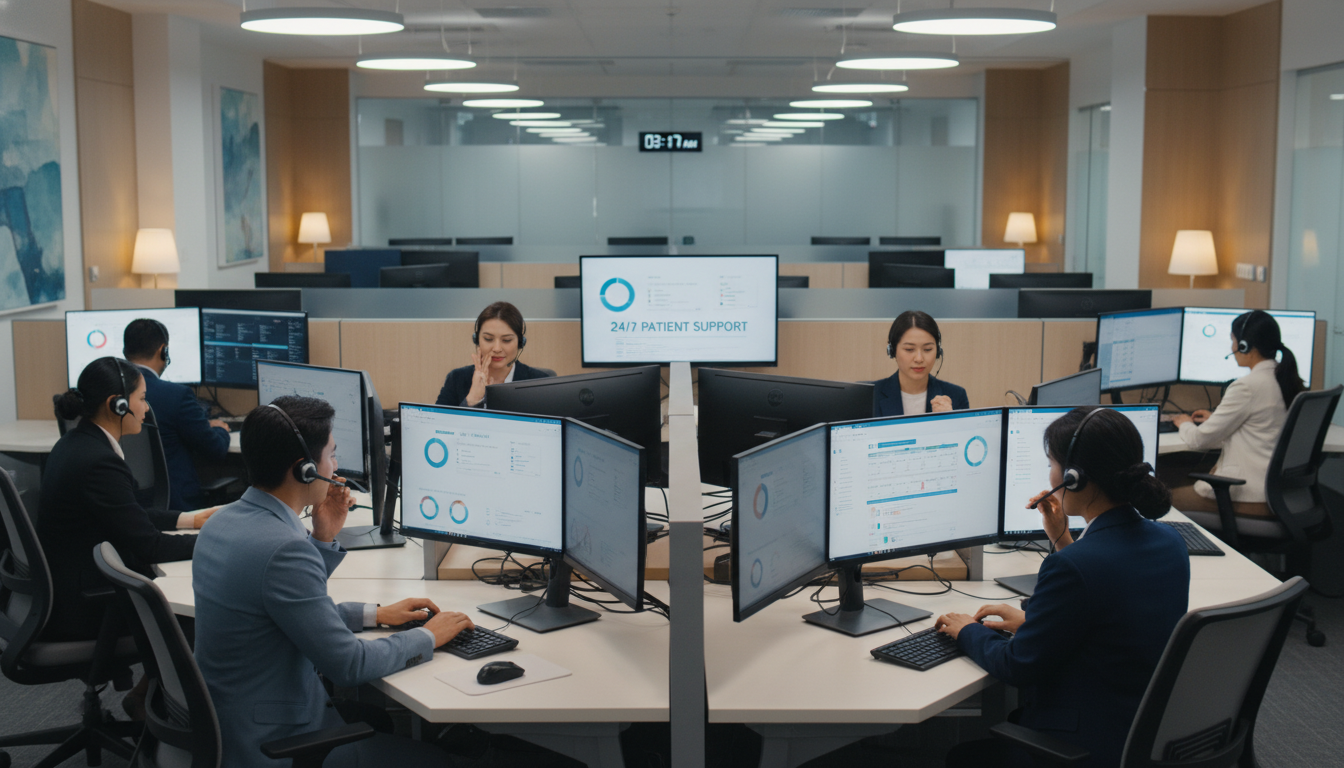
Extended service hours mean better access. Many call centers work all day and night. You can get help anytime, not just during office hours. Your provider doesn’t have to pay for night shifts.
For small practices, call centers level the playing field. A small practice can offer the same service as a big hospital. You get great service, no matter the size of your provider.
Outsourcing shows healthcare is becoming more about what patients want. It’s about being easy to reach and quick to help.
Technology makes these benefits even better. Modern call centers use advanced systems. They know who you are and what you need. This makes talking to them smooth and easy.
Quality is also a big plus. Call centers focus on being good at their job. They check their calls and train often. This means you always get professional and helpful service.
Enhancing Patient Experience Through Outsourcing
Working with medical call center services makes your patient journey better. It’s not just about answering phones. It’s about creating a system that meets your needs.
Every part of your healthcare experience gets better. Scheduling appointments and getting test results is easier. You get access to resources that many can’t offer alone.
Better Communication When You Need It Most
Outsourced call centers make it easier to reach your healthcare provider. Wait times go down because they have enough staff. You don’t have to listen to hold music or leave voicemails.
Every call gets the same high level of service. Whether it’s early morning or late evening, you get the same quality. This means no surprises in service levels.
Language barriers are no problem. Many call centers offer multilingual support. This is great for talking about health issues in your own language.
The people you talk to know a lot about health. They can tell if you need help right away or if it can wait. This helps you feel less stressed.
Quality checks happen all the time to make things better. Calls are recorded and reviewed. Your feedback helps improve service for everyone.
You can communicate in many ways, not just by phone. Modern centers support text, email, and patient portals. This flexibility lets you choose how you want to communicate.
Technology That Works for You
Advanced tech supports 24/7 patient support that feels personal. It connects with your electronic health records securely. This means you don’t have to repeat your medical history every time.
Smart call routing connects you with the right person. For billing questions, you get someone who knows finance. For medical questions, you get someone with medical knowledge.
Automated reminders help you stay on schedule. You get reminders by text, email, or phone. This reduces no-shows and keeps you on track with care.
Secure messaging keeps your health info safe. Your info is encrypted and only seen by those who should see it. This makes talking about health issues private and secure.
The tech makes your experience feel like talking to your doctor’s office. Everyone has access to the same systems and info. This means you get consistent care, no matter who you talk to.
Info is always up to date and accurate. When you schedule an appointment, it shows up right away. Lab results are available quickly, too.
This tech turns your healthcare experience into something proactive. You get quick responses and efficient service. The mix of human skill and tech creates a system that really meets your needs.
Cost-Effectiveness of Outsourcing
When your healthcare provider outsources patient support, big changes happen. These changes affect how much you pay and the quality of care you get. Knowing how call centers work helps you see if your provider is making smart choices.
The world of healthcare finance is very complex. Every dollar spent on office work is a dollar not used for patient care. This makes choosing the right way to run a call center very important for your care.
In-House Operations Versus External Partners
Starting a call center in-house costs a lot. It’s not just about hiring people. Your provider must pay for training, benefits, and more. These costs add up and affect what you pay for healthcare.
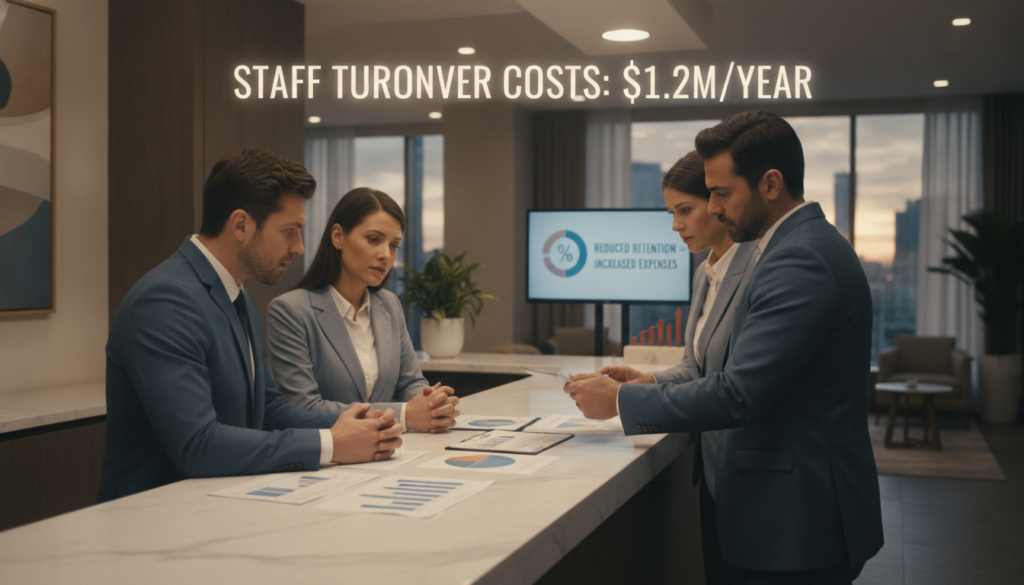
Technology is a big expense. In-house centers need special systems and upgrades. They also face costs from employee turnover, which can be high.

Choosing to outsource patient support helps healthcare groups save money. Medical call center services spread costs across many clients. This can cut costs by 30-50% compared to doing it themselves.
Outsourcing offers different pricing options. This gives healthcare groups more flexibility:
- Per-minute billing: You only pay for the time you talk, from $0.75 to $1.50 per minute
- Per-call pricing: Flat rates of $2 to $5 per call
- Monthly retainers: Fixed costs for a set service level, from $5,000 to $50,000
- Hybrid models: A mix of base fees and extra charges for busy times
Both options have hidden costs. In-house centers face costs from missing work, overtime, and old technology. Outsourcing has costs for starting up, fitting into your systems, and managing vendors.
| Cost Factor | In-House Call Center | Outsourced Solution | Impact on You |
|---|---|---|---|
| Staffing Expenses | $35,000-$45,000 per agent annually plus 25-35% benefits | $0.75-$1.50 per minute usage-based | Lower overhead can mean reduced fees or better service hours |
| Technology Investment | $100,000-$500,000 initial setup, $20,000-$50,000 annual maintenance | Included in service pricing | More resources available for medical equipment and clinical staff |
| Training Programs | $3,000-$5,000 per employee, recurring with turnover | Provider responsibility | Consistent service quality without interruption |
| Physical Space | $25-$50 per square foot annually | No facility costs | Freed space can expand clinical services |
How Savings Translate to Patient Benefits
The money saved by strategic outsourcing decisions can improve your care. It can fund more staff, longer hours, better equipment, or lower costs for you.
Small medical practices save $50,000 to $100,000 a year by outsource patient support. Mid-sized groups save $200,000 to $500,000. Large systems can save millions for patient care.
For example, a healthcare network with 12 clinics saved $430,000 a year by outsourcing. They used this money for more nurses and longer urgent care hours.
You should check if your provider uses these savings to improve your care. Look for signs like more services, better technology, shorter waits, or stable costs. Ask questions about how cost savings help your care during visits.
Understanding what’s included helps see the value. Good outsourcing partners offer 24/7 service, many languages, advanced analytics, disaster recovery, and compliance management. These services would cost a lot if your provider had to build them.
Cost-effective healthcare administration should improve your care. Lower costs mean more money for better services, quality, and affordability. When healthcare groups make smart outsourcing choices, you get better care.
The Impact on Patient Satisfaction
When healthcare providers outsource their call operations, your satisfaction is key. Medical call center services do more than just answer phones. They affect how well you follow treatment plans and how you see the quality of care.
Healthcare groups that focus on patient needs see big wins in satisfaction. They get better because of faster service, clearer talks, and steady service. Your feedback helps shape these services to better meet healthcare needs.
Measuring What Matters to You
Healthcare providers and their partners watch certain numbers to see if call centers meet your needs. These numbers show how well the service is and where it can get better.
First Call Resolution (FCR) shows if your issue is fixed right away. A high FCR rate means reps can solve your problems quickly. This saves you time and reduces stress.
Average Speed to Answer (ASA) is how long you wait to talk to someone. Fast ASA means you talk to someone in under 30 seconds. Long waits can make you hang up and show staffing or system problems.
The Customer Satisfaction Score (CSAT) comes from your feedback after a call. You rate your experience from 1 to 5. Scores above 4.0 mean the service did well. This feedback shows how you really feel about the call.
| Performance Metric | What It Measures | Excellent Benchmark | Impact on Your Experience |
|---|---|---|---|
| First Call Resolution (FCR) | Issues resolved in one contact | Above 70% | Saves your time and eliminates callback frustration |
| Average Speed to Answer (ASA) | Hold time before reaching representative | Under 30 seconds | Reduces waiting and improves accessibility |
| Net Promoter Score (NPS) | Likelihood to recommend provider | Above 50 | Reflects overall satisfaction with healthcare experience |
| Call Abandonment Rate | Percentage hanging up before connection | Below 5% | Indicates adequate staffing and reasonable wait times |
Net Promoter Score (NPS) asks if you’d recommend the healthcare provider. Scores above 50 are great. This shows your trust and confidence.
Call abandonment rate shows how many hang up before talking to someone. Low rates mean enough staff. High rates mean 24/7 patient support needs to improve.
Success Stories from Real Healthcare Settings
Real stories show how outsourcing can change patient experiences. These examples show big improvements in different healthcare settings and with different patients.
A Texas orthopedic practice had trouble scheduling appointments. After using medical call center services, wait times dropped to under 2 minutes. Satisfaction went up by 32% in six months, and no-shows fell by 15%.
A Montana hospital had trouble with after-hours support. They used 24/7 patient support and cut down on emergency visits by 18%. Patients got help anytime, improving health and saving money.
A California clinic added Spanish support for Hispanic patients. Satisfaction among Spanish speakers went up by 41%, and appointment rates rose by 28%.
A pediatric network in a big city used automated reminders in many languages. Missed appointments fell by 22%, and parents liked the easy reminders.
These stories share key points: choosing the right vendor, setting clear goals, and checking quality often. When healthcare picks the right partner, your experience gets better. You get faster service, less waiting, and better communication.
Ensuring Regulatory Compliance
When you share medical details over the phone, strict federal laws protect your privacy. These laws are key when healthcare providers outsource patient support. Knowing these laws helps you trust that your information is safe.
Regulatory compliance is more than just a rule for healthcare organizations. It’s a system to protect your rights as a patient. Every call about appointments, prescriptions, or billing questions is protected by law.
Why HIPAA Matters When You Call Healthcare Centers
The Health Insurance Portability and Accountability Act, or HIPAA, is a key law for healthcare privacy in the U.S. It sets strict rules for handling your Protected Health Information (PHI). When you talk to medical call centers, HIPAA rules apply to every word and data point.
HIPAA violations can cost healthcare organizations up to $1.5 million per violation category each year. This risk makes providers very careful with your privacy, whether they handle calls themselves or use external centers.
Call centers must follow several important rules:
- Business Associate Agreements (BAAs) make clear who is responsible for protecting your information
- Encryption requirements keep your data safe from unauthorized access
- Access controls limit who can see your records
- Audit trails track who accesses your information and what they do
- Training mandates ensure staff knows about HIPAA rules
You also have rights under HIPAA. You can ask how your data is used and shared. If there’s a breach, you’ll be notified quickly. You can also file complaints with the Department of Health and Human Services if you think your privacy was broken.
How Professional Outsourcing Partners Maintain Your Privacy
Companies that outsource patient support often have stronger compliance programs than in-house call centers. They invest in security because protecting healthcare privacy is their main job. Their success depends on keeping the trust of healthcare organizations and patients.
Professional outsourcing partners offer several benefits:
- Dedicated compliance teams keep up with changing laws and update procedures
- Enterprise-grade technology includes advanced security systems and cloud platforms
- Independent audits check compliance and find vulnerabilities
- Continuous training programs keep staff up-to-date on security
- Incident response plans handle security concerns or breaches quickly
You should ask your healthcare provider about their outsourcing partner’s credentials. Look for certifications like HITRUST or SOC 2. Also, ask if they do regular security tests and assessments.
The breach history of an outsourcing partner shows their commitment to security. Reputable call centers have clean records and openly talk about their security measures. They know your trust is based on their performance, not just promises.
| Compliance Element | What It Protects | How You Benefit |
|---|---|---|
| HITRUST Certification | Comprehensive security framework covering technical, physical, and administrative controls | Ensures the call center meets healthcare industry’s highest security standards |
| SOC 2 Type II Audit | Security, availability, confidentiality, and privacy of customer data systems | Provides independent verification that controls work effectively over time |
| Regular Penetration Testing | Identifies vulnerabilities before hackers can exploit them | Proactive protection that prevents data breaches before they occur |
| Business Associate Agreement | Legal accountability for protecting your PHI according to HIPAA standards | Creates enforceable consequences if the outsourcing partner mishandles your information |
When healthcare providers choose the right outsourcing partners, they often improve privacy protection. The key is to pick partners who see compliance as an ongoing effort. Your health information deserves this level of protection.
Training and Quality Assurance
Quality healthcare communication comes from structured training and quality checks. These steps protect your interests. When you call your healthcare provider’s call center, you talk to well-prepared people. They know how to handle your medical concerns.
These representatives have gone through a lot of training before they start helping you. This training makes your interactions better and improves your satisfaction with healthcare.
Comprehensive Training Programs That Protect Your Healthcare Experience
Your call center representative has been trained for three to six weeks. This training covers important areas that affect your experience. They learn medical terms to talk about your health concerns.
They also learn about your healthcare provider’s specific rules and how to use systems like scheduling and prescription refills. They know how to keep your health information private.

They get training in communication skills too. This includes being empathetic, listening well, and knowing how to calm down upset patients. These skills are key to a good experience during stressful times.
They also learn how to use your healthcare provider’s electronic health records and other technology. This helps them find your information quickly and accurately. They know how to decide when you need to see a doctor right away or when you can schedule an appointment.
Representatives at medical call center services get more training than others. This means you’re more likely to talk to someone who really understands your medical questions.
“The quality of healthcare call center interactions depends entirely on the depth of training representatives receive before they ever speak with their first patient. Complete preparation programs create the foundation for positive patient experiences.”
Training doesn’t stop after the initial program. Representatives keep learning with ongoing education. This includes regular updates and practice with difficult situations. Some even get to watch experienced representatives work.
This ongoing learning helps representatives stay up-to-date with your healthcare provider’s systems. Knowing this helps you appreciate the expertise behind the voice helping you and sets the right expectations for the service you get.
Continuous Monitoring Systems That Improve Your Service
Many quality checks work together to make sure you get good service. These checks make sure service is consistent and find ways to get better. Call monitoring and evaluation are key in outsource patient support operations.
Supervisors check recorded calls using scorecards. They look at how well representatives do their job, how they communicate, and how well they follow rules. This ensures representatives meet high standards that protect your experience.
Calibration sessions help supervisors agree on how to evaluate calls. This makes sure everyone is consistent. You benefit from this because it keeps quality steady.
Supervisors can listen to calls live and give feedback right away. This helps representatives get better at their job while helping patients like you.
Your feedback is very important. Surveys ask for your honest thoughts on the service. Healthcare organizations and their partners use this feedback to get better.
Mystery shopper programs also check service quality. Trained evaluators pretend to be patients to see how well service is. This gives unbiased feedback on your experience. Just like healthcare providers manage denial management processes, call centers have structured ways to fix service issues.
Performance dashboards track important metrics in real-time. These tools show how well representatives do their job. You benefit from this because it makes everyone accountable.
| Quality Assurance Method | What It Measures | How It Benefits You |
|---|---|---|
| Call Monitoring | Technical accuracy, communication quality, protocol adherence | Ensures consistent, professional service on every call |
| Patient Surveys | Overall satisfaction, specific service elements, likelihood to recommend | Your feedback directly influences service improvements |
| Mystery Shopping | Real-world patient experience, system navigation, representative responsiveness | Provides unbiased assessment of actual service quality |
| Performance Dashboards | Call metrics, resolution rates, accuracy scores, satisfaction trends | Creates data-driven accountability for service excellence |
Quality checks lead to action. Representatives who need work get more training. Top performers earn recognition and rewards, which motivates the team.
When quality checks find big issues, organizations make big changes. These changes might be new scripts, better workflows, or new technology. The goal is always to make your experience better.
Technology gets better because of quality checks. If representatives struggle with systems, organizations get better tools. This makes their job easier and helps you get faster, more accurate service.
Knowing about these quality checks shows you that your experience is always being watched and improved. Your feedback helps make service better. Your opinions shape the quality of medical call center services you get in the future.
Challenges in Healthcare Call Center Outsourcing
Outsourcing patient support has its ups and downs. It can affect your care quality. Knowing these challenges helps you spot problems and push for better service.
Healthcare groups face big choices when they outsource. It’s more than just passing calls to another company. They need to plan well, watch over the process, and keep improving to meet your needs.
Common Pitfalls to Avoid
Inadequate system integration is a big problem. Call center reps might not see your medical records. This means you have to give out your info again and again.
This tech issue makes you frustrated and wastes your time. You call for quick answers but end up explaining things for 20 minutes.
Insufficient training specific to your provider’s protocols is another issue. Call center staff might give you wrong info about your provider. This happens when they don’t know your provider’s specific rules.
Language and cultural barriers are big issues with offshore call centers. You might have trouble understanding reps or they might not get your concerns. This can lead to mistakes like wrong appointment times or not taking your symptoms seriously.
The loss of personal connection is hard for long-term patients. When your provider had an in-house call center, staff knew you. Outsourced support means new reps every time, who don’t know your health history.
Inconsistent service quality is a problem when call centers handle many clients. They might mix up rules between different places. You might see different wait times, levels of help, and service standards.
Poor communication between the call center and your doctor’s office is dangerous. Messages about your care might not get through. This can slow down your treatment and harm your health.
Not enough staff during busy times defeats the purpose of outsourcing. Your provider might have wanted to make it easier to get help. But if the call center isn’t staffed right, you’ll wait a long time and get rushed service.
Warning signs that your provider’s outsourcing isn’t working include:
- Having to tell the same info to different reps
- Getting callbacks for things you’ve already fixed
- Getting wrong appointment confirmations
- Reps who don’t know basic office rules
- Longer wait times than before
- Getting wrong info that doesn’t match what your provider says
Addressing Patient Concerns About Outsourcing
Your worries about privacy and security are valid. You want to know if your medical info is safe with an outside company. HIPAA rules protect your info, whether it’s in-house or outsourced.
Good call center partners sign agreements to follow HIPAA. These agreements say how they’ll keep your data safe and what they’ll do if they don’t.
You should ask your healthcare provider these questions about their partner’s security:
- What HIPAA compliance certifications does the call center hold?
- How do they encrypt patient data during transmission and storage?
- What background checks do they perform on representatives?
- Where are the call centers physically located?
- How often do they undergo third-party security audits?
Concerns about quality of care focus on if professional 24/7 patient support is as good as before. Good outsourced call centers often do better than small in-house teams. They have better tech, training, and quality checks.
The key is in how well the outsourcing is done. A provider that picks the right partner, trains well, and watches over things usually does better.
Modern systems help reps know your full history and preferences. This means they can give you personalized, informed service even if they don’t know you personally.
Communication barriers are a worry, mainly with offshore call centers. You might struggle to understand reps or be understood. Providers try to pick partners who speak clearly and provide training to help.
You can ask your provider to use domestic call centers if you’re worried about understanding. Many offer this option, but it might affect hours or response times because of costs.
Emergency response is a big concern. You want to be sure call center reps can handle urgent situations. Good call centers train reps to spot and handle emergencies well.
| Patient Concern | How Quality Providers Address It | Questions You Should Ask |
|---|---|---|
| Privacy and Security | HIPAA compliance, encrypted systems, Business Associate Agreements, regular security audits | What security certifications does your call center partner maintain? |
| Service Quality | Quality assurance monitoring, performance metrics, regular training updates, patient satisfaction surveys | How do you measure and ensure call center quality? |
| Personal Connection | CRM systems with patient history, interaction notes, preference documentation, continuity protocols | Can representatives see my previous interactions and preferences? |
| Communication Barriers | Language proficiency requirements, onshore options, accent training, cultural competency education | Where are your call center representatives located? |
| Emergency Recognition | Medical triage training, escalation protocols, direct lines to clinical staff, 24/7 provider access | How do representatives handle urgent medical concerns? |
These challenges are real, but they can be managed. The success of outsourcing depends on the partner, how it’s done, and ongoing checks. It’s not just about outsourcing itself.
You deserve top-notch patient support, whether it’s in-house or outsourced. Speak up if service isn’t good enough. Think about these points when choosing healthcare providers.
Choosing the Right Outsourcing Partner
Not all medical call center services are the same. The partner your healthcare provider picks affects every phone call you make. They are the first voice you hear, who schedules your appointments, and answers your billing questions.
Understanding what makes a great partner helps you see if your healthcare provider made a good choice. This choice is important for your health care.
The selection process needs careful thought. Your provider should see this as a strategic partnership, not just a way to save money. The best partnerships make patient experiences seamless, like talking to an in-house employee.
Critical Questions for Vendor Evaluation
Healthcare organizations should ask specific questions when evaluating companies that outsource patient support. These questions show if a vendor can deliver excellent patient service. You can also ask your healthcare provider about their chosen partner using these same criteria.
Experience and Healthcare Focus: The vendor should show they have experience in healthcare call centers, not just general customer service. Ask what types of healthcare organizations they serve and how long they have been in the medical field. Healthcare requires special knowledge that generic call centers lack.
Your provider should ask about the vendor’s client portfolio. A company that mainly serves retail or technology clients will struggle with healthcare’s unique needs. Look for vendors where at least 75% of their business focuses on healthcare clients.
Compliance Credentials: HIPAA compliance is a must for medical call center services. Your provider must ask for proof of recent security audits, compliance certifications, and privacy training programs. Request copies of their Business Associate Agreement and evidence of cybersecurity insurance.
Vendors should undergo regular third-party compliance audits. Ask when their last audit occurred and if they can share the results. Companies that take privacy seriously welcome these questions.
Staff Quality and Training: The quality of call center representatives impacts your experience. Your provider should ask about average representative tenure and the details of training programs. High turnover rates and minimal training indicate serious service quality problems.
Look for vendors with tenure rates above 18 months and training programs lasting at least four weeks. Representatives should receive ongoing education about medical terminology, your provider’s specific procedures, and customer service best practices.
Technology Integration: The vendor’s technology platforms must work well with your provider’s systems. Ask what platforms they use and how they will connect with electronic health records, scheduling systems, and billing software. Poor integration creates information gaps that frustrate patients and lead to errors.
Request demonstrations of their technology and ask for references from clients using similar systems. The integration should allow representatives to access your information in real-time without putting you on hold to check multiple systems.
Performance Metrics and Guarantees: Accountability matters when you outsource patient support. Your provider should establish clear performance metrics and ask what guarantees the vendor offers. These might include maximum wait times, call abandonment rates, first-call resolution percentages, and patient satisfaction scores.
The vendor should provide regular reporting on these metrics. Ask what happens if they fail to meet agreed-upon standards. Strong vendors offer service level agreements with financial penalties for performance failures.
Staffing and Volume Management: Call volumes change throughout the day and across seasons. Your provider should ask about the vendor’s staffing model and how they handle volume spikes. Understaffing leads to long hold times during busy periods, creating frustration when you need help most.
The vendor should have flexible staffing arrangements and backup plans for unexpected volume increases. Ask about their staff-to-call ratios during peak times and whether they use predictive analytics to anticipate busy periods.
Location and Communication Quality: Where the call centers are located affects language capabilities and cultural fit. Your provider should ask whether the vendor offers onshore, offshore, or hybrid options. Consider what matters most for your patient population.
Some patients prefer speaking with representatives in the same country who share cultural references and language patterns. Others prioritize cost savings over location. Your provider should match the location strategy to patient preferences and the complexity of calls handled.
Quality Assurance Processes: Continuous improvement requires robust quality assurance measures. Ask what processes the vendor has in place for monitoring calls, evaluating performance, and handling patient complaints. This reveals their commitment to maintaining high standards.
Strong vendors monitor a significant percentage of calls, provide regular feedback to representatives, and have clear escalation procedures for problems. They should welcome patient feedback and use it to improve service quality.
Business Continuity Planning: Disasters and outages can disrupt call center operations. Your provider needs assurance that service will continue even during emergencies. Ask about the vendor’s business continuity plan and backup facilities.
Look for vendors with multiple call center locations and redundant technology systems. They should have detailed disaster recovery plans that have been tested regularly, not just theoretical documents that sit on a shelf.
Assessing Healthcare Expertise and Specialization
Healthcare-specific experience is key when choosing medical call center services. The specialized knowledge required for healthcare support differs significantly from generic customer service operations. Your provider must verify that the partner has genuine expertise in the medical field.
Healthcare call centers need representatives who understand medical terminology and common conditions. They must navigate complex regulations like HIPAA while working with healthcare-specific technology platforms such as Epic, Cerner, or Athena. Understanding insurance verification and prior authorization processes is essential, as is the ability to appropriately triage patient concerns and identify urgent situations.
Evaluating Healthcare Credentials: Your provider should examine several factors when assessing a vendor’s healthcare expertise. Years of experience in healthcare matter more than general call center experience. A company with 20 years in retail customer service but only two years in healthcare lacks the depth of knowledge needed.
The percentage of business focused on healthcare clients reveals commitment to the industry. Specialists who dedicate their entire operation to healthcare understand the nuances better than companies that occasionally work with medical clients. Look for vendors where healthcare represents at least 75% of their business.
Certifications and training credentials show investment in healthcare knowledge. Ask what certifications their staff hold and what continuing education programs they offer. Medical terminology courses, HIPAA training, and customer service certifications all indicate a commitment to excellence.
Case studies showing successful healthcare implementations provide concrete evidence of capability. Request examples of similar organizations they have served and the results achieved. Strong vendors can demonstrate improved patient satisfaction scores, reduced wait times, and successful technology integrations.
Specialization in your provider’s specific healthcare sector adds significant value. A vendor experienced with hospital systems may struggle with the different needs of private practices or specialty care clinics. Ask about their experience in your provider’s particular segment of healthcare.
| Evaluation Criteria | What to Look For | Red Flags | Ideal Standard |
|---|---|---|---|
| Healthcare Experience | Minimum 5 years exclusively in medical call centers | Less than 3 years or mixed industry experience | 10+ years with 90% healthcare focus |
| Staff Retention Rate | Average tenure above 18 months | High turnover with average tenure under 12 months | 24+ months average tenure |
| Compliance Credentials | Recent third-party HIPAA audits with documentation | Self-certification only or audits older than 2 years | Annual audits with clean findings |
| Training Program | 4+ weeks initial training with ongoing education | Less than 2 weeks training or no continuing education | 6-8 weeks of training plus monthly updates |
| Technology Integration | Experience with your specific EHR platform | Generic systems with no healthcare integration experience | Pre-built integrations with major healthcare platforms |
Cultural Fit and Partnership Quality: Beyond technical capabilities, cultural alignment between your healthcare provider and their outsourcing partner determines long-term success. The vendor should share your provider’s values around patient care and demonstrate a communication style that matches your organization’s approach.
The best outsourcing relationships function as true partnerships. The call center should feel like an extension of your healthcare provider’s team, not just a vendor providing a commodity service. Representatives should be empowered to make decisions that benefit patients, not just follow strict scripts.
Willingness to customize service matters a lot. Vendors who force a one-size-fits-all model often fail to meet your specific needs. Look for partners who adapt their processes to fit your organization, not the other way around.
When you understand what makes a great partner for those who outsource patient support, you can better assess if your healthcare provider made a wise choice. If you think their current partner is not up to par, you have a reason to push for better standards. Your voice matters in improving patient communication experiences.
Future Trends in Healthcare Call Center Outsourcing
The world of medical call centers is changing fast. New technology will make talking to your healthcare team better. You’ll get faster and more personal service soon.
Smart Technology Reshaping Patient Communication
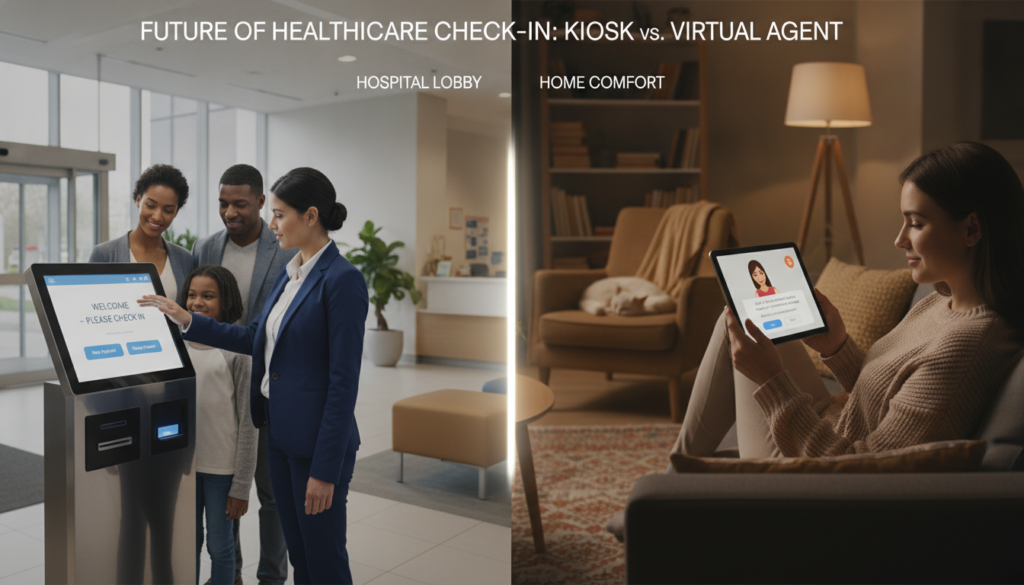
Artificial intelligence is changing how we talk to healthcare teams. Virtual assistants now do things like book appointments and refill prescriptions. You can talk to them like you would a person.
These systems learn from your past to guess what you might need next. They might remind you about your flu shot or suggest a follow-up visit. If you sound upset, they quickly connect you with a real person.
Top providers mix AI and human help. AI handles simple stuff, while people deal with the tough stuff. This way, you get quick answers and caring support when you need it.
Integration with Comprehensive Care Platforms
Call centers are doing more than just scheduling now. They help with video calls and fix tech problems during virtual visits. They also work with your connected devices for remote monitoring.
Call centers connect you with specialists and your primary care team. This means better support and more care between visits. Technology helps make your care more personal, not less.