Did you know that medical organizations spending more than 30% of their budget on administrative tasks can cut costs by up to 50% within just one year? This striking figure reveals why the choice between external partners and internal staffing has become one of the most critical decisions your organization will face in 2026.
The landscape of medical operations is shifting rapidly. Workforce shortages continue to strain resources. Patient expectations keep rising. Cost pressures show no signs of easing.
Your organization needs a staffing solution that balances quality, efficiency, and financial sustainability. The decision between outsourcing specialized functions and building internal teams isn’t simple. Each approach offers distinct benefits and challenges.
This comparison will help you understand both operational models. You’ll see how each option affects your bottom line, service quality, and strategic goals. Most importantly, you’ll learn that there’s no universal answer. What works for a large hospital system may not suit a regional clinic or specialty practice.
Key Takeaways
- Organizations with administrative overhead above 30% typically see the greatest cost savings from outsourcing specialized functions
- The choice between external partners and in-house teams depends on your specific operational requirements, strategic objectives, and financial position
- Workforce shortages and rising patient expectations make this decision more critical than ever in 2026
- Both operational models offer unique advantages in areas like cost control, quality management, and scalability
- Large hospital systems and smaller regional practices often require different staffing approaches to optimize performance
- Understanding the full impact on service quality, compliance, and long-term sustainability is essential before making your decision
Understanding Healthcare BPO
Your healthcare group is under a lot of pressure to work better and keep patient care top-notch. Costs are going up, and rules are getting stricter. Many hospitals are looking at new ways to staff, like outsourcing.
The debate on healthcare staffing outsourcing is about finding a balance between saving money and keeping quality high. You need to know what BPO is and how it’s different from hiring people directly. This knowledge helps you decide if outsourcing fits your goals.
When comparing healthcare BPO vs in-house, you look at many areas. Each option has its own good points and challenges. Your choice affects your money, flexibility, and how happy your patients are.
The Scope of Business Process Outsourcing
Healthcare BPO means working with outside companies for tasks like billing and scheduling. These tasks don’t need doctors but are key to your work. It lets your team focus on medical care.
These outside companies offer many services, like medical billing and coding. These jobs need special knowledge of insurance and rules that change often.
Outsourcing billing has gotten better. Many places now send all their billing to outside companies. This can help your money flow better and make your team’s job easier, like dealing with denial management.
Other tasks often outsourced include:
- Claims processing and insurance checks
- Scheduling and appointment planning
- Medical writing and document help
- Keeping health records
- Customer service and talking to patients
- Help with telemedicine
Outsourcing is growing as technology gets better. Some places now send out tasks like writing medical notes and helping with care plans. This shows more trust in BPO companies’ skills and safety.
Key Advantages of External Partnerships
Healthcare staffing outsourcing has big benefits. Getting help from experts is a big plus. BPO companies focus on certain tasks and know them very well.
Knowing what you’ll spend helps a lot. Outsourcing means fixed costs, so you can plan better. You won’t worry about extra expenses or finding new staff.
Being able to grow or shrink quickly is another big plus. Outsourcing companies can change how much work they do fast. This is great when you get more patients or need to do more work.
Most BPO companies use the latest technology. They spend a lot on software and keeping things safe. You get to use these tools without spending a lot of money.
Starting new things fast is easier with outsourcing. Outsourcing companies can start new projects in weeks, not months. This helps you keep up with changes or new rules.
Key benefits include:
- Less work for leaders
- More focus on patient care
- Lower costs because of scale
- Access to the best ways of doing things
- Less risk because of service guarantees
By using outsourcing, you can focus on what really matters. This can make your organization better and stand out in your field.
Potential Drawbacks and Risk Factors
Even with its benefits, healthcare BPO has its downsides. Losing control over how things are done worries many leaders. When you use outside companies, you can’t change things as quickly.
It can be hard to talk to your team and the outside companies. Different places, cultures, and goals can cause problems. This can slow things down and make solving problems harder.
Being too dependent on outside companies is a big risk. Being too reliant on them can leave you in trouble if things go wrong. Switching to a new company or bringing things back in-house can be expensive and hard.
Keeping patient data safe is a big worry when you use outside companies. Even though good BPO companies have strong security, you’re always responsible for keeping patient info safe. You have to watch out for rules like HIPAA all the time.
Quality can be a problem, even with agreements. Outsiders might not know your place as well as your team does. This can lead to service that doesn’t match your values.
Common problems include:
- Different cultures and goals
- Hard to manage outside relationships
- Disruptions when switching
- Hard to see what’s happening every day
- Contracts that don’t fit your needs
These issues don’t mean you should never use BPO. But you need to do your homework and make a good contract. You should have clear goals, ways to talk, and plans for when things go wrong before you start.
Knowing both the good and bad of BPO helps you make a smart choice. Next, you’ll look at the other option: having your own team. This will help you decide what’s best for your place and goals.
The Case for In-House Staffing
The debate on whether to outsource or have in-house healthcare staff is ongoing. Many places choose to build their own teams. This lets them control all aspects of their healthcare operations.
Knowing about the in-house model helps you make smart choices for your future. You must think about the good of having control versus the work of managing your team. Your choice depends on your situation, resources, and plans for the future.
Understanding Internal Workforce Management
Having an in-house team means you hire everyone who works for you. Your HR team finds and interviews candidates. They also decide who to hire.
You also provide training and set standards for performance. You manage your operations without outside help.
This model is more than just paying employees. You handle their pay, benefits, and career growth. You create the work environment and culture for your team.
When comparing, in-house teams report directly to your managers. They work only for you and know your processes well. This creates a team that shares your mission and values.
Key Benefits of Building Your Own Team
Having your own team has many advantages. You can oversee quality and solve problems quickly. Your team fits your culture and values.
- Complete Operational Control: You decide on processes and standards without outside help.
- Direct Quality Oversight: You can check quality and fix problems right away.
- Cultural Alignment: Your team shares your values and is committed to your mission.
- Enhanced Communication: Your team works well together without outside barriers.
- Process Customization: You can make workflows fit your needs exactly.
- Institutional Knowledge: Your team knows your operations well over time.
- Employee Loyalty: Long-term jobs lead to dedication and less turnover.
- Unified Team Identity: Everyone feels part of the same team, improving teamwork.
Your team gets specialized skills for your specific needs. They know your patients, rules, and challenges well. This is a big advantage over outside teams.
Challenges You’ll Face with Internal Teams
In-house teams have big benefits but also big challenges. You’ll spend a lot of money and time on your team. This includes everything from salaries to training.
When choosing between in-house and outside teams, remember these big challenges:
- High Recruitment Costs: Finding and hiring good people costs a lot.
- Administrative Complexity: Handling payroll and HR needs a lot of work and systems.
- Limited Scalability: Changing your team size is hard and expensive.
- Restricted Expertise Access: Hiring experts for special jobs is expensive, even if you only need them sometimes.
- Ongoing Training Requirements: Keeping your team’s skills up to date costs a lot.
- Fixed Cost Burden: Your team’s costs stay the same, even if your work changes.
- Turnover Management: Losing team members is costly and creates gaps in knowledge.
- Performance Issues: Dealing with poor performance takes time and can distract from your main work.
Being in-house also means more hidden costs. You’ll need space, equipment, and technology. These costs add up fast and can hurt your budget if you’re not careful.
| Consideration Factor | In-House Impact | Resource Requirement |
|---|---|---|
| Workforce Flexibility | Limited ability to scale quickly | High planning lead time needed |
| Specialized Skills | Must hire full-time specialists | Significant salary investment |
| Operational Costs | Fixed expenses regardless of volume | Continuous financial commitment |
| Management Attention | Requires dedicated HR oversight | Substantial administrative time |
Your organization needs to weigh the benefits of control and culture against the costs. You must consider your budget, management time, and plans. Knowing both sides helps you make a better choice.
Cost Analysis: BPO vs In-House
Looking at the costs of BPO versus in-house operations helps you decide. You need to consider many costs that affect your budget for years. This detailed look shows where your money goes and which option is better for you.
Comparing costs between outsourcing and in-house healthcare is more than just salaries. You must think about infrastructure, technology, and overhead costs. Knowing these costs helps you make choices that fit your budget and goals.
Upfront Expenses: What You’ll Pay From Day One
The first costs are different for each option. BPO partnerships usually need less money upfront because you use the provider’s setup and staff. You’ll pay for transition, integration, and contract fees, but it’s less than starting from scratch.
Going in-house means a big upfront cost. You’ll spend on hiring, onboarding, and setting up workspaces. Setting up a workspace for each employee can cost thousands, including equipment and furniture.
Technology is another big upfront cost for in-house teams. You’ll buy software, set up systems, and hire IT support. These costs take a lot of money that could help patients or grow your clinic.
Training costs also vary a lot. BPO providers come with staff already trained in healthcare. In-house teams need a lot of training, which delays their work and increases costs.
Ongoing Financial Impact Over Multiple Years
The long-term costs show the real difference between BPO and in-house. BPO contracts have fixed monthly or per-transaction costs that grow with your needs. This makes budgeting easier and avoids unexpected costs.
In-house teams have high fixed costs that don’t change with patient numbers. Salaries keep going even when it’s slow, and benefits add a lot to the cost. Insurance, retirement, and time off add 30-40% to salaries.
Technology upkeep is an ongoing cost for in-house teams. You’ll need to update software, replace hardware, and keep systems safe. These costs add up over time, needing IT staff and budget that could go to healthcare.
BPO savings become clearer over time. While BPO might cost more upfront, you save on payroll taxes, insurance, and unemployment. These savings can be 20-40% over three to five years.
Don’t forget about contract increases. Most BPO deals have annual rate hikes. Talk about these increases in the beginning to keep costs down.
Expenses That Catch Organizations Off Guard
Both models have hidden costs that can surprise you. BPO partnerships need time for vendor management from your team. This includes performance reviews, audits, and keeping the relationship strong, which costs real money.
Quality issues might need fixing in BPO, which costs your team time and can affect patient happiness. You might also face fees for changing the contract or adding services.
Switching to a new BPO or bringing operations in-house has its own costs. You’ll pay for transition, training, and temporary losses in productivity. These costs can be high and should be part of your initial decision.
In-house teams have hidden costs too. Replacing employees can cost 50-200% of their salary for lost work, hiring, and training. High turnover drains your resources without showing up in budgets.
Compliance and audits are big hidden costs for in-house teams. You’ll spend on training, systems, and checks to stay legal. This takes staff time and consultant fees all year.
The money you spend on operations can’t be used for other important things. This trade-off affects your competitiveness and growth.
| Cost Category | BPO Model | In-House Model | Key Consideration |
|---|---|---|---|
| Initial Investment | $15,000-$50,000 for transition and integration | $150,000-$500,000 for hiring, training, and infrastructure | BPO requires 70-90% less upfront capital |
| Annual Operating Costs (per FTE) | $45,000-$65,000 contract fees | $75,000-$95,000 including salary, benefits, overhead | In-house costs 40-50% more annually |
| Technology Expenses | Included in contract pricing | $5,000-$15,000 per employee annually | BPO eliminates separate tech budgets |
| Hidden Costs | Vendor management, quality monitoring, transition risks | Turnover replacement, compliance training, opportunity costs | Both models carry 10-20% additional expenses |
Look at total costs over a few years to understand the difference. Three-to-five-year plans show patterns missed by single-year views. You’ll see how initial costs balance out over time, considering growth and maturity.
Quality of Care: A Critical Factor
Choosing between healthcare BPO and in-house teams affects your patients’ care every day. This choice shapes how claims are processed and how staff interacts with patients. Quality assurance should be at the heart of your decision.
The quality debate goes beyond just clinical results. It also includes how well claims are processed, how quickly staff responds, patient satisfaction, and following rules. Your choice of model affects these areas.
“Quality is never an accident; it is always the result of intelligent effort.”
This saying fits perfectly with healthcare operations. Whether you outsource or build your team, your quality efforts will decide your success.
How BPO Providers Maintain Quality Standards
Good BPO partners show quality through industry-recognized certifications and frameworks. They have HITRUST, ISO 9001, and SOC 2 Type II. These show they follow strict quality rules.
Service level agreements make outsourced teams accountable. Your BPO contract should list quality goals like:
- Accuracy rates for data entry and claims processing
- Average response times for patient inquiries
- Error resolution timeframes
- Customer satisfaction scores
- Compliance audit results
Top BPO companies use technology-enabled quality controls. These systems watch performance, spot problems, and report on quality. You get to see how things are going without having to watch every detail.
Quality training is another BPO plus. They spend a lot on education for their team. They teach HIPAA, customer service, and healthcare processes.
But, quality varies among BPO vendors. Your careful choice of vendor affects the quality you get. Not all healthcare staffing outsourcing partners deliver the same results.
When picking a provider, ask for quality metrics from current clients. Check their certifications and visit their sites. Ask about their quality methods and how they report on it.
Achieving Quality Control with Internal Teams
Having your own staff lets you control quality directly. You can create quality programs that fit your patients and workflows.
In-house teams have big advantages. You can oversee training and fix problems fast. You don’t have to go through an external vendor.
Your team knows your patients well. This knowledge leads to better care that BPO can’t match. They understand your culture and service goals.
| Quality Dimension | BPO Approach | In-House Approach |
|---|---|---|
| Standardization | Industry best practices applied consistently | Customized to organizational needs |
| Oversight | SLA-based monitoring with reporting | Direct management supervision |
| Training | Specialized programs from BPO provider | Organization-specific curriculum |
| Issue Resolution | Escalation through vendor channels | Immediate internal correction |
The in-house model lets you build a quality-focused culture. You can make quick changes based on feedback and needs. This is great for the fast-changing healthcare world.
But, keeping quality high in-house takes a lot of work. You need systems for checking performance, audits, and training. Managing quality takes a lot of time and effort.
The choice between BPO and in-house depends on your goals and what you can do. BPO offers proven systems and expertise. In-house teams offer customization and fit with your culture. Your quality goals should help you decide.
Flexibility and Scalability of Operations
Healthcare groups face big changes in demand. This makes it key to be able to grow or shrink quickly. Your choice between BPO and in-house affects how fast you can adjust without losing quality or money.
Outsourcing or keeping staff in-house changes how you meet new needs. Knowing the pros and cons helps match your team with your growth plans.
Rapid Response Through External Partnerships
BPOs offer quick access to more staff without the long hiring process. This is great for growing fast into new areas or adding services.
BPOs have variable pricing that changes with your work. You only pay for what you use, saving money when it’s slow.
Scaling up or down is fast, in weeks, not months. When patients surge, BPOs can quickly add staff. This avoids the risks of hiring too many people.
Getting new skills or tech is also quicker with BPOs. They often already know what you need, saving time and money.
But, there are limits. Your contract sets how much you can grow. Going too big can cost more. Make sure your contract fits your growth plans.
- Access to larger workforce pools enables quick volume adjustments
- Variable pricing structures align costs with revenue fluctuations
- Reduced risk during market uncertainty or seasonal downturns
- Faster implementation of new capabilities and processes
- Contract limitations may restrict scaling speed or incur premiums
Building Capacity With Internal Resources
Scaling up your team takes time and effort. It can take 60 to 90 days for new staff to be ready. This includes finding, hiring, and training them.
Building a team is costly and time-consuming. It takes training and time for them to fit in and work well. This makes it hard to grow fast when needed.
Shrinking your team is also hard. Layoffs cost money and can hurt morale. This makes it hard to adjust costs quickly.
Keeping a team costs a lot, even when it’s slow. Salaries and benefits don’t change with demand. This can be tough financially.
But, you have full control over your team. You choose who to hire and how they fit in. This lets you build the team you need exactly.
Keeping staff can also help them grow. You can promote them, keeping them happy and loyal. This builds a strong team over time.
How steady your demand is matters for in-house teams. Stable demand makes it easier to manage costs. But, changing demand is harder.
| Scalability Factor | BPO Model | In-House Model | Strategic Consideration |
|---|---|---|---|
| Time to Scale Up | 2-4 weeks | 60-90 days | BPO enables faster response to opportunities |
| Time to Scale Down | Per contract terms (typically 30-60 days notice) | 30-90 days plus severance costs | Both require planning; BPO avoids layoff complications |
| Cost Structure | Variable (aligned with volume) | Fixed (salaries and benefits) | Variable costs provide better BPO cost savings during downturns |
| Control Level | Moderate (within contract) | Complete | In-house offers precise capability development |
| Best Fit Scenario | High volume variability, rapid growth | Stable volumes, strategic capability building | Match model to your demand predictability |
Your growth path decides between BPO and in-house. BPO is good for quick growth. In-house is better for steady demand and building expertise.
Think about your comfort with change. Being able to cut costs quickly is valuable in uncertain times. This flexibility helps you handle challenges without hurting your team or reputation.
Technology and Innovation in the Industry
Innovation is key in BPO partnerships and in-house operations. It affects your healthcare organization’s success. The tech you choose affects how well you handle claims, patient data, and changes in rules. Your choice between healthcare staffing outsourcing and managing tech yourself shapes your future.
Healthcare now needs advanced digital tools that were new just a decade ago. You need systems that fit with your current work and prepare for future changes. The real question is which way gives you the best value for your money.
Advanced Technology Access Through BPO Partners
BPO providers spend millions on top tech that most health groups can’t afford alone. You get access to enterprise-level solutions without the big costs or risks. They keep their tech up to date to stay ahead.
Your BPO partner has a full tech stack that includes:
- Artificial intelligence and machine learning algorithms for better analytics and claims handling
- Robotic process automation (RPA) for accurate, fast work on routine tasks
- Advanced analytics platforms for real-time insights into your revenue cycle
- Pre-built integrations with major EHR systems like Epic and Cerner
- Cloud-based infrastructure for growth, security, and disaster recovery
Top BPOs have tech teams that watch industry trends and bring in new tech fast. You get their know-how without hiring tech staff or dealing with many vendors. Their systems are set up to work with many health groups, making setup quick.

But, there are limits with BPO tech. You can’t control the tech roadmap as much. Their schedule might not match your needs or plans.
Linking BPO systems with your own tech needs careful planning. You must set clear rules for data, security, and how to measure success. Some find custom requests slow or costly.
Building Internal Technology Infrastructure
Managing tech yourself lets you control your digital strategy. You choose which systems to use, when to update, and how to customize. This is key when you need special features that standard systems don’t offer.
Building your own tech requires a big investment in several areas:
- Software licensing and subscriptions for managing revenue, patient engagement, and analytics
- Hardware infrastructure like servers, networking gear, and computers
- Cybersecurity systems to protect patient data and follow HIPAA rules
- Implementation services from vendors and consultants
- Ongoing maintenance and upgrades needing dedicated IT staff
Managing tech yourself lets you build unique capabilities that set you apart. You can mix clinical and operational data in ways BPOs can’t. Your tech team focuses on your needs, not many clients.
You also deal directly with tech vendors, which can get you better deals or custom solutions. Your team can fix problems fast, without waiting for outside help. This is key during system failures or security issues.
But, finding and keeping good tech staff is hard. IT pros in healthcare are in demand and expensive. You need to offer good pay, training, and a modern work environment to attract and keep talent.
The fast pace of tech change puts pressure on your team. Keeping up with new tech like AI and blockchain is a big job. Small groups find it hard to keep up with the big BPOs in research and development.
| Technology Factor | BPO Approach | In-House Approach |
|---|---|---|
| Initial Investment | Low capital requirement with shared infrastructure costs | High upfront capital for software, hardware, and implementation |
| Innovation Speed | Rapid access to proven technologies across multiple clients | Customized solutions requiring extended development timelines |
| Control Level | Limited influence over provider’s technology roadmap | Complete authority over strategy, priorities, and customization |
| Technical Expertise | Access to specialized teams without recruitment challenges | Ongoing talent acquisition and retention responsibilities |
| Integration Complexity | Pre-built connectors requiring configuration and testing | Direct system integration with full architectural control |
Your tech choice between healthcare BPO vs in-house depends on your size, tech skills, and goals. Big health systems with big IT budgets might prefer to manage tech themselves. Smaller groups often do better with BPO tech.
Think about how well you can keep up with new tech over time. Healthcare tech changes fast, and you need to adapt quickly. The approach that lets you innovate the most is the best value, even if it costs more upfront.
Compliance and Regulatory Considerations
Compliance is key when choosing between healthcare BPO vs in-house in 2026. The healthcare world has strict rules. Your choice affects your legal, financial, and reputation risks.
New rules keep coming. Your chosen model must quickly adapt. Breaking rules can lead to big fines, legal trouble, and harm to your reputation.
Navigating BPO Compliance Complexities
Outsourcing adds more compliance challenges. Good BPO providers have strong compliance plans. These cover HIPAA, state rules, and more.
But, you’re always ultimately responsible for following the rules. This is called “non-delegable duty” in healthcare law.
You can’t just pass off the responsibility. If your BPO provider breaks the rules, you’ll face the consequences. Agencies will hold you accountable, no matter where the mistake happened.
“In healthcare, the organization that provides or bills for services maintains responsibility for compliance, regardless of whether functions are performed by employees or contractors.”
When deciding on outsourcing vs in-house healthcare, you need to do your homework. Check your BPO partner’s compliance plans and history. Look at their training and audit results.
Business Associate Agreements (BAAs) under HIPAA need careful attention. These contracts must clearly outline responsibilities and security measures. A bad BAA can leave you open to compliance issues.
Keeping an eye on your BPO provider is hard. You can’t just forget about it. You need to check in regularly, audit them, and talk to their compliance team.
Working with BPO providers from other countries adds more complexity. You have to deal with data sovereignty and cross-border data transfers. Some rules say where healthcare data can be stored or processed.
Maintaining Direct Regulatory Control In-House
Managing compliance yourself means you have full control. You can shape your compliance programs to fit your needs. This is important in the strict healthcare world.
You can tailor your compliance to your specific risks. Different healthcare groups face different rules. With in-house teams, you can create programs that fit your needs.
Healthcare rules change often. With in-house teams, you can quickly update your processes. You don’t have to wait for vendors to catch up.
Having in-house compliance means you’re accountable. Regulators can see your commitment to following the rules. This can help during reviews.
But, managing compliance yourself is expensive. You need experts in healthcare rules and standards. This means investing in staff, training, and technology.
For small healthcare groups, this can be too much. A compliance officer and their team cost a lot. Add training, audits, and technology, and the costs add up.
The table below shows key differences in compliance between BPO and in-house models:
| Compliance Factor | BPO Model | In-House Model |
|---|---|---|
| Direct Oversight | Limited; requires monitoring agreements and audits | Complete; immediate visibility into all processes |
| Legal Responsibility | Remains with your organization despite outsourcing | Clear internal accountability chains |
| Response to Changes | Depends on provider’s update timeline | Immediate implementation capability |
| Staff Expertise | Provider maintains compliance specialists | Requires hiring and retaining expert staff |
| Cost Structure | Compliance included in service fees | Full burden of compliance program costs |
Your choice between outsourcing vs in-house healthcare depends on your size and resources. Big healthcare systems often have in-house compliance teams. They can handle complex rules specific to their needs.
Smaller groups might find BPO providers more affordable. But, they must closely watch their vendors to meet compliance needs.
Think about the risks of outsourcing certain functions. Some, like revenue cycle management, have big compliance risks. Others, like patient data handling, trigger HIPAA rules. Clinical decision support raises quality of care standards.
Decide if the risks of outsourcing are worth it. Some groups might choose to keep sensitive functions in-house and outsource others. This can be a good balance.
Employee Engagement and Satisfaction
Administrative staff bring more than skills—they bring engagement and connection to your mission. Your choice between outsourcing and in-house teams affects their experience. This, in turn, impacts the quality of work for your patients and organization.
Workforce satisfaction is key to retention, productivity, and service quality. When choosing between BPO and in-house, you’re deciding how staff will connect with your mission and values.
The BPO Employee Experience
BPO staff work in a different setting than your direct employees. They serve many clients through large organizations. This setup has both benefits and challenges for engagement.
BPO companies offer competitive pay and benefits to attract talent. They provide career growth within their structure. Staff can move roles, take on leadership, or specialize in healthcare areas.
Yet, BPO staff may feel less connected to your organization. They handle transactions for many clients daily. This can weaken their bond to your mission and culture.
Stress levels can be high in BPO environments. Workers face strict targets and efficiency metrics. They might not know much about your organization’s values or patient success stories.
Turnover rates vary in BPO, with entry-level roles having higher attrition. This turnover can disrupt continuity and knowledge that supports your operations. You might see changes in service consistency or need to repeat training.
Leading BPO providers tackle engagement issues with cultural programs and recognition. They connect staff to your mission through communication, success stories, and meetings. Treating BPO staff as part of your team can strengthen their engagement.
Creating Strong Internal Culture
Managing your own staff lets you control culture and satisfaction. You shape the employee experience from recruitment to career growth. This control helps build strong connections between staff and your clinical mission.
Your team sees how their work impacts patient care. They see the results of their efforts in better patient experiences and faster claims resolution. This visibility gives them meaning and purpose.
You can design compensation and benefits that reflect your values and market conditions. Your recognition programs can celebrate contributions that align with your priorities. You control career paths, development opportunities, and mobility, building loyalty and reducing turnover.
In-house staff develop a strong organizational identity over time. They participate in your meetings, celebrations, and improvement initiatives. They form relationships with clinical staff and understand departmental interdependencies. This integration creates commitment that goes beyond transactional employment.
Yet, you must actively manage engagement to keep satisfaction high. You must give regular feedback, address performance issues, and resolve conflicts. You compete for talent in local markets where healthcare professionals have many options.
Your ability to offer competitive compensation may be limited by budget. Smaller organizations struggle to match the benefits and career opportunities of large BPO companies or major health systems.
| Engagement Factor | BPO Model | In-House Model | Impact on Operations |
|---|---|---|---|
| Mission Connection | Indirect relationship with your organization; serves multiple clients simultaneously | Direct daily exposure to your mission, values, and patient impact | Affects work quality, attention to detail, and discretionary effort |
| Career Development | Advancement within large BPO organization across multiple healthcare clients | Growth opportunities within your specific organization and departments | Influences retention rates and institutional knowledge preservation |
| Work Environment | Production-focused with strict metrics; standardized processes across clients | Culture you directly shape; flexibility to prioritize quality over speed | Determines stress levels, job satisfaction, and workforce stability |
| Compensation Control | Set by BPO provider based on market rates and service agreements | Your direct control to align with organizational values and budget | Affects ability to attract top talent and maintain competitive positioning |
The workforce dynamics in each model impact service quality and consistency. BPO staff deliver efficient processes but with less personal investment. Your in-house team brings strong commitment but needs ongoing engagement and development investment.
Consider how each approach fits your organizational culture and values. If mission-driven work and patient connections are key, in-house teams might be better. If you value operational efficiency and specialized expertise, BPO providers can offer these benefits while managing their own workforce satisfaction.
Customer Experience and Patient Outcomes
When choosing between healthcare staffing outsourcing and in-house teams, always put patient experience first. Your decisions affect how patients see your organization and the care they get. The healthcare BPO vs in-house choice impacts patient satisfaction, health outcomes, and care quality.
Knowing these effects helps you match your staffing with your patient-focused mission. Every interaction with patients shapes their healthcare journey.
How Outsourcing Impacts Patient Care Quality
Healthcare BPO services can greatly improve patient experience. They bring operational efficiency improvements that help your patients. Faster scheduling, less waiting, and accurate billing make patient journeys smoother.
Advanced technology from BPO partners offers benefits you might not get alone. They provide 24/7 support, multilingual help, online portals, and advanced communication. These features help more patients and fit different schedules.

BPO staff get special training on patient interactions and healthcare standards. This ensures they provide consistent, friendly service. Their focus on certain tasks means they’re very good at things like insurance and claims.
But, healthcare staffing outsourcing can have downsides that hurt patient experience. BPO staff may not know your specific services or patients well. This can lead to longer calls and less personal service.
Patients might think you’re more focused on saving money than on their care. This feeling gets worse if they talk to someone who’s not local. Language and cultural differences, or too scripted answers, can make conversations tough.
| Patient Experience Factor | BPO Advantage | In-House Advantage |
|---|---|---|
| Availability Hours | 24/7 coverage with rotating shifts | Standard business hours typically |
| Organizational Knowledge | Standardized processes across clients | Deep familiarity with specific services |
| Personal Connection | Consistent professional protocols | Relationship building over time |
| Technology Capabilities | Advanced platforms and tools | Customized to organization needs |
You need to manage risks with clear agreements and quality checks. Regular feedback helps your BPO partners understand your patient values.
Building Stronger Connections Through Direct Employment
In-house staff build deeper patient relationships. They know your services, providers, and patients well. This knowledge leads to more personalized and efficient care.
Patients see in-house staff as truly representing your organization. This trust and confidence in your care system grows. When staff are familiar, patients feel more at ease sharing health information and asking questions.
The bond between administrative staff and patients is key to positive healthcare experiences. It goes beyond just clinical care.
Your in-house team can act as care coordinators. They understand patient needs fully and use your resources well. Being there in person helps patients, who often prefer face-to-face talks for complex issues.
In-house teams can quickly adjust to changes in your services. This ensures patients get the latest information. The healthcare BPO vs in-house debate shows in-house staff often stick to your quality standards better.
But, in-house teams might not offer the long hours, many languages, or special training BPOs do. This can limit access for some patients. Also, they might not handle big volumes well, leading to longer waits.
Choosing between outsourcing and in-house staff depends on your care mission. Consider your patient needs, service complexity, and how personal you want care to be. Both methods can work if they align with your patient experience goals and quality measures.
Making Your Decision: Key Considerations
Choosing between BPO and in-house operations depends on your organization’s needs. This choice affects your finances, patient happiness, and how you compete. Knowing what matters most to your situation helps you make a smart choice.
No single solution fits every healthcare organization. Your size, priorities, and goals guide your choice. The framework below helps you decide between healthcare BPO vs in-house systematically.
Evaluation Framework for Your Staffing Decision
Your organization’s size and patient volume are key. Larger systems might save money with in-house operations. But, smaller ones could save more with BPO and access expertise they can’t afford.
Look at where you need to improve. If certain areas are struggling, BPO providers can help faster than building from scratch. Know your weak spots before looking at solutions.
Your location and labor market affect staffing. Areas with talent shortages or high costs might benefit from BPO. Think about whether you can hire and keep good staff affordably.
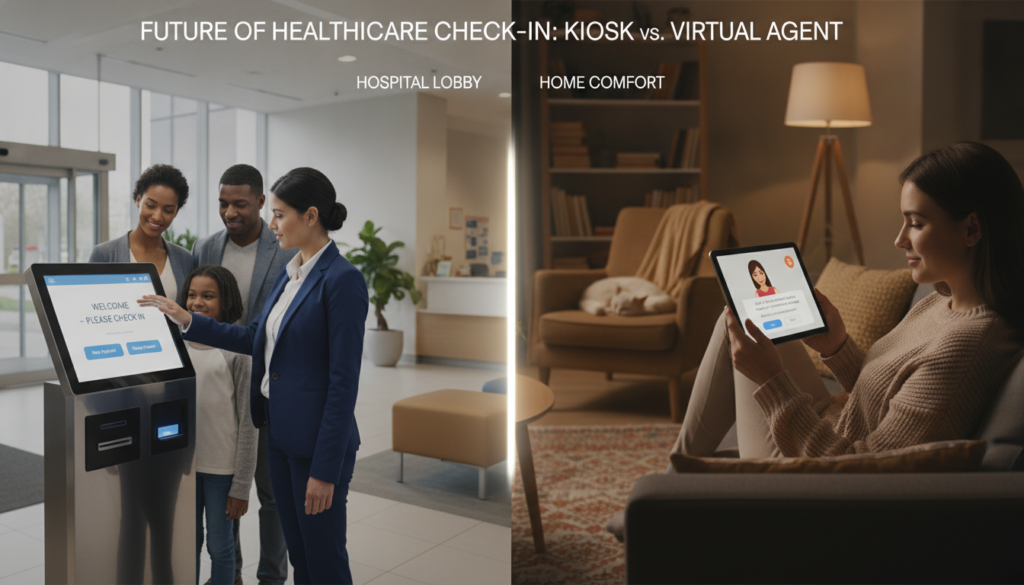
Technology and IT capabilities are also important. If you lack IT resources, BPO providers can help. But, if you have advanced systems, in-house might be better. You’ll need to support virtual check-in patient experience technology.
How fast you’re growing and if your patient numbers change a lot matters. If you’re growing fast or have unpredictable numbers, BPO can scale up. But, if you’re stable, in-house might be better.
How comfortable you are with risk and compliance varies. Some leaders prefer in-house control, even if it costs more. Others trust BPO partners with good records.
Don’t forget about your management team. Do you have the capacity to manage more staff? Outsourcing can free up your team to focus on strategy.
Financial situation and capital availability are big constraints. If you’re short on money, BPO might be more affordable. But, if you have capital, investing in your team could give you an edge.
| Decision Factor | Favors BPO | Favors In-House | Weight in Decision |
|---|---|---|---|
| Organization Size | Small to mid-sized practices | Large health systems with volume | High |
| Labor Market | Talent shortages, high costs | Available qualified workforce | High |
| Growth Pattern | Rapid or unpredictable growth | Stable, predictable volumes | Medium |
| Capital Availability | Limited capital resources | Strong capital position | High |
| Management Capacity | Limited leadership bandwidth | Robust management team | Medium |
Strategic Alignment: The Ultimate Decision Driver
Your choice should support your long-term goals, not just solve immediate problems. Short-term savings that harm your strategy are not worth it. Think about where you want to be in three to five years.
If you want to stand out by giving great patient care, consider which model works best. If keeping strong patient relationships is key, you might want to keep things in-house. In-house staff can build deeper connections with patients.
If you’re expanding quickly, BPO might be better. It can handle rapid growth and new locations faster than you can. BPO can quickly support your expansion plans.
If you focus on specific services, you might need in-house operations. This is because BPO can’t always meet the unique needs of specialty care. You need to customize your workflows for specialties.
Cost analysis is critical, not just comparing prices. Look at both BPO savings and in-house efficiency. The cheapest option that sacrifices quality or satisfaction will fail financially.
Consider a hybrid approach for many organizations. You could outsource back-office tasks but keep patient-facing operations in-house. This way, you get BPO’s benefits in standard processes while keeping control of key areas.
Decide which functions are strategic and which are not. Keep your core competencies in-house. Use BPO for functions that don’t define your competitive edge.
Your decision on healthcare BPO vs in-house should reflect your organization’s strengths and weaknesses. The right choice depends on your specific situation and goals. Aligning your operations with your strategy is key to success in healthcare.
Take time to evaluate these factors carefully. Rushing or following trends without considering your needs can lead to problems. Your operational model should support your strategy, not hold it back.
The Future of Healthcare Operations
The world of healthcare administration is changing fast. You need to think about the future when deciding between outsourcing and keeping teams in-house. Both options are evolving to meet new needs in patient care and making things run smoother.
BPO Services Transform Through Technology
Artificial intelligence and machine learning are changing BPO services in healthcare. Now, they automate tasks like managing revenue cycles and processing claims. There are even micro-BPO services for specific tasks like handling denied claims.
With value-based care, BPO services are now focused on managing health populations and coordinating care. You can find onshore and nearshore services that fit your culture. Advanced analytics are now a standard part of BPO services, not just extras. Hybrid models mix dedicated teams with shared service centers.
Top BPO providers also focus on keeping healthcare data safe from cyber threats.
In-House Teams Adapt to Stay Competitive
Organizations with their own teams are quick to adopt new tech. They use automation and AI to keep up with BPO services. Remote and hybrid work models help them find more talent.
They also train their staff to work better together. Investing in staff development is key. Smaller places team up to save money while keeping control.
Your choice today will shape your future operations. Whether you outsource, keep teams in-house, or mix both, staying current will help you succeed.