Healthcare organizations waste nearly 40% of their technology budgets on solutions that never deliver promised results. This is a big problem, and it’s even bigger when it comes to artificial intelligence. You’ve probably seen many vendors promising big changes.
The truth is more complex. AI in healthcare administration does offer real breakthroughs. But it’s hard to tell what’s real and what’s just marketing. You have to make tough choices with tight budgets, all while keeping patient care first.
This guide helps you see through the noise. You’ll find out which healthcare AI implementation strategies really work in real medical facilities. We’ll look at AI healthcare technology that makes workflows better without costing too much.
You’ll learn to judge solutions by what they actually do, not just what vendors say. We’ll show you how AI can help with things like predictive analytics and automated tasks. This will help you make better choices for your hospital or clinic.
Key Takeaways
- Healthcare organizations lose 40% of technology budgets on underperforming solutions, making careful AI evaluation critical
- Successful AI applications focus on specific operational problems, not broad promises
- Proven implementations show real improvements in efficiency and patient care
- There are budget-friendly ways to test AI before big investments
- Real-world examples show which technologies actually work in clinics
- Knowing what AI can really do helps you spot true value from marketing hype
Understanding AI in Healthcare Administration
If you manage a healthcare facility, you’ve likely heard a lot about AI. It’s important to know what’s real and what’s not. This section will explain AI in healthcare administration in simple terms. It will help you make smart choices about technology.
Before we dive into the details, let’s talk about what healthcare AI means for your place. It’s not about replacing people. It’s about using tools that can process information faster and more accurately than humans.
What AI Actually Means in Your Healthcare Facility
Healthcare artificial intelligence means computer systems that do tasks that humans usually do. In your place, it means software that learns from data to make decisions and improve things.
Think of AI as a smart helper that never gets tired. It looks at patient schedules, finds billing mistakes, and predicts what you’ll need based on past trends. Unlike old software, AI gets better as it learns from more data.
You’ll find AI in three main ways in healthcare administration. First, there are diagnostic support systems that help doctors understand test results. Second, there are administrative automation tools that do things like confirm appointments and check insurance. Third, there are predictive analytics platforms that guess how many patients you’ll have and what you’ll need.
“AI is not about replacing the human touch in healthcare—it’s about freeing healthcare professionals to focus on what they do best: caring for patients.”
It’s important to know the difference between narrow AI and general AI. Narrow AI is what you’ll use in healthcare, which is great at specific tasks. General AI, which can do anything a human can, is not yet real.
How We Got Here: The Evolution of Healthcare AI
The story of AI in healthcare administration started 50 years ago. The first AI systems were expert systems, like MYCIN at Stanford, which helped find bacterial infections and suggest antibiotics.
These early systems had big problems. They needed a lot of manual setup and couldn’t learn from new data. Updating them was hard and needed special programmers.
The 1990s changed everything with machine learning healthcare. Instead of being programmed, systems started learning from data. This was perfect for healthcare’s move to electronic records, which had lots of data.
| Era | Technology Type | Healthcare Application | Key Limitation |
|---|---|---|---|
| 1970s-1980s | Expert Systems | Clinical decision support | Required manual rule programming |
| 1990s-2000s | Machine Learning | Pattern recognition in medical imaging | Limited by data availability |
| 2010s-Present | Deep Learning & NLP | Administrative automation, predictive analytics | Requires significant computational resources |
| 2020s-Future | Generative AI & Advanced Analytics | Comprehensive workflow optimization | Integration with legacy systems |
The 2010s saw huge growth in AI. Deep learning improved medical imaging, and natural language processing understood clinical notes. This made AI useful for your facility, not just big research places.
Today, AI works because of three things: lots of data, powerful computers, and better algorithms. This makes healthcare artificial intelligence available to all, not just big research places.
The AI Technologies You’ll Actually Use
You’ll see different AI technologies in your facility. Knowing these differences helps you choose the right AI for your needs.
Natural Language Processing (NLP) is very useful for healthcare administration. NLP systems understand human language in notes and documents. You can use NLP to automatically code diagnoses, extract information from letters, or analyze patient feedback.
NLP is very accurate. It can find important information in discharge summaries with over 90% accuracy. This saves your coding team a lot of work.
Robotic Process Automation (RPA) handles repetitive tasks that take up your team’s time. RPA works with different systems without needing special setup. It can do things like check insurance and update records, just like a human.
Eligibility verification is a great place to use RPA. It can check insurance for hundreds of patients overnight, finding exceptions for humans to review. This lets your team focus on harder cases.
Predictive Analytics and Machine Learning help you plan for the future, not just react to now. They look at past data to predict patient needs, no-shows, and readmission risks.
Think about how machine learning healthcare changes staffing. Instead of using last year’s schedules, predictive models consider trends and events. This helps you staff better, saving money and reducing wait times.
The differences between these technologies matter for your plan:
- NLP needs good documentation to work well, so you’ll need to improve your documentation first
- RPA gives quick wins with little disruption, making it a good first AI project
- Predictive analytics needs historical data, so you’ll see better results with older EHR systems
- Computer vision applications are starting to help with document processing, automatically getting info from faxes and scans
Each technology solves specific problems in your workflow. The key is to match the right AI with your facility’s biggest challenges, not just follow the latest trend.
Current Applications of AI in Healthcare Administration
Artificial intelligence is changing healthcare administration now. It brings real results you can see. AI in healthcare administration has grown up and works well. Your place can use these tools today and see big changes soon.
AI tackles big problems in healthcare. It makes staff work less on boring tasks. It also makes sure things are done right and frees up time for caring for patients. Knowing which AI tools really work is key.
Reducing Workload Through Intelligent Automation
AI takes over tasks that used to take up a lot of time. AI medical billing is a big help, cutting down on claim denials by up to 30%. It checks claims against rules before sending them in.
This saves money. Fewer denied claims mean faster money coming in. AI medical billing gets better over time, catching more problems before they cost a lot.
AI makes scheduling better too. It books appointments and changes them without needing a person. It sends out reminders and confirmations on its own.
Checking insurance is faster now. Automated healthcare administration tools check if patients are covered right away. This cuts down on delays and mistakes.
Getting prior approvals is easier too. AI pulls the right info from patient records and sends requests. It only alerts staff for tricky cases.
- Claims processing time reduced by 40-50% through automated coding verification
- Appointment scheduling accuracy improved by 35% with AI-powered systems
- Prior authorization turnaround time decreased from days to hours
- Insurance verification completed in seconds instead of minutes
- Staff overtime costs reduced by 25-30% in administrative departments
Transforming Information into Actionable Insights
AI turns data into useful insights. AI in healthcare administration makes data a valuable tool. It helps make better decisions.
AI reads through notes in patient records. It finds important info for quality teams. They can spot trends without looking through thousands of records.
AI finds ways to make things better. It looks at how patients move through your place. It finds bottlenecks and scheduling problems. This helps make things run smoother.
AI catches data problems early. It checks for missing info and mistakes. It alerts staff right away to keep data good.
| Data Management Function | Traditional Approach | AI-Enhanced Approach | Improvement Metric |
|---|---|---|---|
| Clinical documentation review | Manual chart audits | Automated NLP analysis | 95% faster completion |
| Operational reporting | Weekly manual reports | Real-time dashboards | Continuous monitoring |
| Data quality checks | Quarterly audits | Automated validation | 99% error detection |
| Trend identification | Retrospective analysis | Predictive analytics | 3-6 month lead time |
AI predicts what you’ll need before you need it. It looks at past and current trends. This helps your team plan better.
Creating Meaningful Connections with Patients
AI makes every part of the patient journey better. It helps talk to patients, get them to come back, and keep them healthy. It does this with personal touches.
AI reminders cut down on no-shows by 20-35%. It knows how to reach each patient best. This means your staff has more time for important things.
AI chatbots answer simple questions 24/7. They help with office hours, insurance, and more. This lets your team focus on the tough stuff.
AI sends messages to keep patients on track. It reminds them of tests and meds. It talks to them in a way that matters to them.
AI makes sure patients get checked in after they leave. It sends reminders and checks for problems. This helps keep patients healthy and out of the hospital.
The best AI for patients mixes automation with personal touches. It uses tech for the big stuff and adds a human touch.
AI makes patient portals better by giving them info that matters. It gives them articles and videos that fit their health needs. This keeps them interested in their health.
- Set up reminders that fit how patients like to be contacted
- Train chatbots on your place’s rules
- Watch how patients respond to see how to get better
- Link outreach with care plans
- Keep making messages better based on how patients react
AI in healthcare is real and works. Your place can pick tools that solve big problems. Now, it’s about seeing how these tools make a difference for you.
Benefits of AI in Healthcare Administration
AI in healthcare administration brings big wins in costs, decision-making, and workflows. Healthcare groups in the U.S. see AI as more than tech. It brings real money savings and changes how care is given.
AI’s benefits touch every part of a healthcare system. It helps your facility stay competitive and keep care high. Here are the real gains healthcare leaders are seeing.
Cost Reduction Strategies
Back-office tasks can drop by 25-40% with AI. Artificial intelligence healthcare BPO changes claims, revenue, and credentialing. AI works all day, every day, without mistakes.
Healthcare costs go down in many areas. AI catches errors early, cutting down on appeals. Mistakes in paperwork are now rare.
AI means fewer staff for routine tasks. Your team can focus on complex cases. This lowers costs for managing workflows.
| Administrative Function | Traditional Processing Cost | AI-Enabled Cost | Savings Percentage |
|---|---|---|---|
| Claims Processing | $12-15 per claim | $4-6 per claim | 60-67% |
| Prior Authorization | $8-12 per request | $2-4 per request | 67-75% |
| Patient Billing Inquiries | $6-9 per interaction | $1-2 per interaction | 78-89% |
| Appointment Scheduling | $5-7 per appointment | $1-2 per appointment | 71-86% |
Enhanced Decision-Making
Your data turns into smart insights with AI in healthcare administration. Predictive models guess patient needs with 85-90% accuracy. This lets you plan better.
Analytics find money leaks that humans miss. AI checks thousands of transactions for errors. You find problems before they get big.
AI gives you data fast, not slow. Your leaders see real-time dashboards. They can act fast, not wait for reports.
AI makes your team more proactive. You make decisions based on current data, not guesses. This changes how you manage.
Increased Efficiency in Operations
AI saves time fast. Prior authorizations take minutes, not hours. Your team spends more time with patients.
AI schedules better, saving 15-20% of room time. It considers many things at once. This means less waiting for patients.
AI writes notes and suggests codes. This saves 10-15 minutes per patient. Your team has more time for patients.
AI makes work more enjoyable. Your team does more meaningful work. This makes them happier and more likely to stay.
AI’s benefits are real and lasting. Your facility can see more patients without more costs. Care gets better as providers focus on patients.
Artificial intelligence healthcare BPO benefits every part of your organization. These gains are real, not just dreams. They’re what forward-thinking leaders are seeing now.
Key Challenges Facing AI Implementation
AI adoption in healthcare faces real challenges. These can stop even the best plans without the right prep. AI brings big benefits, but your team must tackle big obstacles. Knowing these challenges helps you plan better.
Success with AI depends on solving problems before they start. You’ll meet real issues when adding new systems. Looking at these challenges helps you handle AI adoption well.
Protecting Patient Information in AI Systems
Data privacy is key when using AI in healthcare. Patients trust you with their private info. AI systems add new risks.
You must check AI vendors’ security. Look at their encryption, access controls, and how they handle breaches. Make sure they follow HIPAA rules and keep up with them.
Set clear rules for AI data use. Decide what info AI can see and how long it keeps data. Working with HIPAA experts helps a lot.
Here are ways to protect data:
- Do regular security checks on AI systems
- Use strong passwords for AI access
- Only give AI the info it needs
- Have plans for AI data breaches
- Keep logs of AI system use
Connecting New Technology with Legacy Infrastructure
Your old IT systems can’t handle new AI. They use different formats and ways to talk. This is a big reason AI projects fail.
Adding AI costs more than you think. Moving data from old systems is hard. You might need to make special links for AI and old systems.
Start small with AI to avoid big problems. Try AI in small steps. This lets your team fix issues without stopping work.
Start with simple AI tools like chatbots. They’re easy to add and show quick benefits. As you get better, tackle harder tasks.
Overcoming Staff Hesitation and Building Acceptance
Staff might be scared of AI. They worry about losing their jobs or not knowing how to use new tech. You need to understand and help them.
AI won’t replace people. It helps with boring tasks. This lets staff focus on important work.
Staff might resist because of workflow changes. New AI can slow things down at first. Give them good training to help them adjust.
Here’s how to win staff over:
- Get staff involved in AI plans
- Find early supporters for AI
- Share success stories
- Offer help and training
- Listen to staff and make changes
Change takes time. Some staff will get AI right away, others will take longer. Be patient and support them.
| Challenge Category | Primary Risk Factors | Impact on Implementation | Mitigation Strategies |
|---|---|---|---|
| Data Privacy | HIPAA violations, data breaches, unauthorized access, vendor non-compliance | Legal liability, reputation damage, patient trust erosion, regulatory penalties | Rigorous vendor vetting, encryption protocols, governance policies, regular audits |
| System Integration | Legacy incompatibility, data migration errors, interface development costs, technical debt | Project delays, budget overruns, operational disruption, incomplete functionality | Phased implementation, standalone applications first, thorough testing, IT resource allocation |
| Workforce Resistance | Job security fears, technology anxiety, workflow disruption, inadequate training | Low adoption rates, workarounds, decreased productivity, employee turnover | Transparent communication, extensive training, early involvement, peer champions, ongoing support |
| Resource Constraints | Budget limitations, staffing shortages, competing priorities, time pressures | Rushed implementation, insufficient testing, inadequate support, partial deployment | Realistic planning, executive sponsorship, dedicated project teams, incremental rollout |
AI challenges are not too big to handle. Good planning can turn these into learning chances. Focus on data safety, integration, and staff acceptance.
Every healthcare group faces these challenges. It’s not about avoiding them, but being ready. Good planning leads to smoother AI use, higher adoption, and better patient care.
Case Studies: Successful AI Implementations
Looking at real healthcare AI case studies shows the difference between hype and real change. Top medical places in the U.S. have moved past test phases to see real gains. They’ve improved efficiency, saved money, and helped patients more. These examples give you solid proof of what works and how to use it in your place.
Here are three big healthcare systems that used AI to solve big problems. Each story has real results, how long it took, and lessons learned. They show the real value of using AI wisely.
Mayo Clinic: AI for Operational Efficiency
Mayo Clinic used AI to better use their operating rooms. They used to have a lot of downtime, which cost a lot and limited surgeries.
The AI system looks at past data to guess how long surgeries will take. It considers things like the surgery type, the surgeon, and the patient’s health. This helps schedulers plan better without delays.
Mayo Clinic cut their downtime by 20% in the first year. This meant they could do about 500 more surgeries a year without adding more staff or buildings.
Mayo learned a few key things. First, they focused on a real problem and had clear goals. Second, they worked with staff to make sure the AI solved real problems.
They also let staff get used to the AI slowly. At first, they used it along with old ways to build trust. This made staff more open to the new system.
Mount Sinai Health System: AI in Patient Care
Mount Sinai in New York used AI in many ways to improve care and efficiency. They made a system that predicts which patients might get worse in the hospital.
The AI checks electronic health records and other data to find at-risk patients. It alerts the team early, so they can act fast. This helps prevent big problems and cuts down on ICU stays.
Mount Sinai also cut down on hospital infections with AI. They found patients at risk and helped them more, saving money and improving health.
Mount Sinai also used AI in the emergency room. They predicted how busy it would be, so they could staff it better. This cut wait times by 30 minutes and helped nurses not get too tired.
AI also helped with paperwork, so nurses could spend more time with patients. Nurses were happier after this change, showing AI must consider people too.
Mount Sinai made sure staff understood AI. They taught them how it works and what it can do. This built trust and made staff rely on AI more.
Geisinger: Predictive Analytics in Health Management
Geisinger in Pennsylvania and New Jersey used AI to improve health management. They analyzed data from over 1.5 million patients to find those at high risk for hospital stays or complications.
The system looks at many things like past health, meds, and social factors. It gives scores to help care coordinators focus on the right patients. This helps use resources better.
Geisinger reduced hospital readmissions by 15% in high-risk groups. This saved money and improved patients’ lives through better care.
Geisinger also used AI to plan resources better. They decided where to add staff, new programs, and focus on quality. This made care better and more efficient.
They also found patients likely to miss appointments. AI sent reminders and help, raising appointment rates by 12% and saving time.
Geisinger’s success came from working together and using data from many sources. This was a big investment but was key for good predictions.
Geisinger also put people first in AI. Care coordinators reviewed AI suggestions and used their own judgment. This kept care focused on patients, not just AI.
These stories show what works for AI in healthcare. Each place had a clear problem, built a strong data base, involved staff, and measured results. They also knew AI is best when it helps people, not replaces them.
The Role of AI in Telehealth and Remote Care
Remote healthcare services are growing fast. This is thanks to AI technologies that help your facility reach more people while keeping care quality high. Telehealth and AI together open up new ways for patients and doctors to connect. AI in healthcare administration is key in remote care, where face-to-face meetings are hard to do.
AI doesn’t replace your team. It helps them do more and keeps patients supported all the time. We’ll look at three main areas where AI is changing remote healthcare.
Intelligent Chatbots Transform Patient Communication
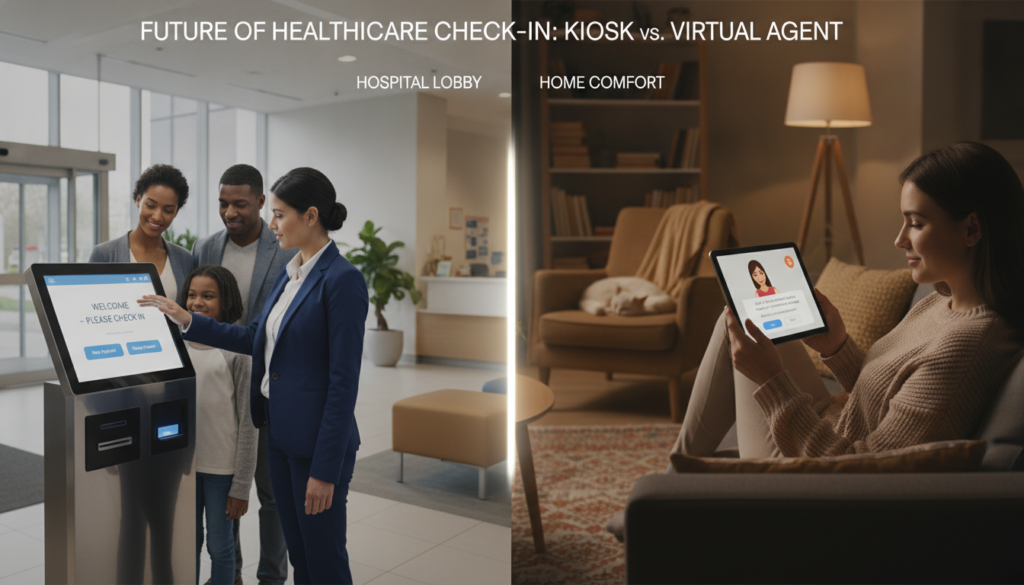
AI front desk healthcare solutions change how you first talk to patients. These smart chatbots handle lots of chats at once. They answer simple questions and set up appointments without needing a person.
These chatbots are great at sorting out symptoms and deciding what to do next. If a situation needs a doctor, they pass it on with all the details.

Healthcare groups using AI front desk healthcare see big improvements. Virtual check-ins and chatbots cut down on phone calls by 40-60%. This lets your front desk team focus on more important tasks.
These systems are always the same. They give the same info every time, unlike people who might forget something. Your patients get the right info every time, following your rules and the latest advice.
Virtual Health Assistants Provide Continuous Support
Virtual health assistants are the next step after chatbots. These telehealth AI solutions help patients between visits. They act as constant helpers in their health journey.
These assistants are good at many things:
- Medication reminders: They remind patients to take their meds on time and right dosage
- Symptom tracking: They keep track of how patients feel and how treatments work
- Chronic disease management: They teach patients how to manage ongoing health issues
- Post-discharge follow-up: They help patients after they leave the hospital to avoid going back
The info these assistants gather is very useful. It shows how patients are doing and helps find problems early. This lets your team act fast, not just react after things get worse.
Patients stick to their treatment plans better with this support. The assistants adjust how they talk and how often based on what each patient needs. Some like daily chats, others weekly updates.
Remote Monitoring Enables Proactive Intervention
Wearable devices and home monitoring send out health data all the time. Without AI, this data would be too much for your team. Remote monitoring systems with AI spot problems early, before they turn into emergencies.
They know what to ignore and what to alert you about. They see big changes that mean you need to act fast. For example, they might notice a patient’s blood pressure is getting worse.
These systems let you care for more patients without needing more staff. They watch over patients with ongoing health issues, recent hospital stays, or high risks. AI is always watching, ready to point out when you need to step in.
Using these telehealth AI solutions leads to better health and saves money. Hospitals see fewer emergency visits and readmissions. Early action means less expensive and less intense care, making patients happier and healthier.
Remote monitoring changes how you talk to patients. You have all their health data ready, so you can talk about making things better, not just checking in.
Chatbots, virtual assistants, and remote monitoring make a strong AI in healthcare administration team for telehealth. These tools help your facility do more, engage patients better, and get better results. As remote care grows, AI will be key to handling this growth well.
Future Trends in AI for Healthcare Administration
Investing in AI means looking at both current and future tech. The future of healthcare AI will change how we handle admin tasks and care for patients. By knowing what’s coming, you can make choices that help your facility grow over time.
The next big thing in AI for healthcare is about three main areas. These are predictive systems, personalization tools, and population health solutions. Each of these builds on what we have now but adds new features we couldn’t have before.
Predictive Analytics and Machine Learning
The next step in predictive healthcare analytics will be huge. Soon, AI will predict staffing needs months ahead. It will look at past data and outside factors to tell you when you’ll need more nurses and where overtime will happen.
AI will also change how we manage money in healthcare. New systems will spot claim denials early, with accuracy over 95%. They’ll check coding, payer rules, and document quality to find problems before they happen.
AI will make operations smarter by learning from data. It will manage everything from supplies to maintenance, finding inefficiencies humans can’t see. As it gets more data, it will get better, making it a valuable asset.
AI learns from your specific situation. It adapts to your facility’s needs, unlike traditional software. This makes it smarter over time, giving you an edge.
Enhanced Patient Personalization
The future of healthcare AI means tailoring care to each patient. This includes their preferences, health knowledge, and past behavior. AI will make this possible, changing how we interact with patients.
Imagine reminders sent in the best way for each patient. AI will figure out the best time to reach them. This small change can greatly reduce no-shows without extra work for your staff.
Health materials will adjust to each patient’s needs. AI will look at how they’ve engaged with information before. This means patients get information they can understand, improving their health.
Care plans will consider more than just health. AI will look at social and personal factors that affect treatment. It will suggest ways to overcome barriers, like transportation or money issues.
AI and Population Health Management
AI will change how we manage health at a population level. It will help us focus on preventing sickness instead of just treating it. This means identifying risks early and targeting care to those who need it most.
Risk prediction will get very accurate with AI. It will look at many factors, including genetics and behavior. This lets us catch problems before they start, saving money and improving health.
AI will help us forecast health needs in our communities. It will analyze data to predict outbreaks and demand. This lets us prepare for challenges before they hit us hard.
AI will find gaps in care automatically. It will track who needs screenings or services, helping us focus on the right patients. This makes care more efficient and effective.
AI will help us use resources wisely. It will show which programs work best for different groups. This lets us fund initiatives that really make a difference in health and finances.
The future of AI in healthcare is exciting. It will bring predictive analytics, personalization, and population health together. By preparing for these changes, your facility can stay ahead of the competition.
Regulatory Considerations for AI in Healthcare
Using AI in healthcare means you’re in a world of changing rules. You’ll deal with federal rules, state privacy laws, and new ethical guidelines. These rules help keep your AI use safe and legal, making sure it helps patients.
Every step of using AI, from picking vendors to keeping systems up to date, is covered by rules. You must know what approvals you need, how to keep patient data safe, and what ethical standards to follow.
FDA Regulations on AI Technologies
The FDA’s rules for AI depend on how you plan to use it. If your AI makes decisions that affect patient care, you’ll need FDA approval. But, some AI tools for managing things like scheduling don’t need FDA approval.
AI systems that help doctors decide on treatments need FDA clearance. These are seen as medical devices. But, AI for tasks like scheduling or billing doesn’t need FDA oversight because it doesn’t affect patient care.
The FDA looks at two types of AI: locked algorithms and adaptive algorithms. Locked algorithms follow old rules. Adaptive systems, which learn from new data, need more rules, like plans for how they can change without needing new FDA checks.
It’s important to understand the FDA’s Software as a Medical Device framework. This framework helps decide how strict the rules will be for your AI.
When picking vendors, ask about their FDA status. Some companies might say they have FDA clearance when they don’t, using it as a marketing trick.
HIPAA Compliance and Data Security
AI makes keeping patient data safe even harder. Every AI vendor that handles patient data must sign a special agreement with you. This agreement says how they’ll protect the data.
These agreements must cover a few key points. The vendor must use encryption for data, keep logs of who accesses data, and have plans for when data is breached. They must also notify you quickly if there’s a breach.
One big mistake is not properly removing personal info from training data. If you’re using patient data to train AI, you must make sure it’s properly de-identified. Just removing names and social security numbers isn’t enough.
Access controls are also very important. You must limit who can see AI insights about patients, just like you would with medical records. Use role-based access controls for all AI outputs that have patient info.
Do HIPAA risk assessments for each AI tool you use. These assessments should look at where patient data goes, how it’s stored, who can see it, and how it’s protected. Document these assessments and fix any problems before you start using the AI.
If there’s a data breach with AI, you’re responsible for telling patients and facing penalties. Make sure your contracts say who does what in case of a breach.
Ethical Frameworks for AI Use
Using AI in healthcare also means following ethical rules. These rules make sure AI is fair and transparent. You need to have rules for avoiding bias, respecting patient choices, and making sure everyone has access to AI services.
When choosing vendors, check if they’ve tested their AI for bias. Ask them about how their AI performs differently for different groups. AI that’s only tested on one group might not work well for others, which could make health problems worse.
Create an AI governance committee with people from different areas of your organization. This committee should check AI plans for ethics before you start using them. They should also watch how AI is doing to make sure it’s fair.
Getting patient consent for AI decisions is important. You usually don’t need special consent for AI in tasks like scheduling. But, for AI in clinical decisions, you might need to tell patients about it. Make sure your policies are clear on when and how you’ll tell patients about AI in their care.
How transparent your AI is depends on what it does. You should be able to explain how your AI makes decisions. “Black box” algorithms that can’t explain themselves are hard to hold accountable and can make patients lose trust. Try to use AI that you can understand.
Write policies that cover AI ethics. These policies should talk about how to check for bias, who should oversee AI, what to do if AI makes mistakes, and how patients can question AI decisions.
| Regulatory Area | Key Requirements | Compliance Actions | Common Pitfalls |
|---|---|---|---|
| FDA Oversight | Medical device approval for clinical decision support; predetermined change control plans for adaptive algorithms | Determine if AI requires FDA clearance; maintain documentation of algorithm updates; implement change control procedures | Assuming administrative tools need FDA approval; failing to update submissions when algorithms change significantly |
| HIPAA Compliance | Business associate agreements; encryption standards; audit logging; breach notification protocols | Execute BAAs with all AI vendors; conduct risk assessments; implement access controls; establish breach response plans | Inadequate data de-identification; insufficient vendor due diligence; missing audit trails for AI access |
| Ethical Standards | Bias testing across demographics; transparency in decision-making; patient consent protocols; fairness monitoring | Form AI governance committee; test for algorithmic bias; create explainability documentation; develop ethics policies | Deploying AI without demographic testing; lack of human oversight; inability to explain AI decisions to patients |
| Data Security | Encryption at rest and in transit; role-based access controls; secure data transmission; vulnerability assessments | Implement end-to-end encryption; restrict AI output access by role; conduct regular security audits; update systems promptly | Storing unencrypted training data; overly broad access permissions; delayed security patches; inadequate vendor security review |
Your plan for following rules should keep up with new technology and rules. Stay updated on FDA guidance, watch for HIPAA actions on AI, and join groups talking about ethical AI use. This way, you can stay ahead of rules instead of just reacting to them.
Remember, following rules is just the minimum. You should aim to do more, using AI in ways that really help patients. Make sure you’re protecting privacy and fairness for everyone you serve.
Skills and Training for Healthcare Administrators
Using AI in healthcare needs more than just buying software. It requires skill building and strategic partnerships. The tech is just half the battle. You must learn to lead AI efforts, check vendor plans, and merge new systems with your current operations.
Success with AI depends on the human touch. You don’t need to be a data scientist. But, you must know enough to make smart choices. Learning and teamwork can give you the skills to lead in this changing field.
Building Foundation Knowledge
Starting with AI in healthcare means learning the basics. You need to know the difference between narrow AI and general AI. This helps you understand what vendors can really do.
Understanding how machine learning works is key. It shows why AI needs big data and constant checks. This knowledge helps you avoid false promises and plan better for training.
Knowing about AI biases and errors is also vital. AI trained on limited data might not work for all patients. Spotting these issues early can save money and keep care quality high.

Learning key terms helps you talk tech with teams and vendors. You should know about natural language processing, predictive analytics, and neural networks. Also, training data and model validation are important.
This vocabulary lets you ask smart questions during vendor talks. You can ask about training, validation, and monitoring. These questions help you see through the hype and find real AI solutions.
Accessing Learning Resources
There are many ways to learn about AI in healthcare. You don’t need a computer science degree. There are many resources that teach you what you need to know.
Online courses and certifications are great for learning. HIMSS offers programs on AI basics and how to use it. These programs take 20-40 hours and you can do them at your own pace.
Going to conferences on AI in healthcare is also a good idea. HIMSS, ACHE, and MGMA have AI tracks. You can see demos, hear stories, and meet others who face similar challenges.
Reading about AI in healthcare keeps you up to date. Healthcare IT News, Health Data Management, and the Journal of the American Medical Informatics Association have the latest news and tips.
Learning from peers is very valuable. You can share experiences and learn from others. This way, you avoid mistakes and improve care.
University programs offer deeper learning for those serious about AI. Harvard, Stanford, and others have programs that mix tech with strategy. These programs help you create a strong AI plan for your organization.
| Learning Resource | Time Commitment | Best For | Cost Range |
|---|---|---|---|
| Online Courses (HIMSS, Coursera) | 20-40 hours | Building foundational knowledge | $300-$1,500 |
| Professional Conferences | 2-4 days | Networking and case studies | $1,000-$3,000 |
| University Executive Programs | 5-10 days | Strategic planning and deep dives | $5,000-$15,000 |
| Peer Learning Networks | Ongoing | Practical implementation advice | Free-$500 annually |
Creating Effective Technical Partnerships
Your work with IT specialists is key to AI success. You need a clear plan and good communication. The tech should support your goals, not the other way around.
Having a good team structure is important. You might need an AI steering committee. This group checks if AI projects fit your strategy and are technically possible.
Good communication is essential. You should talk about what you want to achieve in simple terms. Then, IT can figure out how to make it happen.
Working together ensures AI helps your real needs. You know the workflow, and IT knows the tech. Together, you create solutions that work.
Deciding who makes what decisions is important. You should know who decides on budgets, vendors, and when to go live. IT should handle the tech details.
Respecting each other’s skills is key. You know about patient care, and IT knows about tech. Together, you can make AI work.
Regular meetings keep everyone on track. You should meet weekly to check progress and solve problems. This keeps your AI projects moving forward.
Learning about AI is an ongoing process. Tech changes, rules change, and new uses emerge. Your commitment to learning will help your organization use AI well.
Insights from Industry Experts
Experts in AI for healthcare share lessons from their work. They show what works and what doesn’t. Their advice helps you avoid mistakes and move forward.
These leaders have seen AI grow from new tech to useful tools. They know how to make AI work in healthcare.
Voices from Thought Leaders in AI
Chief Medical Information Officers say AI needs clinical leaders from the start. Dr. John Halamka from Mayo Clinic Platform says tech alone isn’t enough. People’s actions decide if AI is used.
Researchers from Stanford and Harvard say AI is best for simple tasks. Tasks like document processing and scheduling are good places to start.
“The biggest mistake healthcare organizations make is trying to solve their hardest problems first with AI. Start with simple, high-volume administrative tasks where success is easily measurable and builds organizational confidence.”
AI ethics experts say AI must be clear in its decisions. They warn against using AI without understanding it. Your team needs to know how AI makes choices.
Experts also talk about the difference between big changes and small improvements. The best AI changes how things are done, not just how fast.
Predictions for the Next Decade
Experts say AI will become easier for all to use. Cloud services will help small places use AI without big costs. This will change how AI is used in healthcare.
Natural language processing will soon be common for documents. This will cut down on writing time by a lot. AI will understand medical terms and rules well.
Experts also talk about ambient clinical intelligence. This tech will make work easier by doing tasks on its own. But, it needs to get better at being accurate and working with other systems.
| Technology Area | Current Maturity | Predicted Timeline | Expected Impact |
|---|---|---|---|
| Automated Prior Authorization | Pilot Stage | Standard by 2026 | 75% reduction in processing time |
| Predictive Patient No-Shows | Early Adoption | Widespread by 2027 | 20% improvement in scheduling efficiency |
| AI-Powered Revenue Cycle Management | Mature | Ubiquitous by 2025 | 15-25% reduction in claim denials |
| Autonomous Administrative Workflows | Research Phase | Limited adoption by 2030 | 30-50% staff productivity gains |
Experts warn against spending too much on new tech. Some AI is too far off to be useful now. Focus on proven tools instead.
The next decade will see AI become more integrated. Instead of many tools, you’ll have one system for everything. This will make things simpler and improve data flow.
Recommendations for Organizational Leaders
Start with a focused pilot program, not a big change for everyone. Pick one problem and see if AI helps. Success in a small area builds trust for bigger changes.
To get everyone on board, show AI’s value to those who use it most. Involve staff in choosing and planning AI. Their input makes solutions better for real use.
“Don’t let vendors tell you what problems their AI solves. Define your specific challenges first, then evaluate whether their technology addresses your actual needs. Most AI failures stem from solving problems you don’t have.”
When picking AI vendors, look at how well their tech works with yours. The best AI is useless if it can’t share data. Ask for details on how it will work with your systems.
Set clear goals before starting with AI. Know what success looks like. Use numbers to show how AI helps. This helps keep improving and justifies spending more.
Update your AI plan often. Tech changes fast, and what’s good today might not be tomorrow. Experts suggest annual reviews to keep up with new options. This helps avoid using old tech.
Leaders say some AI plans won’t work, but that’s okay. Use those failures to learn and do better next time. The key to success is to keep trying and learning from every attempt.
Conclusion: The Path Forward for AI in Healthcare Administration
Your journey with AI in healthcare starts with knowing where you are. The tech has moved from tests to real use, showing real results. Your job is to find true chances and avoid false ones.
Innovation Without Disruption
AI in healthcare works best as a step forward, not a big change. Start with small tests to solve big problems. Learn from leaders like Mayo Clinic and Mount Sinai before big steps.
Your success comes from picking solutions that fit your goals and budget.
Creating Flexible Teams
Your team needs to get ready for AI. Create training that teaches practical skills, not just tech. Make sure your clinical and IT teams work together well.
When your team sees AI as a helper, not a replacement, they’ll use it easily.
Keeping Patients First
Every AI plan should ask: Does it make care better or easier to get? Your tech choices should free up staff to connect with patients. Look at how AI affects patient care, not just its tech.
Your goal to help patients should guide all AI choices.
Going forward, be careful but also excited. You have the knowledge to make smart choices for your team and patients.