Nearly 30% of individuals leave medical facilities before seeing a provider because of long waits. This costs your clinic money and hurts its reputation every day.
Long waits are a big problem in American medical facilities. Your clinic needs to solve this issue to succeed.
Modern problems need modern solutions. Healthcare technology has changed how we handle arrivals and registration at clinics.
Virtual check-in systems are a game-changer for your clinic. They make the whole process from scheduling to meeting the provider smooth.
This isn’t just about new tech. It’s about making sure everyone’s time is respected and your workflow is better.
You’ll learn seven ways to reduce patient wait times and boost satisfaction. Each method tackles a different part of your clinic’s operations. Together, they can change your whole practice.
Key Takeaways
- Nearly one-third of individuals abandon appointments due to excessive reception delays, directly impacting your clinic’s revenue
- Virtual check-in technology streamlines the entire arrival process from scheduling through provider consultation
- Modern digital intake systems create seamless experiences while optimizing clinical workflow efficiency
- Seven proven strategies work together to transform operations and dramatically improve satisfaction scores
- Implementing these solutions respects everyone’s time and addresses the most common complaint in American healthcare facilities
Understanding the Importance of Patient Wait Times
When patients arrive at your clinic, time starts ticking. Every minute they wait affects more than just them. It impacts your clinic’s reputation, how well it runs, and its profits.
The experience starts when someone books an appointment. But it really matters during the wait. How well you manage this time shows if your clinic is efficient and caring or not.
The Clinical and Operational Significance of Wait Times
Wait times are key to showing your clinic’s health. Long waits can make patients anxious. This can mess up their health checks and even lead to wrong diagnoses.
When patients are anxious, they don’t talk as well with doctors. They might forget to share important symptoms. This can harm their health and safety.
Many people watch wait times to judge your clinic. Insurance companies, accreditation groups, and online reviews all look at them. They decide if your clinic is good or not.
Virtual check-in benefits are clear when you look at old ways. Paper forms and long lines slow things down. A small delay in the morning can turn into a big problem later.
How Wait Times Drive Patient Loyalty and Revenue
Happy patients stick to their treatment plans. They come back for more care. This means more money for your clinic.
Happy patients also tell others about your clinic. But unhappy ones leave bad reviews. This can scare off new patients.
Shortening wait times by just a bit can make a big difference. Your online ratings go up, complaints go down, and more patients stay. This means more money for your clinic.
In today’s world, patients have many choices. They look at wait times when deciding where to go. Using virtual check-in benefits can help you keep patients.
Reducing wait times is more than just making things easier. It’s about keeping care quality high, keeping patients safe, and staying competitive. The numbers you track today will shape your clinic’s future.
Introducing Virtual Check-Ins
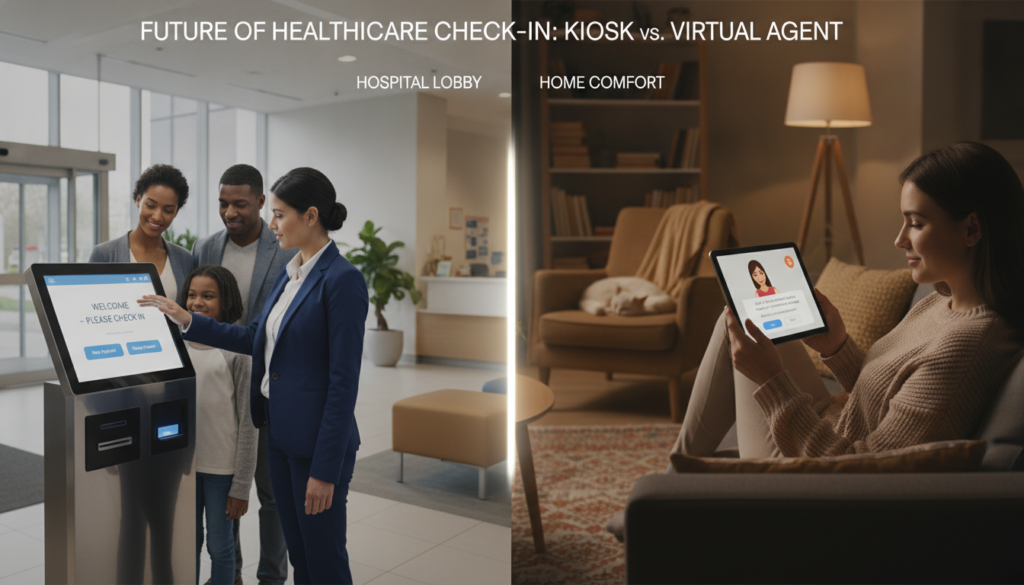
Your clinic’s waiting room can be less crowded with new technology. This tech lets patients check in before they arrive. It makes the old way of doing things easier and faster.
Now, patients can do paperwork from anywhere with internet. This change makes healthcare more like other services we use today. It makes patients happier and helps your clinic run better.
Understanding the Technology
Virtual check-ins are digital systems that replace old paper forms. Patients can fill out forms and update their info on phones or computers. These systems work with your health records, keeping everything in one place.
The tech is safe and follows HIPAA rules. It keeps patient info safe from lost or damaged papers. Digital records are secure and update your system automatically.
This tech makes your clinic more efficient. It cuts down on extra work for your staff. They can focus more on helping patients.
The future of healthcare is about giving patients tools that save time and improve care.
Implementation in Your Practice
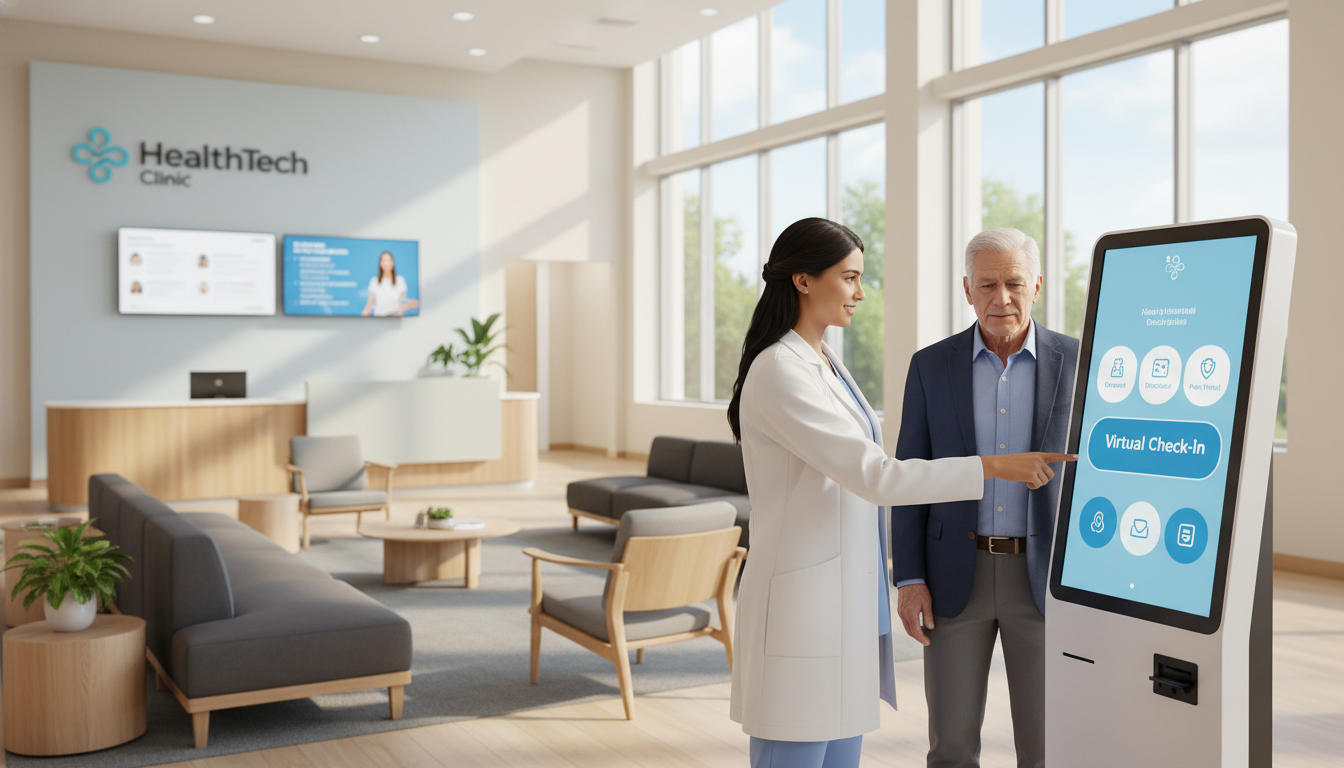
It starts when patients get a link to fill out forms before their visit. They can do it at any time. This makes it easy for them to get ready for their appointment.
When they arrive, they just tell the front desk they’ve checked in online. Your staff can quickly check if it’s done. This means patients get to their appointment faster.
Setting up this tech is easier than you think. You need devices for staff, internet, and to connect with your software. Most EHR systems already work with these systems.
Think about how it works for all patients. The system should be easy for everyone. Many platforms offer help in different languages and for people with disabilities.
Training your staff is key. They need to know how to help patients and solve problems. Most vendors offer training to help your team.
These tools grow with your clinic. They work for small or big clinics. You can make them fit your clinic’s needs without big changes.
Streamlining the Check-In Process
The entrance of your clinic is where things slow down. Patients gather, forms pile up, and staff juggle tasks. This congestion affects your clinic’s operations. Using virtual check-in technology can make things smoother.
Traditional check-in methods are slow. Patients arrive early, stand in line, and fill out forms. Your staff gets overwhelmed, making the atmosphere chaotic.
Transforming Your Reception Area
Your reception desk is a bottleneck. Every patient must stop there for registration and insurance verification. This creates crowds and a stressful environment.
Privacy is a concern in your waiting room. Patients discuss sensitive information openly. Virtual check-in lets patients register before they arrive.
Digital check-in solutions let patients skip the reception desk. Your staff can focus on greeting patients instead of paperwork. This makes your reception area more welcoming.
Your reception area becomes a welcoming space. Staff can make eye contact and answer questions. This sets a positive tone for the visit.
Eliminating Paperwork Delays
Patients spend 8 to 12 minutes filling out forms. This is wasted time. Digital forms can be completed at home, saving time.
Digital forms are smarter than paper ones. They only show relevant questions. This makes form completion faster by 30 to 40 percent.
Patients can fill out forms at their convenience. They can review their information carefully. This reduces errors and makes the process smoother.
Your staff benefits too. They don’t have to deal with bad handwriting or incomplete forms. Digital submissions save time and reduce errors.
Digital forms have extra features like address verification and insurance card uploads. These features ensure accurate information on the first try. This saves staff time and reduces follow-up calls.
Enhancing Communication with Patients
Using virtual check-in tech makes patients more informed and cuts down on staff work. Today’s healthcare needs easy talks between you and your patients. The virtual check-in patient experience turns old ways of talking into quick, easy systems.
With tech handling simple chats, your team can focus on harder patient needs. This makes your team work better and talk to patients more effectively.
Automated Notifications and Reminders
Your virtual check-in can send reminders through texts, emails, or apps at the right times. Most clinics set reminders for 72 hours, 24 hours, and 2 hours before appointments. These reminders go to patients based on what they like.
These reminders do more than just remind you of your appointment. They also give you tips to get ready for your visit.
Automated reminders usually include:
- Links to fill out forms before your visit
- Directions to your clinic with parking info
- Instructions for your specific appointment
- Info on insurance and what you need to bring
- Reminders about any money you owe and how to pay

Virtual check-in helps your clinic in big ways. Reminders cut no-shows by 20-30% on average. This means more money for your clinic and better use of your doctors.
Your team saves a lot of time not making calls. The system works all the time, without needing people. Patients get the same info, no matter when.
Confirmation of Appointments
Two-way messages let patients reply to reminders. They can say they’re coming, need to change their time, or cancel. This lets your team know right away if plans change.
Systems that confirm appointments in real-time help you fill empty spots fast. If someone cancels, you can offer that time to someone else. This helps doctors work more and waste less time.
Your clinic gets many benefits from these systems:
- Know right away if someone confirms or cancels
- Manage a waitlist to fill empty spots
- Less phone calls at the front desk
- Know how many patients you’ll have each day
- Keep records of patient communication
These systems make sure everyone knows what’s going on. Patients who confirm their appointments are more likely to show up. Your clinic looks professional and reliable.
These better ways of talking to patients make your clinic run smoother. Your team works less and talks to patients more. Everyone is happier and more satisfied.
Empowering Patients with Self-Service Options
When patients manage their own healthcare, your clinic gets better. Self-service tools in virtual check-in systems make patients more involved. This helps your staff and makes patients more engaged.
Patients get to use digital tools to access important info. This makes them come to appointments better prepared. It leads to more productive talks with doctors.
Convenient Digital Access to Medical Information
Your virtual check-in system links to a patient portal. It gives patients 24/7 access to health info. This builds trust and strengthens your clinic’s relationship with patients.
Health records on the patient portal help patients ask better questions. They can review past visits, meds, and plans online. This saves your staff time and makes appointments more focused.
Patients can also share health info with others securely. This cuts down on staff time spent on records requests. It saves a lot of time with many patients each month.
| Self-Service Feature | Patient Benefit | Clinic Advantage | Time Saved |
|---|---|---|---|
| View test results online | Immediate access to lab values | Fewer phone calls to staff | 5-10 minutes per inquiry |
| Review visit summaries | Better understanding of care plans | Reduced need for clarification calls | 8-12 minutes per patient |
| Access immunization history | Proof for school or work requirements | Eliminates records room searches | 15-20 minutes per request |
| Download medical documents | Share with other providers easily | No printing or mailing costs | 10-15 minutes per request |
Patient-Controlled Information Updates
When patients update their own info, your clinic gets a big win. They enter accurate data, unlike staff during busy times. They know their info best.
With self-service healthcare, data entry errors drop. This avoids billing delays and mistakes. It saves time and money for your clinic.
Staff no longer spends time on basic info updates. Patients do it before they arrive. This lets staff focus on care that needs a human touch.
Accurate insurance info from patients cuts down on claim denials. Current contact details mean reminders reach patients, reducing no-shows. This saves money and boosts revenue.
Self-service options also give insights into patient preferences. Patients can share how they want to be contacted and more. This personalizes their experience without long intake talks.
Improving Resource Allocation
Your clinic’s resources are big investments that need smart planning. Virtual check-in tech changes how you use these assets. It helps you work better in every area, improving care and saving money.
Virtual check-in lets you use your staff and space in new ways. It gives you data to make better choices. This way, every resource helps patients more and makes your clinic better.
Making Every Minute Count for Your Team
Your front desk team spends 40-50% of their time on simple tasks. Tech can do these tasks, freeing up staff for more important work. This lets them focus on what they do best.
With less paperwork, staff can give exceptional customer service. They can answer insurance questions clearly and help with care plans. This makes patient care smoother.
Staff can now welcome patients warmly, not just quickly. This change makes your clinic feel more personal and friendly.
Improving how you use resources can also boost your income. You might see more patients without spending more money. Or, you could save on staff costs when it’s slower.
Creating Smooth Operations Throughout the Day
Virtual check-in gives your team real-time visibility into who’s arriving. You know who’s done their forms and who needs help. This lets you adjust plans to keep things running smoothly.
With this info, your team can handle changes quickly. If a patient checks in early, your doctor can adjust their schedule. If someone’s late, you can change plans to keep things moving.
This info helps you manage your schedule better. You can spot and fix problems before they cause delays. This makes everyone’s day easier.
| Resource Allocation Metric | Before Virtual Check-In | After Virtual Check-In | Improvement |
|---|---|---|---|
| Staff Time on Data Entry | 45% of shift | 15% of shift | 67% reduction |
| Average Patient Processing Time | 8-12 minutes | 2-3 minutes | 75% faster |
| Staff Available for Patient Support | 55% of capacity | 85% of capacity | 55% increase |
| Patients Served Per Day | 45 patients | 62 patients | 38% growth |
Using resources better makes your clinic more flexible and efficient. You can handle more patients without losing quality. Staff are happier because they’re doing meaningful work.
With better planning, you can use your space better too. Knowing when patients will arrive helps you use rooms more efficiently. This means you can make more money from what you already have.
Integrating Telehealth Solutions
Telehealth changes how your clinic gives care by using virtual check-ins. By linking your virtual check-in with telehealth, you can help patients without them coming to your place. This way, you can see more patients while keeping care quality high.
The virtual check-in benefits grow when you add remote consultations. Your clinic can move from digital check-in to video calls easily. This makes care more flexible and efficient for patients.
A hybrid care model offers both virtual and in-person services. You decide which visits need a doctor’s touch and which can be remote. This way, you can help more patients effectively.
Preliminary Consultations Through Remote Technology
Your clinic can handle many types of appointments online before patients visit. Follow-up visits after procedures are often simple and work well on video calls. You can check on patients, answer questions, and change treatment plans without in-person visits.
Remote consultations are great for managing medications. You can adjust prescriptions and talk about side effects through video. This saves time for everyone and keeps care quality high.
Initial screenings work well online. You can do first assessments, review symptoms, and get medical history on video. This telehealth integration helps prepare for in-person visits, making them more efficient.
Post-op check-ins are easier online. Patients at home don’t have to travel for updates. You can see how they’re healing, talk about concerns, and guide them on your screen.
Smart Triage Reduces Facility Traffic
Pre-visit questionnaires in your virtual check-in system help decide if visits are needed. Digital health assessments help you see if patients need to come in. This stops unnecessary trips to your clinic.
Patients with mobility challenges really benefit. They can get care without the trouble of traveling. Your clinic becomes more accessible to those who might delay or skip visits.
For rural or remote patients, virtual care is key. It means they can get timely care without long trips. The hybrid care model makes sure distance doesn’t stop them from getting help.
When dealing with contagious diseases, virtual consultations are a must. They keep other patients and staff safe. You can check symptoms, give advice, and monitor progress without risking spread in your clinic.
This digital health plan cuts down wait times for those who really need to see you. By sorting out virtual appointments, you free up rooms and staff. This means shorter waits and better use of resources for your whole practice.
Collecting Data for Better Insights
Every time a patient uses your virtual check-in, you get valuable data. This data shows patterns in your clinic’s workflow. It helps you make better decisions about scheduling, staff, and patient flow.
This data is a big change from guessing. Now, you can see where delays happen and how they affect patient happiness. This lets you fix problems with exactness, not just guesses.

Tracking Patient Journey Timestamps
Your virtual check-in system tracks every step of a patient’s visit. It records when patients fill out forms, confirm they’re there, get assigned a room, and meet with doctors. This detailed tracking shows how time moves through your clinic.
The performance metrics from these timestamps help you find exact wait times. You can see wait times by doctor, time of day, day of the week, and appointment type. This level of detail is hard to get with manual tracking.
Modern platforms show this data in easy-to-understand dashboards. You can see heat maps of busy times, trend lines of progress, and charts of department differences. These tools help share findings with your team.
Seeing where your clinic can improve is key. By tracking patient flow, you find where things slow down. This data helps you make your clinic more efficient.
Pinpointing Operational Weaknesses
Looking at the data shows where you can get better. You might find that some doctors are always late, causing delays. Or, some appointments take longer than expected, affecting others.
Maybe your reception desk gets too busy at certain times. But other times are quiet. This is clear when you look at the data. Using facts to solve problems makes your efforts more effective.
Here are some common areas where data shows room for improvement:
- Provider scheduling patterns that show timing issues
- Appointment duration estimates that are off for some procedures
- Peak arrival windows that overwhelm your reception
- Administrative task completion times that show training needs or inefficiencies
- Patient arrival behaviors that show patterns by demographic
By focusing on real problems, you can make better changes. You can target improvements that really help. The data helps you make smart choices and see the results.
Virtual check-in technology changes how your clinic works. You go from guessing to knowing exactly what to fix. This makes healthcare analytics a useful tool for improving patient care.
Adapting to Patient Needs
The best virtual check-in systems remember and adapt to patients. They improve based on feedback. This makes your clinic stand out by creating unique experiences for each patient.
Modern healthcare customization goes beyond just collecting data. It creates meaningful connections that make patients feel valued from the start.
Creating Tailored Experiences for Every Individual
Your virtual check-in system remembers important details about each patient. This makes their experience smoother and more comfortable. When patients return, the system knows their preferred communication methods.
Language preferences are automatically applied during visits. Spanish-speaking patients see forms in Spanish. Those who need larger text get displays without asking each time.
Healthcare customization also applies to forms. Your system shows only relevant questions based on each patient’s history and reason for visit. This saves time for patients who don’t have certain symptoms or conditions.
Patient flow improvement happens naturally with these personalized touches:
- Customized wait time estimates based on real-time clinic status and appointment type
- Options for patients to wait in their vehicles or nearby if delays occur
- Automatic alerts to staff when patients with mobility issues or special needs check in
- Pre-populated forms that reduce repetitive data entry for returning patients
- Accessibility features that adjust automatically based on documented patient requirements
Your staff gets advance notifications for patients who need extra assistance. This ensures wheelchairs are ready and interpreters are available. Patient flow improvement accelerates when your team is prepared.
The personalization features also build trust. Patients appreciate when your clinic remembers their preferences. This shows that your facility values them as individuals, not just numbers.
Building Better Systems Through Patient Input
Your virtual check-in platform makes it easy to collect patient opinions. Post-visit surveys send via text message or email shortly after appointments. This gives you accurate insights into what works and what needs improvement.
This feedback loop transforms your virtual check-in into an evolving system. You learn which questions confuse patients and which features they find most helpful. You also find out about technical glitches and areas for improvement.
Your clinic benefits from systematic feedback collection in several ways:
- Identification of technical issues that patients encounter but might not report directly
- Discovery of features that patients value most, helping prioritize future enhancements
- Recognition of confusing questions or instructions that need clarification
- Understanding of demographic groups that might struggle with certain aspects
- Measurement of satisfaction trends over time as you implement improvements
The data you gather reveals patterns that might be invisible. You might find that elderly patients take longer on certain form sections. This suggests the need for simpler language or better instructions. Younger patients might request mobile app features to streamline their experience.
Patient-centered care flourishes when you actively listen and respond to feedback. Making adjustments based on real patient input shows that your clinic genuinely cares. This approach builds loyalty and encourages patients to engage more fully with your virtual check-in system.
Ensuring Compliance and Security
Your patients trust you with their most sensitive information. This makes security key for any digital solution. Virtual check-in systems boost your clinic’s safety more than paper-based methods.
Modern virtual check-in platforms focus on security. They protect data and meet all rules from the start.
Switching to digital check-in makes your clinic more efficient and secure. Unlike paper forms, digital systems keep data safe and controlled.
Protecting Patient Data Through Advanced Technology
Good virtual check-in platforms use strong healthcare data security measures. These measures protect patient information in your system.
Your virtual check-in should have these key security features:
- End-to-end encryption: Patient data is encrypted during and after transmission, keeping it safe from others
- Multi-factor authentication: Extra steps ensure only the right people can see sensitive info
- Automatic session timeouts: Devices log out if left alone, stopping unauthorized viewing
- Regular security audits: These checks find and fix security issues before they become big problems
- Secure cloud storage: Data centers offer top-notch security, more than most clinics can do on their own
Digital systems create automatic audit trails. These trails show who accessed patient data and when. This is much easier than with paper records.
This info is super helpful for compliance checks and spotting odd access patterns. Just like how denial management needs detailed records, audit trails keep patients and your practice safe from breaches.
Meeting Healthcare Regulatory Standards
HIPAA compliance is a must, not just a choice. It’s the law, and breaking it can cost a lot. Virtual check-in platforms are made to meet these strict rules.
Working with a trusted vendor means they’ll give you Business Associate Agreements (BAAs). These agreements clearly state who’s responsible for protecting data. This ensures your vendor knows their duties and provides the needed security for HIPAA compliance.
Digital consent management is another big plus. Your system makes sure all consents and privacy notices are properly signed and stored. This avoids the risks of lost or missed signatures.
Vendors that offer compliant solutions get checked regularly by third parties. They keep up with new rules, so you don’t have to worry about falling behind.
With strong healthcare data security and built-in compliance, your virtual check-in system actually lowers your compliance risk. It protects patients, meets regulators’ needs, and makes your clinic more efficient with secure, streamlined processes.
Real-World Examples of Success
Healthcare innovations are truly tested in real clinics with real patients. Virtual check-in systems have shown real benefits. They have improved clinics across the United States.
These healthcare success stories show how virtual check-in cuts wait times. They also make patients happier. This technology can change your practice for the better.
Documented Results from Medical Facilities
A clinic in California saw big changes after using virtual check-in. Wait times went from 28 minutes to 12 minutes in just three months. Patient happiness went up by 35% too.
The clinic’s staff was more efficient. They could help patients more because they weren’t stuck on paperwork. This let the clinic see more patients without losing quality.
In Texas, a pediatric clinic used virtual check-in to solve waiting room problems during flu season. Parents could fill out forms in their cars. This cut wait times by 50% and reduced germ spread.
Children were less stressed without long waits. Parents liked being able to keep their kids comfortable until the doctor was ready.
A family medicine clinic in Florida found virtual check-in helped in many ways. They handled 40% more patients without hiring more staff. They used the saved money to improve services and equipment.
This clinic also saw fewer no-shows thanks to reminders. Appointments started on time 28% more often. Daily patient capacity went up by 15%. Virtual check-in made their work smoother, like healthcare BPO services do for the back office.
| Healthcare Facility | Wait Time Reduction | Satisfaction Increase | Capacity Improvement |
|---|---|---|---|
| California Multi-Specialty Clinic | 57% decrease (28 to 12 min) | 35% improvement | Data not specified |
| Texas Pediatric Practice | 50% reduction | Reduced transmission risk | Better room utilization |
| Florida Family Medicine | 28% on-time improvement | Lower no-show rates | 15% daily capacity increase |
Direct Feedback from Healthcare Consumers
Patient stories show the real impact of virtual check-in. They share how it makes healthcare better for them. These stories show why this technology works for many patients.
One working mom said:
Doing forms at home means I’m not stressed in the waiting room. I check in on my phone and we’re seen quickly. It’s made doctor visits easier.
Elderly patients also like it, even though some think they won’t. A 72-year-old said the big text on tablets was easier than small print. It helped with their arthritis.
Busy professionals like it too. One business owner said it saved him time. He could do paperwork on his commute and arrive right when needed.
These patient testimonials show a few key points. Patients like doing paperwork at home. They like knowing exactly when to arrive. And they feel respected when clinics value their time.
Together, the numbers and stories prove virtual check-in is a good choice. It makes clinics better and patients happier. These examples show how virtual check-in can change healthcare for the better.
Conclusion: Embracing Virtual Check-Ins
Virtual check-in technology helps your clinic cut down on wait times. It also makes your operations better. This article showed seven ways digital changes can improve your practice.
Your patients want things to be easy, fast, and respectful of their time. They expect the same convenience they get in other areas of life.
The Future of Patient Care
Healthcare is changing fast in the United States. Patients want the same ease they find in banking, shopping, and travel. Virtual check-ins show your clinic is modern and cares about patient experience.
This technology is more than just making things more efficient. It shows you’re ready for the future of healthcare. It meets what patients now expect from their doctors.
Those who start using virtual check-ins early get ahead. They attract more young, tech-savvy patients. These patients look for doctors who use digital tools.
Your choice to use virtual check-ins shows you get what they need.
Taking Action for Your Clinic
First, look at different virtual check-in systems that work with your EHR. Start small with a pilot program for certain providers or times. Then, train your staff and tell your patients about the change.
You don’t have to change everything at once. Many clinics add virtual check-ins slowly. This leads to happier patients and a smoother workflow for your team.