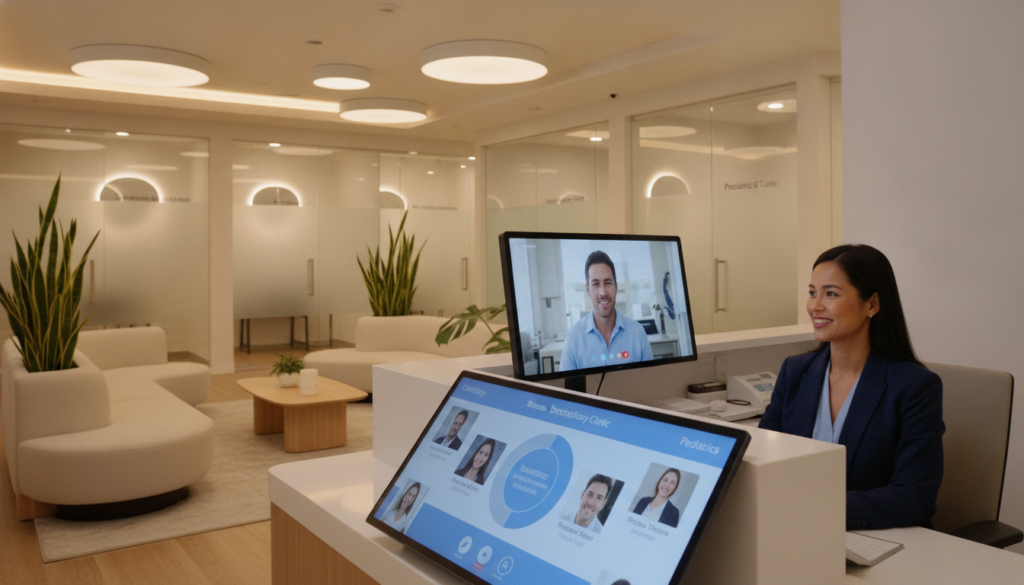
Could a remote care model leave your practice exposed in ways you do not expect? The answer depends on how you protect patient services, professional decisions, data, and daily operations.
This guide explains how liability coverage virtual medical staffing supports professionals who serve patients through a remote team. You will learn how a staffing model can create different risks from those found in a traditional office.
CM&F Group offers a useful example of an established insurance resource. Founded more than a century ago, the company can provide an immediate quote in as little as five minutes. You can apply in a few clicks and download proof of coverage at once.
You will also see how professional malpractice concerns differ from broader business risks, including property loss and data incidents. For trusted guidance, contact Total Medical Solution at (352) 516-3972 or info@totalmedicalsolution.com. Its team offers 24/7 support to help you choose the right plan.
Key Takeaways
- Remote care can create distinct risk concerns.
- CM&F Group has more than 100 years of experience.
- Quotes may arrive in about five minutes.
- Online applications can simplify planning.
- Proof of protection may be available instantly.
- Total Medical Solution offers help around the clock.
Understanding Liability Coverage Virtual Medical Staffing Requires
Your risk profile changes when clinicians, coordinators, and clients connect through remote care services. Communication gaps, record errors, and unclear supervision can affect patient health and your business.
A strong review looks beyond malpractice. Fires, cyberattacks, lawsuits, injuries, and accidents can disrupt daily operations. Your policy should reflect the type of work your team performs and the states where you operate.
How Remote Healthcare Work Changes Your Risk Profile
Every agency should match its insurance coverage to its services. Review client contracts, worker roles, data practices, and emergency procedures. This information helps you identify gaps before a claim occurs.
- Confirm which professionals your agency places and supervises.
- Check whether your policy addresses on-site and remote duties.
- Ask how business interruptions and cyber events receive support.
Why Malpractice Support Matters for Remote Services
Professional liability insurance can respond to disputes about clinical judgment, communication, documentation, or supervision. It may also help with defense costs when a patient or client files a formal complaint.
Workers’ compensation remains a key employment obligation. Most states require it when an agency employs workers, so include health and workplace risks in your insurance review.
Professional Liability Insurance for Virtual Medical Staffing
Professional liability insurance helps protect your practice when a client claims that a work error caused harm or financial loss. It is also known as errors and omissions insurance or malpractice insurance.
This form of insurance focuses on professional judgment. It can respond to claims tied to inaccurate information, missed details, poor communication, or alleged negligence during patient-related work.
Protection for Errors and Oversights
Your medical staffing insurance should match the services your team provides. Review each policy for covered duties, exclusions, deductibles, and limits. These details show how well the plan fits your business.
- Work mistakes that affect a client or patient
- Alleged negligence by qualified professionals
- Oversights that create financial loss
Defense Costs and Malpractice Claims
A claim can create major legal costs even when you believe your team acted properly. Professional liability insurance may help pay defense expenses tied to a lawsuit or formal demand.
Ask whether defense costs reduce your limits and whether the policy protects independent professionals. Keep this protection separate from general business insurance, which usually addresses nonclinical incidents such as property damage or visitor injuries.
General Liability Coverage for Bodily Injury and Property Damage
A wet lobby floor can trigger a business claim long before anyone questions clinical judgment. General liability coverage addresses bodily injury property incidents that stand apart from professional errors.
For example, a client may slip during a visit, or your team may accidentally damage a client’s equipment. These events can create a claim for injury property damage. General liability insurance may also help with some advertising-related allegations, such as claims involving misleading statements.
This protection does not replace medical staffing insurance. It serves a different purpose. Professional policies focus on patient care decisions, while this business policy may respond to physical harm or property damage.
- Client slip-and-fall incidents
- Accidental damage to client property
- Some advertising injury allegations
A business owner’s policy can simplify planning by combining commercial property insurance with general liability coverage. It may protect your office contents, leased space, and other business property under one policy. Review deductibles, exclusions, and limits before choosing insurance for your staffing operation.
Separating these risks helps you select the right protection for daily operations and unexpected claims.
Business Insurance Policies Your Healthcare Staffing Agency May Need
Your agency handles more than patient-related services. It also manages employees, vehicles, records, equipment, and customer trust. A practical insurance plan helps address these separate business risks.
Most states require workers’ compensation when employees perform work for your company. Review your duties, locations, and employment structure before selecting a policy. You can also compare options through medical staffing insurance resources.
Workers’ Compensation for Employee Injuries
This policy may help pay employee health care, disability benefits, and legal costs after a workplace injury. It supports both your team and your agency when an incident affects work.
Commercial Auto Insurance for Business Vehicles
Most states require commercial auto insurance for vehicles owned by a healthcare staffing firm. It may address vehicle damage, accident-related bills, theft, and vandalism.
Cyber Protection for Data Breaches
Cyber protection may help fund customer notices, breach investigations, and fraud monitoring. You can often add it to a business owner’s policy or a general liability policy.
| Risk | Policy | Possible response |
|---|---|---|
| Employee injury | Workers’ compensation | Health costs and disability benefits |
| Vehicle incident | Commercial auto insurance | Damage, theft, or accident bills |
| Data breach | Cyber protection | Notices, investigation, and fraud monitoring |
Policy Limits, Exclusions, and State Coverage Differences
A policy’s fine print can shape the result of a claim more than a sales summary ever will. Review deductibles, exclusions, limits, and covered duties before you choose an insurance plan for your business.
Rules also differ across states. The Hartford explains that insurance coverage may vary by state and may not be available to every business. Local review helps you confirm whether your services, locations, and workers fit the plan.
How Policy Language Affects a Claim
An insurance company reviews the policy language and investigates the claim before making a decision. General information cannot predict whether a claim will receive payment. The Hartford, headquartered in Hartford, Connecticut, operates through subsidiaries under The Hartford Insurance Group, Inc.
- Exclusions may affect negligence, injury, property, cyber, or employment claims.
- Professional liability insurance may use separate limits and defense rules.
- Medical staffing insurance should match each service your team performs.
Ask how exclusions apply to remote work, records, and client contracts. Then compare the answer with your actual operations. This step can reveal gaps in your liability insurance before a dispute begins.
What Influences Medical Staffing Insurance Costs
Several details shape your insurance cost. A small staffing agency generally pays less than a larger company, but no two quotes match. Insurers review revenue, the number of employees, location, years of experience, and the type of healthcare employment services you provide.
Your equipment and business property also matter. Higher policy limits may raise costs, while a larger deductible can lower the premium. The selected insurance types, from cyber protection to commercial auto, workers’ compensation, and professional liability, can change the final price.
To request medical staffing insurance quotes, gather clear records first. Note annual revenue, employee roles, work locations, vehicle use, equipment values, and employment details. This preparation helps each agency assess the same facts.
- Compare the policy limit with your expected claim exposure.
- Ask which coverage applies to remote and on-site work.
- Update records when revenue or employee count changes.

How to Choose an Insurance Company or Staffing Agency Partner
Choosing a partner requires more than comparing a monthly price. Start with your services, workers, clients, and common claim scenarios. Then confirm that the policy supports your business in each state where you operate.
Review professional liability insurance, general liability coverage, cyber protection, auto protection, and employee safeguards. Check deductibles, limits, exclusions, and claims support. Your healthcare staffing agency should also explain who handles reports and how quickly you can reach a claims professional.
Insureon offers one comparison model. Its licensed agents work with top-rated United States providers. This approach may help you compare options without assuming one insurance company fits every operation.
Customer reviews add useful context, but read them with care. The Hartford says it collects and tabulates its reviews, and that they do not represent all customers. Look for repeated comments about service, communication, and claim handling.
Compare Features That Affect Daily Operations
- Confirm bodily injury property and property damage terms.
- Ask whether commercial auto insurance applies to business travel.
- Check if the policy matches your services and workers.
| Review area | What to check | Why it matters |
|---|---|---|
| Policy terms | Limits, deductibles, and exclusions | Shows your payment share and possible gaps |
| Service quality | Licensed agents and clear support | Speeds decisions and questions |
| Customer feedback | Recent reviews and claim comments | Reveals service patterns |
Getting a Quote and Proof of Coverage
Gathering the right details can make an insurance quote faster and more accurate. To get medical staffing insurance, prepare your annual revenue, employee count, locations, services, and business structure. Include details about office space, equipment, and property used for daily work.
Insureon describes a simple three-step process. First, complete an application with basic business information. Next, compare quotes and policy terms from available providers. Finally, pay for the selected plan and download a certificate.
- Collect current business records and contact details.
- Review limits, deductibles, exclusions, and state availability.
- Compare total costs before choosing an insurance company.
CM&F Group may provide an immediate quote in as little as five minutes. Its online process can also provide instant proof of insurance. This option may help when a client needs evidence quickly.
A certificate confirms selected insurance coverage, but it does not replace the full policy. Read the complete terms, including professional liability insurance provisions, before you buy. Check reviews and ask how the plan handles claims, contracts, and changing business needs.
Contact Total Medical Solution for Twenty-Four-Seven Support
Clear answers can help you choose protection that fits your work. If you run a staffing agency, Total Medical Solution can review your risks, team structure, and client needs.
Call (352) 516-3972 to discuss liability concerns, policy choices, and medical staffing insurance. You can also use the “Text Me” option when written help feels more convenient.
Email Total Medical Solution’s contact team at info@totalmedicalsolution.com. Include your business model, employees, healthcare services, and current concerns. These details help the company explain suitable coverage and next steps.
- Ask about insurance limits and exclusions.
- Explain how your agency delivers services.
- Request help when you need to get medical staffing guidance.
- Reach out to learn how other agencies manage changing risks.
Support is available 24/7. You can request assistance beyond a standard business day and receive practical direction for your coverage review.

Conclusion
A sound remote care plan joins professional protection, cyber safeguards, general business coverage, and clear policy limits. This structure helps your staffing operation respond to clinical claims, data incidents, and property damage without confusion.
Your final insurance choice should reflect your virtual staffing model, employee duties, client property, data risks, vehicles, revenue, and state rules. Confirm that your liability insurance and coverage needs match the services you provide.
Policy language controls claim decisions. The Hartford notes that availability can differ by state and business type. Review telehealth risk research and HIPAA training information before making a choice.
Take the next step today. Call Total Medical Solution at (352) 516-3972 or email info@totalmedicalsolution.com. Its team provides insurance guidance and 24/7 support for your staffing business.