Right now, 63% of doctors in the U.S. feel burned out. But it’s not because of patient care. It’s because of paperwork. Doctors spend 15.6 hours a week on tasks that don’t make money.
This is a big problem for practice budgets. Replacing a doctor can cost between $500,000 and $1 million. Independent practices are struggling with high labor costs and low reimbursements.
The debate on virtual vs in-office staff is key in 2025. In-office staff do hands-on work and talk to patients face to face. But, their total cost is 1.5 to 2 times their salary.
Virtual Medical Assistants work from home and handle digital tasks. They are 40–60% cheaper than in-office staff. Practices using VMAs cut down on doctor’s paperwork in just 60 days.
The U.S. Department of Health and Human Services says too much paperwork makes doctors unhappy. VMAs help by taking care of paperwork. The best approach is to use both in-office staff and VMAs.
So, which is better for your practice? Let’s look at the costs and benefits together.
Key Takeaways
- Virtual Medical Assistants cost 40–60% less than in-office staff when factoring in benefits, taxes, and overhead.
- VMAs can reduce physician administrative burden by 35% within 60 days, freeing doctors to focus on patient care.
- In-office medical assistants remain essential for physical tasks like taking vitals and assisting with clinical procedures.
- Physician turnover caused by burnout costs practices $500,000 to $1 million per replacement — a risk that VMAs help reduce.
- A hybrid staffing model combining on-site clinical staff with remote VMAs offers the best balance of cost savings and quality care.
- Most VMA deployments become fully operational in just 10–14 business days, making the transition fast and low-risk.
Introduction to Medical Assistant Roles
Medical assistants are key in healthcare. They do many tasks, from admin work to clinical support. The debate on in-person vs virtual models is big for practice owners in the U.S.
What Is a Medical Assistant?
A medical assistant helps healthcare providers with admin, tech, and creative tasks. They can work in a clinic or remotely. Their jobs include scheduling, talking to patients, and doing clinical tasks.
Overview of Virtual Medical Assistants
Virtual medical assistants (VMAs) work from home. They use secure connections and follow strict privacy rules. They do tasks like scheduling and managing patient info.
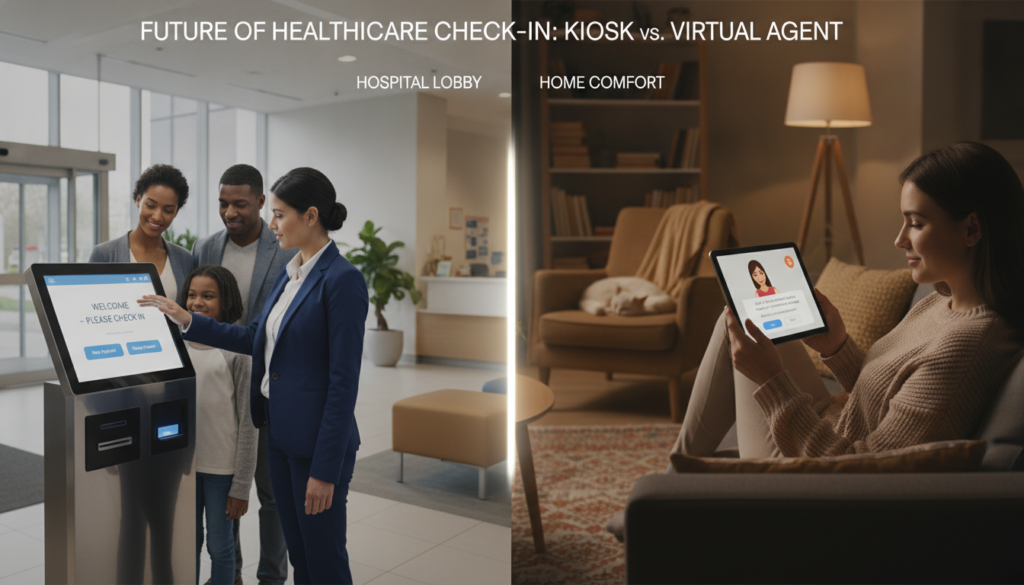
VMAs save money on office costs. A virtual check-in agent can verify insurance and remind patients fast. This makes things faster and more accurate.
Overview of In-Office Medical Assistants
In-office medical assistants do hands-on work. They need to be there in person. Their tasks include:
- Drawing blood and collecting lab specimens
- Taking vital signs and rooming patients
- Assisting with procedures and examinations
- Managing front desk reception during clinic hours
They use digital tools and manual methods. Their physical availability is key for tasks that need a person.
Knowing these differences helps us compare costs next.
Cost Comparison: Virtual vs. In-Office
Money is important when running a medical practice. Knowing the costs of each staffing model helps us make better choices. Let’s look at the virtual medical assistant comparison to see where your money goes.
Initial Setup Costs for Virtual Assistants
Starting with a virtual assistant is cheap. We don’t need extra desks, computers, or breakroom stuff. The main costs are for encrypted VPN access, HIPAA-compliant tools, and Business Associate Agreements. This minimal infrastructure investment makes growing easier from the start.
Payroll and Benefits for In-Office Staff
An in-office medical assistant makes about $22 an hour, on average. But that’s just the start. The in-office model gets expensive fast with hidden costs:
- Health insurance and retirement benefits
- Paid time off and sick leave
- Workers’ compensation and FICA taxes
- Recruitment and onboarding fees
- Office space in high-rent medical buildings
Long-Term Financial Implications
Over time, the choice between virtual and in-office assistants becomes clearer. Virtual assistants are highly scalable — we can change hours easily without recruiting for weeks. But, in-office costs like space and equipment keep going up.
Staff burnout is another hidden cost. In-office teams do both clinical and admin work, leading to more errors. This hurts our revenue cycle.
| Cost Category | Virtual Medical Assistant | In-Office Medical Assistant |
|---|---|---|
| Average Hourly Cost | $8–$15 | $22+ (before benefits) |
| Office Space Required | None | Dedicated workstation |
| Benefits & Taxes | Not required | 20–30% added to base pay |
| Equipment Costs | Provided by assistant | $2,000–$5,000 per station |
| Estimated Savings | 40–60% reduction | Baseline cost |
| Scalability | Immediate adjustments | Weeks to months |
Flexibility and Hours of Operation
Scheduling is key in a busy medical practice. The availability of our staff greatly affects patient care. Let’s look at how virtual and in-office assistants compare in terms of flexibility.

Virtual Assistants and Their Scheduling
Virtual assistants are available 24/7. They work across time zones, helping patients outside regular hours. They manage different workflows without mixing up patient data.
AI helps with after-hours support. It answers simple questions right away. This makes patients feel heard, even late at night.
In-Office Staff Work Hours
In-office staff work standard hours. This means overtime or temporary staff for extra hours. Sick days and vacations make it hard to cover shifts.
Impact on Patient Care Availability
Virtual assistants make a big difference in patient care. Practices with virtual assistants see big improvements:
| Metric | Before Virtual Assistant | After Virtual Assistant | Improvement |
|---|---|---|---|
| Average Wait Time | 28 minutes | 15 minutes | 46% reduction |
| Patients Seen Daily | 20 patients | 28 patients | 40% increase |
| After-Hours Availability | None | 24/7 coverage | Full access |
Virtual assistants help reduce no-shows too. They send reminders and keep patients informed. This leads to better communication strategies, which we’ll discuss next.
Communication and Collaboration
Communication is key in the virtual medical assistant vs in-office debate. It affects how well your team works together and with patients. Let’s explore how each model handles daily interactions.
Tools for Virtual Communication
Virtual medical assistants use secure platforms to stay in touch with your practice. They work with EHR systems like Epic and Athenahealth for tasks and records. Tools like VPNs and video calls keep things running smoothly.
One often overlooked perk? Virtual assistants don’t get distracted like in-office staff. They can focus better on their tasks without interruptions.
In-Person Interaction Advantages
Face-to-face meetings are powerful. On-site staff provide a personal touch that’s vital for:
- Dealing with urgent problems
- Doing hands-on procedures
- Having private talks
- Connecting with worried patients
Patient Experience and Satisfaction
Using virtual assistants for tasks like scheduling boosts patient happiness. Satisfaction scores went up by 44% thanks to quicker responses and less waiting.
| Metric | Virtual Assistant | In-Office Assistant |
|---|---|---|
| Average Response Time | Under 2 minutes | 5–10 minutes |
| Follow-Up Completion Rate | 96% | 78% |
| Patient Satisfaction Score | 4.6/5 | 3.8/5 |
Understanding these communication needs helps us see what each role requires from your practice.
Training and Supervision Needs
When we look at virtual vs in-office healthcare staffing, training is key. Both need education, but how and what they learn differs. Let’s see what each path means for your practice’s investment.
Training Requirements for Virtual Medical Assistants
Virtual medical assistants can train entirely online. They need 40 to 60 hours of medical terminology. HIPAA certification and EHR/EMR skills are must-haves from the start.
Many virtual assistants get certified. They learn medical billing, coding, and healthcare documents. Online courses and virtual reality help with special skills like cardiology or pediatrics.
Onboarding In-Office Staff
In-office medical assistants learn by doing. They get hands-on training in clinical skills and emergencies. New staff shadow others for weeks to learn the ropes.
| Training Area | Virtual Assistant | In-Office Assistant |
|---|---|---|
| Delivery Method | Online courses, demo accounts | In-person shadowing |
| HIPAA Certification | Required | Required |
| Clinical Skills | Not applicable | Hands-on training |
| EHR/EMR Proficiency | Certified remotely | Trained on-site |
| Average Onboarding Time | 2–4 weeks | 4–8 weeks |
Continuous Education for Both Roles
For both virtual and in-office teams, ongoing education is essential. Changes in rules, new software, and insurance updates require constant learning. Virtual staff get regular check-ins, while in-office staff get feedback in real-time.
Continuous learning keeps both teams sharp. This makes your patients safer. Next, we’ll see how technology helps in daily practice.
Technological Integration
Technology is key when comparing in-office vs remote medical assistants. The tools each model uses affect daily operations. Let’s explore the tech differences.

Software Used by Virtual Assistants
Virtual medical assistants are experts in digital platforms. They work with top EHR systems like Epic, Cerner, Athenahealth, and NextGen. They also use practice management and telehealth tools daily.
They use AI for faster work and less mistakes. This includes automated tasks and predictive analytics.
In-Office Systems and Equipment
In-office teams use physical tools like computers and scanners. This setup costs a lot at first and for upkeep. Medical devices and exam room tech add more expenses.
Compatibility and Ease of Use
Looking at virtual vs in-office assistants, we see a big difference in tech needs. Here’s a comparison:
| Requirement | Virtual Assistant | In-Office Assistant |
|---|---|---|
| Internet Speed | Minimum 25 Mbps with backup | Standard office broadband |
| Security Protocols | VPN, multi-factor authentication, encryption | On-site firewalls, locked workstations |
| Hardware Needs | Dual monitors, encrypted computer | Full office equipment suite |
| Learning Curve | Standardized digital workflows | Hands-on equipment training |
Both models benefit from easy-to-use tech. Standard workflows and automated tools help. As we discuss privacy and compliance next, tech will be even more important.
Privacy and Compliance Considerations
When we compare virtual and in-office healthcare, protecting patient data is key. Both have risks. A HIPAA breach can cost up to $1.9 million per violation category per year. This doesn’t include damage to reputation.
HIPAA Compliance for Virtual Assistants
Every virtual assistant must have a signed Business Associate Agreement (BAA). Without a BAA, no access to Protected Health Information (PHI) is allowed—no exceptions. A good BAA outlines what PHI the vendor can use, breach notification, and audit rights.
Virtual assistants need encrypted VPNs, AES-256 encryption for data at rest, and TLS 1.2+ for data in transit. They must also use multi-factor authentication. They should only access the information needed for their tasks. More on HIPAA compliance for virtual staff helps us choose the right vendors.
In-Office Data Security Measures
Physical offices also have risks. Overheard conversations, charts left out, and unsecured workstations are common breaches. In our comparison, we see that being close doesn’t mean safety. In-office teams need locked filing, password-protected computers, and strict visitor controls.
Risk Management for Both Models
Daily habits are key for both setups. Here are some musts:
- Lock computers when stepping away
- Use strong, unique passwords
- Never share patient details casually
- Conduct annual Security Risk Assessments
- Maintain professional liability insurance ($200–$500/year)
| Security Feature | Virtual Assistant | In-Office Assistant |
|---|---|---|
| Encryption (AES-256, TLS 1.2+) | Required for all ePHI | Required for digital records |
| Multi-Factor Authentication | Mandatory for all system access | Recommended for all logins |
| Audit Logging | Full logs reviewed remotely | Full logs reviewed on-site |
| Physical Document Security | Not applicable | Locked cabinets required |
| Annual Security Risk Assessment | Vendor must provide documentation | Conducted internally |
When we look at recruitment and retention, keeping these standards in mind is vital. It helps us pick partners and staff who protect our patients and our practice.
Recruitment and Retention Strategies
Finding the right team is key for a medical practice. We must choose wisely between in-person and virtual medical assistants. Let’s explore what works for each and how to keep talent.
Finding Qualified Virtual Medical Assistants
Virtual medical assistants offer a big advantage: a global talent pool. We can hire from anywhere, not just our area. Agencies like Care VMA Health and EMBS offer pre-screened professionals.
They are trained in various healthcare areas. This means we can find experts in billing, cardiology, and more, without limits.
- Partner with specialized healthcare staffing agencies
- Use LinkedIn healthcare groups and telehealth job boards
- Tap into global talent for niche specializations
Challenges in Hiring In-Office Staff
Hiring in-office staff has its own challenges. We face local labor shortages and long background checks. Onboarding them in person adds to the delay.
The competition for good staff is high. Hiring costs can reach $125,000 a year if we’re not careful. About 70% of healthcare workers feel burned out, leading to high turnover.
Employee Satisfaction and Retention
What makes staff happy varies between virtual and in-office roles. Virtual assistants love flexible hours and work-life balance. In-office staff enjoy team work and direct patient care.
Both groups want clear career paths and fair pay. This helps keep them happy and loyal.
| Factor | Virtual Medical Assistant | In-Office Medical Assistant |
|---|---|---|
| Hourly Pay Range | $15–$40 | $18–$65 |
| Senior Specialist Annual Salary | $94,000–$110,000 | $110,000–$135,000 |
| Top Retention Driver | Flexible scheduling | Team collaboration |
| Average Turnover Risk | Low | Moderate to High |
Investing in training and reducing paperwork keeps teams happy. This is true for both virtual and in-office staff.
Conclusion: Making the Right Choice
Deciding between a virtual and in-office medical assistant is not simple. Our comparison shows each has its own benefits. The right choice depends on your practice’s size, specialty, budget, and goals for patient care.
Summarizing Key Takeaways
Virtual medical assistants can save 40–60% on costs and have no physical overhead. They offer 24/7 scheduling. But, in-office staff are key for direct patient care and emergencies.
A mix of both can be the best choice for many. This way, you get the most value for your money. With the healthcare BPO market growing fast, it’s a smart move to outsource some tasks.
Recommendations for Medical Practices
If your practice has trouble finding staff or high overhead, consider virtual help. It’s also good for reducing burnout from EHR tasks. If you face high turnover or claim denials, virtual support can help.
New practices or those needing hands-on staff should have both. This way, you can add virtual help as you grow.
Future Trends in Medical Assistance
The demand for medical support jobs is expected to grow by 8% by 2032. This is due to more telehealth, an aging population, and staffing issues. New roles like AI-assisted documentation and remote monitoring are emerging.
Practices that mix local staff with virtual help will thrive. This approach ensures growth and better patient care in the future.