Only 17% of organizations have a fully in-house support team. This number might surprise you. But it shows a clear trend. About 60% of businesses now use a mix of internal and outsourced staff.
We often see our front desk as just a budget line. We think it’s just salaries and some equipment. But, there are hidden costs like recruitment, turnover, and lost productivity. These add 25–40% to the cost of in-house staff.
The outsourced customer support market is growing fast. It reached $1,020 million in 2026 and is expected to hit $1,596 million by 2035. This growth shows a big change in how companies view front desk costs and efficiency.
Looking at front office outsourcing pricing, the savings are clear. Businesses save 50–65% by outsourcing. They save on overhead, can grow faster, and spend less time on daily tasks.
So, what does your in-house front desk really cost? And what can outsourcing save your business? We’ll explore all this in our guide. We’ll look at both the obvious and hidden costs that drain your budget every month.
Key Takeaways
- In-house front desk expenses run 25–40% higher than base salaries once you factor in recruitment, turnover, and management overhead.
- About 60% of U.S. organizations now use a hybrid model combining internal and outsourced front desk teams.
- Front desk outsourcing cost savings typically range between 50–65% compared to running a fully in-house operation.
- Front office outsourcing pricing offers variable, demand-based structures that eliminate costly fixed overhead.
- The outsourced support market is projected to grow from $1,020 million to $1,596 million by 2035.
- Outsourcing reduces the management burden and frees up leadership to focus on core business growth.
Understanding In-House Front Desk Costs
Let’s look at what you’re really spending on in-house staff. The costs are more than just salaries. Front desk expenses include a lot more than just paychecks.
Staff Salaries and Benefits
A front desk worker in the U.S. makes between $60,000 and $80,000 a year. Add health insurance, bonuses, and retirement, and it’s more. A team of five costs between $350,000 and $400,000 a year.
Training and Onboarding Expenses
New hires need at least three weeks to get up to speed. This time is lost for both the new and the training team. Training and skill-building cost $2,000 to $5,000 per person yearly. For a team of five, that’s $15,000 to $20,000.
Office Space and Equipment
We need desks, computers, phones, and more for each team member. Software costs add up quickly:
| Software Category | Estimated Annual Cost |
|---|---|
| Ticketing Systems | $15,000 |
| Knowledge Base Tools | $5,000 |
| Remote Monitoring | $8,000 |
| Communication Platforms | $6,000 |
| Total Software Only | $34,000+ |
Software costs are nearly $40,000 before adding hardware and office space. In-house costs are much higher than outsourced fees. This sets the stage for more hidden costs to come.
The Hidden Costs of Maintaining an In-House Team
Salary is just the beginning. The real cost of a front desk can shock you. Many practices miss hidden expenses that eat into their budget every month. Virtual receptionist rates often show a big difference compared to these costs.
Employee Turnover and Its Impact
Front desk turnover in healthcare is over 25% a year. Each time a receptionist leaves, it costs $5,000–$8,000 to replace them. New hires take 2–3 months to get up to speed.
During this time, patient calls are missed and scheduling errors rise. Economist Arthur Laffer once said:
“Outsource everything but your core business.”
This lost knowledge is hard to value. Knowing what healthcare BPO delivers can help avoid this problem. It keeps staff trained and consistent.
Overtime and Staffing Gaps
Covering sick days, vacations, and extra hours costs a lot. If we need after-hours phone coverage, we need more staff. A virtual model avoids these costs.
A single staffing gap during busy times can cost thousands. This is from missed appointments.
Compliance and Regulatory Costs
HIPAA compliance is a must and it’s expensive. Legal advice, training, and audit prep add up quickly. Looking at virtual receptionist rates from vendors who handle HIPAA can save a lot.
| Hidden Cost Category | In-House Annual Estimate | Outsourced Annual Estimate |
|---|---|---|
| Employee Turnover | $5,000–$8,000 per departure | $0 (vendor managed) |
| Overtime and Premium Pay | $8,000–$15,000 | Included in remote front desk costs |
| HIPAA Compliance Training | $3,000–$6,000 | Included with BAA |
| Reduced Productivity (Ramp-Up) | 2–3 months per new hire | Minimal transition period |
The biggest hidden cost of all? It’s the opportunity cost. Every hour spent on front desk issues is an hour not spent on patient care or growing the practice.
Benefits of Outsourcing Your Front Desk
Switching to an outsourced front desk can seem scary. But the numbers show it’s worth it. You’ll save money and make your patients happier.
Cost Savings and Efficiency
Outsourcing is cheaper because you only pay for what you need. This can save you a lot of money. For example, it can cut your costs by 40–60% in just 90 days.
Some companies save over $20,500 a month. This is because they don’t have to pay for a full-time receptionist.
- Front desk overhead drops by 40–60% on average
- Check-in times shrink from 8–12 minutes to under 2 minutes
- Insurance verification errors fall by over 90% with real-time checks
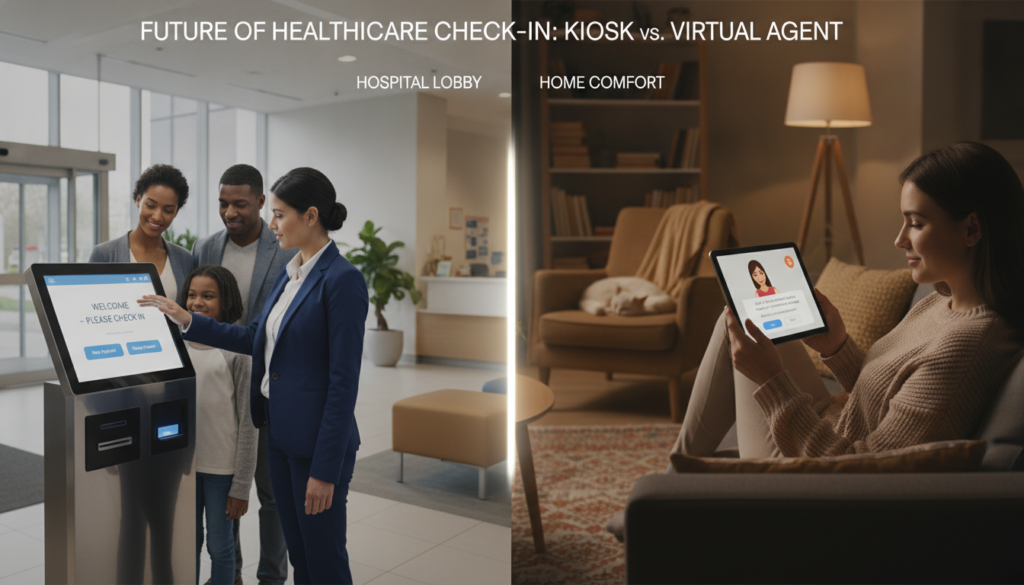
A virtual check-in agent can do a lot before you even arrive. They check your insurance, send reminders, and collect forms online.
Access to Advanced Technology
Outsourced providers give you access to new tech. This includes AI chatbots and predictive analytics. These tools can make your service desk better.
Deloitte says using these tools can cut down on problems by 62%. It also saves money on support.
Enhanced Customer Experience
Being fast and accurate makes people happy. Outsourcing can make your service better. It can make patients more satisfied and help you make more money.
When people feel seen and served quickly, loyalty follows — and so does revenue.
| Metric | In-House | Outsourced |
|---|---|---|
| Average Check-In Time | 8–12 minutes | Under 2 minutes |
| Insurance Verification Errors | Frequent | Reduced by 90%+ |
| Staffing Cost Reduction | Baseline | 40–60% savings |
| Patient Satisfaction Gain | Baseline | +18–24 points |
These benefits show why outsourcing is a good idea. We’ll look at the costs next.
Analyzing the Cost Factors of Outsourcing
Before we sign a contract, we need to know what affects the cost of outsourcing a front desk. Prices vary a lot, based on your business size, call volume, and what you expect from the service. Let’s look at the main things that affect your spending.
Service Provider Fees
Providers use different pricing models. Per-ticket pricing can be from $1 to $15 per call, based on how complex it is and how fast they need to respond. Per-agent monthly fees are $2,500 to $4,500 in offshore markets for a dedicated team. Some models mix flat fees with per-ticket rates for better budgeting.
| Pricing Model | Cost Range | Best For |
|---|---|---|
| Per-Ticket | $1–$15 per interaction | Fluctuating call volumes |
| Per-Agent (Offshore) | $2,500–$4,500/month | Steady, high-volume needs |
| Hybrid | Flat fee + per-ticket | Scalable, predictable budgets |
| 5-Agent Outsourced Team | ~$12,000/month | Full front desk coverage |
| 5-Agent In-House Team | ~$32,500/month | Direct oversight priority |
Contract Terms and Flexibility
Front office outsourcing prices can change based on your contract length. Many providers ask for a 3- to 6-month commitment first. After that, some offer month-to-month deals with 30-day notice for changes. This lets us adjust our team as our business changes without extra costs.
Potential Hidden Fees
Be careful of extra costs that aren’t in the first quote. Common hidden fees include:
- Setup and onboarding fees ($500–$5,000)
- Extra charges for after-hours or holidays
- Costs for technology integration
- Extra for quality checks and reports
Always ask for a full list of fees before signing. The cost of outsourcing a front desk should be clear from the start. Performance guarantees, like how fast they respond and how well they do, add value and make the price worth it when we know what we’re getting.
Comparing In-House and Outsourced Options
Choosing between an in-house team and an external provider is more than just about money. We must consider growth, results, and protection. Let’s dive into the details.
Scalability and Growth Adaptability
In-house teams need big investments. We can’t just hire a little bit of a person for a small increase in calls. Outsourced providers can add agents quickly, unlike hiring internally which takes months.
Think about seasonal businesses. A retail company might need more agents during the holidays. This flexibility keeps costs down and tied to demand. Companies growing fast see big savings with this approach.
Performance Metrics and Measurement
Outsourced teams often perform better. Here’s what we see:
| Metric | In-House Average | Outsourced Average |
|---|---|---|
| First-Call Resolution (Level 1) | 78% | 95% |
| Level 2 Resolution Time | 24 hours | 4 hours |
| Coverage Hours | 8–12 hours/day | 24/7/365 |
| Multilingual Support | Limited | Follow-the-sun centers |
These numbers show outsourced teams often bring a better return on investment. They respond faster and solve problems more efficiently.
Business Continuity and Risk Management
Proactive monitoring is key. One outsourced provider stopped 47 possible outages in a quarter. This saved about $2.35 million at $50,000 per incident. Such risk management is worth every dollar spent.
- True 24/7/365 coverage eliminates after-hours gaps
- Distributed delivery centers reduce single-point-of-failure risks
- Built-in disaster recovery protocols keep operations running
Considering these points, outsourced receptionist fees seem like a smart investment in stability.
What to Look for in an Outsourcing Partner
Finding the right outsourcing partner is key to your front desk strategy. Before we look at virtual receptionist rates or remote front desk costs, we need to know what makes a great provider different from a mediocre one. Let’s explore the important factors to consider.

Industry Reputation and Experience
Start by checking for certifications. Look for ISO 27001, SOC 2 Type II, or HIPAA compliance. These show a company cares about data security. They should also have annual audit reports ready for you.
See how long agents stay with the company. The average is about one year. But, the best firms spend around $3,000 per agent on training and keep staff for three years or more. This stability means better service for your callers.
Range of Services Offered
A good partner offers more than just phone answering. They should support:
- Voice calls and voicemail management
- Live chat and email handling
- Remote desktop assistance
- After-hours and weekend coverage across time zones
Certifications in platforms like Salesforce, Microsoft, and AWS show real skill. Teams trained in ITIL standards and cybersecurity can handle complex tasks. This variety affects remote front desk costs, so knowing what’s included helps with budgeting.
Customer Support and Communication
Your outsourcing partner should feel like part of your team. Look for multilingual support in 15 or more languages. Clear reporting on virtual receptionist rates and performance keeps everyone on the same page.
The best partnerships are built on clear communication, shared goals, and mutual accountability.
Ask about uptime guarantees. Top providers aim for 99.98% uptime with redundant systems. This reliability is key to keeping your business running smoothly, a topic we discussed earlier.
Real-Life Success Stories of Outsourcing
Numbers tell a story, but real results speak louder. We’ve gathered two standout cases where businesses cut costs and boosted performance by switching to outsourced front desk support. These stories show how offsite office assistant pricing can open doors to better service at a fraction of the cost.
Increased Efficiency in Health Services
A U.S.-based healthcare technology company was spending $1.2 million per year on its in-house help desk. After partnering with a specialized outsourcing provider, they slashed that number to $520,000 — a 57% reduction. The savings went straight into product development.
Professional call handling charges dropped while service quality climbed. Average resolution times improved by 35% thanks to SLA-backed commitments and dedicated Tier 2 support. Customer satisfaction scores jumped from 82% to 91%.
Improved Customer Satisfaction in Hospitality
A mid-sized e-commerce retailer in the hospitality space faced a familiar holiday-season crunch. They needed to scale fast — and they did. Within two weeks, their outsourced team tripled headcount and handled 40% more support tickets without adding a single internal hire.
The result? A 25% reduction in cart abandonment during their busiest sales period. Transparent offsite office assistant pricing made budgeting predictable, even during rapid scaling. Professional call handling charges stayed consistent because the contract allowed flexible staffing.
| Metric | Healthcare Tech (Before) | Healthcare Tech (After) | E-Commerce Retailer (Result) |
|---|---|---|---|
| Annual Help Desk Cost | $1,200,000 | $520,000 | Flexible per-agent pricing |
| Cost Reduction | — | 57% | Scaled 3x without internal hires |
| Resolution Time Improvement | Baseline | 35% faster | 40% more tickets handled |
| Customer Satisfaction | 82% | 91% | 25% less cart abandonment |
These results prove that outsourcing isn’t just about cutting costs. It’s about doing more with less — a lesson worth keeping in mind as we explore possible drawbacks next.
Potential Drawbacks of Outsourcing
Outsourcing your front desk can save money, but it comes with risks. About 45% of firms worry about losing control over daily operations. It’s key to understand the costs and trade-offs.
Loss of Control Over Front Desk Operations
Outsourcing means you can’t watch how your team talks to clients. This is big in fields like healthcare and finance. IBM’s 2023 report shows a breach can cost $4.45 million globally.
Dependence on one provider can limit your power. If they raise prices or change terms, you might be stuck. Looking at prices from different vendors keeps you flexible.
Integration Challenges with Existing Systems
Connecting an outside team to your IT needs planning. You might face:
- Software or phone system incompatibilities
- Risks during data migration
- Delays in syncing CRM and scheduling apps
Bad integration can lead to communication problems. It’s smart to plan all technical needs before signing.
Questions of Brand Consistency
Your front desk is often the first thing clients see. If your team and the outsourced team don’t match, it can be off-putting. Training on your brand is key.
A great outsourcing partner should sound like your team — not a stranger answering someone else’s phone.
Being clear about front office pricing and costs helps address brand risks early. We’ll look at this next.
Making the Transition to Outsourcing
Switching to an outsourced front desk can seem scary. But, with a good plan, it’s easy on your budget and team. We’ll make sure everything runs smoothly from the start.

Planning and Strategy Development
Start with a comprehensive audit 60 days before the change. Document all processes and common problems. One company found 237 hidden procedures in two weeks.
Roll out changes in phases to keep things safe. Here’s a typical plan:
| Phase | Timeframe | Tasks Transferred |
|---|---|---|
| Phase 1 | Week 1 | Password resets and basic tickets |
| Phase 2 | Week 2 | Software troubleshooting |
| Phase 3 | Week 3 | Complex technical issues |
| Phase 4 | Week 4 | Full service delivery |
Communicating Changes to Staff and Clients
Be open with your team and clients. Explain why outsourced services are good for the company. Let clients know how service will stay or improve.
Training with the New Provider
For the first two weeks, work together with the new team. This helps pass on important knowledge. Aim to document 90% of information within 30 days.
Investing in training now means better budgeting later. A smooth transition today helps tomorrow.
Budgeting for Front Desk Solutions
Smart budgeting starts with clear numbers. Before we commit to any front desk model, we need to map out every dollar spent — and every dollar saved. Understanding virtual receptionist rates and remote front desk costs gives us the foundation for an informed choice.
Cost-Benefit Analysis for Decision Making
Let’s break down what a five-agent in-house team really costs per year. Once we add salaries, benefits, training, tools, and office space, the total lands between $410,000 and $490,000. Outsourced remote front desk costs are $150,000 to $250,000 annually. That’s a 40–60% savings right off the bat.
| Cost Category | In-House (5 Agents) | Outsourced (5 Agents) |
|---|---|---|
| Annual Salaries & Benefits | $300,000–$350,000 | $110,000–$180,000 |
| Training & Onboarding | $30,000–$40,000 | Included in service fees |
| Technology & Tools | $25,000–$35,000 | Included in service fees |
| Office Space & Equipment | $55,000–$65,000 | $0 |
| Estimated Annual Total | $410,000–$490,000 | $150,000–$250,000 |
The gap gets even wider at scale. A 50-person startup growing to 500 employees might need 15 support staff — costing $1.5 million internally. Outsourcing that same capacity runs about $580,000, freeing up $920,000 each year. ROI often exceeds 200% within the first 12 months.
Setting Realistic Savings Expectations
Numbers on paper look great, but we need to stay grounded. Reviewing current virtual receptionist rates from providers like Smith.ai or Ruby shows pricing varies by call volume and service tier. Here’s a quick way to gauge your return:
- Calculate your true in-house costs, including hidden expenses like turnover and overtime
- Request detailed outsourcing proposals from at least three vendors
- Factor in recovered productivity — a 200-employee company saving 2 hours per person monthly reclaims 400 hours worth roughly $20,000 at $50/hour
If remote front desk costs save us 30% or more while maintaining or improving service levels, the decision becomes straightforward. With a clear budget in hand, we’re well-positioned to explore what the future holds for front desk management.
Future Trends in Front Desk Management
The front desk world is changing fast. The global helpdesk outsourcing market is set to hit $15 billion by 2027. Cloud adoption, remote work, and smart automation are driving this growth.
Offsite office assistant pricing is getting better. This makes outsourced solutions available to businesses of all sizes. Forrester analysts say outsourcing is now a strategic advantage, not just for saving money.
Increasing Use of AI and Automation
Gartner says over 70% of support tickets will be solved by automation by 2030. Self-service portals and AI chatbots answer common questions fast. Proactive monitoring tools can even predict issues before they cause problems.
IBM says downtime costs $9,000 per minute on average. Catching problems early saves a lot of money. AI is taking on routine tasks, making human agents focus on complex issues.
The Shift Towards Hybrid Front Desk Models
We’re moving towards co-managed models that mix in-house and outsourced services. This hybrid approach offers flexibility and resilience without losing control. Providers are customizing services for industries like healthcare and fintech.
When looking at offsite office assistant pricing or professional call handling charges, the future is clear. The future front desk is smarter, leaner, and grows with our business needs.
FAQ
How much does front desk outsourcing cost compared to keeping an in-house team?
What are the hidden costs of running an in-house front desk that most companies overlook?
What pricing models do outsourced receptionist services typically offer?
FAQ
How much does front desk outsourcing cost compared to keeping an in-house team?
An in-house team of 5 agents costs 0,000 to 0,000 a year. This includes salaries, training, tools, and facilities. Outsourcing a similar team costs 0,000 to 0,000 yearly, saving 40-60%.
For example, a company saved ,500 monthly by outsourcing. This is a 63% reduction. Outsourcing saves a lot of money once you consider all the hidden costs of an in-house team.
What are the hidden costs of running an in-house front desk that most companies overlook?
Hidden costs include recruitment, employee turnover, and management overhead. These costs add 25-40% to the base salary. Help desk operations have a 35% annual turnover rate, costing ,000 to ,000 per departure.
Software licensing can cost up to ,000 a year. Economist Arthur Laffer said to outsource everything but your core business. Managing support instead of innovating is often the biggest hidden expense.
What pricing models do outsourced receptionist services typically offer?
There are three main pricing models. Per-ticket pricing ranges from
FAQ
How much does front desk outsourcing cost compared to keeping an in-house team?
An in-house team of 5 agents costs $410,000 to $490,000 a year. This includes salaries, training, tools, and facilities. Outsourcing a similar team costs $150,000 to $250,000 yearly, saving 40-60%.
For example, a company saved $20,500 monthly by outsourcing. This is a 63% reduction. Outsourcing saves a lot of money once you consider all the hidden costs of an in-house team.
What are the hidden costs of running an in-house front desk that most companies overlook?
Hidden costs include recruitment, employee turnover, and management overhead. These costs add 25-40% to the base salary. Help desk operations have a 35% annual turnover rate, costing $5,000 to $8,000 per departure.
Software licensing can cost up to $40,000 a year. Economist Arthur Laffer said to outsource everything but your core business. Managing support instead of innovating is often the biggest hidden expense.
What pricing models do outsourced receptionist services typically offer?
There are three main pricing models. Per-ticket pricing ranges from $1 to $15, depending on complexity and SLA guarantees. This is good for fluctuating demand.
Per-agent or FTE monthly fees are $2,500 to $4,500 in offshore markets. Hybrid models offer a mix of flat fees and per-ticket pricing. Some providers offer month-to-month contracts after an initial period, giving you flexibility.
How quickly can we scale an outsourced front desk team during busy seasons?
Outsourced teams can quickly add agents. This is a big advantage of variable costs. One client scaled from 10 to 45 agents during holidays and back down seamlessly.
In-house teams take months to scale. If you expect 50% growth in a year, outsourcing is more flexible and cost-effective.
What virtual receptionist rates should we expect, and what do they include?
Virtual receptionist rates vary based on service depth and provider location. A dedicated 5-agent team costs around $12,000 monthly. This is less than the $32,500 cost of an in-house team.
Most services include access to advanced technology. This includes AI-powered chatbots and predictive analytics. Quality assurance and SLA-driven performance guarantees are often included.
Will outsourcing our front desk hurt customer satisfaction or brand consistency?
There’s a concern about losing visibility. But the data shows outsourcing can improve customer satisfaction. One company’s NPS jumped from 32 to 61 after outsourcing.
Response times drop from 8 hours to under 2 hours. White-label support maintains brand consistency. Choose a provider like Enshored, which invests in extensive training.
How long does transitioning to an outsourced front desk take?
Knowledge transfer starts 60 days before go-live. Emergency transitions can take 10 days. We recommend a phased approach.
Week 1 handles basic tickets, Week 2 adds software troubleshooting. Week 3 covers complex technical issues, and Week 4 delivers full service. A thorough audit documents every process and identifies knowledge gaps.
What security certifications should we look for in an offsite office assistant pricing proposal?
Security is critical. Look for providers with ISO 27001, SOC 2, or HIPAA compliance certifications. Enshored maintains 99.98% uptime and has passed SOC 2 Type II audits for five years.
Teams should be trained in ITIL standards and cybersecurity. Certifications in major platforms like Salesforce and AWS indicate real capability.
What kind of ROI can we realistically expect from front desk outsourcing?
ROI typically exceeds 200% in the first year. A 50-person startup expanding to 500 employees would save $920,000 a year by outsourcing.
Consider recovered productivity. For a 200-employee company, saving 2 hours monthly per employee equals 400 hours of productivity. One healthcare company reduced costs by 57% while improving service levels.
How will AI and automation shape the future of front desk outsourcing costs?
The future is changing fast. Gartner predicts over 70% of tickets will be resolved by automation by 2030. Self-service portals and chatbots handle common queries instantly.
Proactive monitoring predicts issues before they become outages. The global helpdesk outsourcing market is projected to surpass $15 billion by 2027. Outsourcing is becoming strategic, turning support into a business differentiator.
to , depending on complexity and SLA guarantees. This is good for fluctuating demand.
Per-agent or FTE monthly fees are ,500 to ,500 in offshore markets. Hybrid models offer a mix of flat fees and per-ticket pricing. Some providers offer month-to-month contracts after an initial period, giving you flexibility.
How quickly can we scale an outsourced front desk team during busy seasons?
Outsourced teams can quickly add agents. This is a big advantage of variable costs. One client scaled from 10 to 45 agents during holidays and back down seamlessly.
In-house teams take months to scale. If you expect 50% growth in a year, outsourcing is more flexible and cost-effective.
What virtual receptionist rates should we expect, and what do they include?
Virtual receptionist rates vary based on service depth and provider location. A dedicated 5-agent team costs around ,000 monthly. This is less than the ,500 cost of an in-house team.
Most services include access to advanced technology. This includes AI-powered chatbots and predictive analytics. Quality assurance and SLA-driven performance guarantees are often included.
Will outsourcing our front desk hurt customer satisfaction or brand consistency?
There’s a concern about losing visibility. But the data shows outsourcing can improve customer satisfaction. One company’s NPS jumped from 32 to 61 after outsourcing.
Response times drop from 8 hours to under 2 hours. White-label support maintains brand consistency. Choose a provider like Enshored, which invests in extensive training.
How long does transitioning to an outsourced front desk take?
Knowledge transfer starts 60 days before go-live. Emergency transitions can take 10 days. We recommend a phased approach.
Week 1 handles basic tickets, Week 2 adds software troubleshooting. Week 3 covers complex technical issues, and Week 4 delivers full service. A thorough audit documents every process and identifies knowledge gaps.
What security certifications should we look for in an offsite office assistant pricing proposal?
Security is critical. Look for providers with ISO 27001, SOC 2, or HIPAA compliance certifications. Enshored maintains 99.98% uptime and has passed SOC 2 Type II audits for five years.
Teams should be trained in ITIL standards and cybersecurity. Certifications in major platforms like Salesforce and AWS indicate real capability.
What kind of ROI can we realistically expect from front desk outsourcing?
ROI typically exceeds 200% in the first year. A 50-person startup expanding to 500 employees would save 0,000 a year by outsourcing.
Consider recovered productivity. For a 200-employee company, saving 2 hours monthly per employee equals 400 hours of productivity. One healthcare company reduced costs by 57% while improving service levels.
How will AI and automation shape the future of front desk outsourcing costs?
The future is changing fast. Gartner predicts over 70% of tickets will be resolved by automation by 2030. Self-service portals and chatbots handle common queries instantly.
Proactive monitoring predicts issues before they become outages. The global helpdesk outsourcing market is projected to surpass billion by 2027. Outsourcing is becoming strategic, turning support into a business differentiator.