Over 227 million people in the United States are in health plans that report HEDIS data. That’s about two out of every three Americans. Their care quality is tracked by this single system.
HEDIS scores will count for 25% of Star Ratings by 2026. This is almost double the 13% from 2023. For health plans and providers, this change is huge. The stakes for healthcare quality metrics have never been higher.
The National Committee for Quality Assurance (NCQA) released new specs on March 31, 2026. These specs cover new and updated measures. They also include detailed data collection and calculation guidelines. We need to pay close attention to what’s inside.
The Medicare Plan Finder tool lets consumers compare health plans using a five-star rating scale. Plans with higher stars attract more enrollees and earn bonus payments. Low scores can mean lost revenue and shrinking membership. HEDIS measures 2026 now carry more weight in that equation than ever before.
We put together this guide to walk you through the biggest changes in healthcare quality metrics this year. You’ll learn what shifted, why it matters, and what practical steps your organization can take to boost Star Ratings. Let’s dig in.
Key Takeaways
- HEDIS scores now account for 25% of Star Ratings in 2026, up from 13% in 2023, making performance on these measures critical for plan success.
- Over 227 million Americans are enrolled in plans that report HEDIS data, underscoring the massive reach of these healthcare quality metrics.
- NCQA released updated technical specifications on March 31, 2026, with new measures, revised calculations, and fresh data collection guidelines.
- Higher Star Ratings directly impact enrollment numbers and CMS bonus payments, tying financial outcomes to HEDIS measures 2026 performance.
- The Medicare Plan Finder tool empowers consumers to compare plans on a five-star scale, putting quality transparency front and center.
- Early preparation and a clear understanding of the updated healthcare quality metrics give providers a competitive edge heading into the measurement year.
Understanding HEDIS Measures and Their Importance
Let’s start with what HEDIS measures are. They are key in healthcare, helping to judge how well plans and providers do. This is important across the country.
What Are HEDIS Measures?
HEDIS means Healthcare Effectiveness Data and Information Set. The National Committee for Quality Assurance (NCQA) created these standards over 35 years. They cover many areas, like:
- Preventive services like immunizations and cancer screenings
- Chronic illness management for conditions such as diabetes and asthma
- Access to care and timeliness of appointments
- Patient experience and responsiveness
Each measure is based on solid evidence. This evidence comes from leading medical groups and government agencies. The NCQA’s Committee on Performance Measurement and its panels add their expertise. This ensures we understand the data correctly.
The Role of HEDIS in Quality Assessment
HEDIS measures help us compare health plan quality. Over 200 million Americans are in plans that report HEDIS data. It’s the top tool for improving care in managed care.
| HEDIS Domain | Example Measure | Why It Matters |
|---|---|---|
| Preventive Care | Breast Cancer Screening | Early detection saves lives |
| Chronic Conditions | Comprehensive Diabetes Care | Reduces complications and ER visits |
| Access to Care | Adults’ Access to Preventive Services | Ensures timely provider availability |
| Patient Experience | CAHPS Survey Results | Captures the patient’s voice in care delivery |
Knowing these basics makes the 2026 updates clearer. Quality efforts work best with clear, evidence-based standards like HEDIS.
Key Changes in HEDIS Measures for 2026
The 2026 measurement year brings big updates for health plans. NCQA released new rules on March 31, 2026. These changes affect how we analyze healthcare data and improve quality.
Overview of the New Measures
NCQA introduced new measures with updated risk adjustment tables. They also have a list of medications with NDC codes. You can get these resources for free from the NCQA Store.
The timeline for these documents is from 2026 to 2027:
| Document | Expected Release |
|---|---|
| Measure Trending Determinations | June 2026 |
| Volume 5 – Compliance Audit Standards | August 2026 |
| Volume 3 – Survey Specifications | September 2026 |
| Public Reporting Memo | October 2026 |
| Volume 6 – Medicare Health Outcomes Survey Manual | May 2027 |
Amendments to Existing Measures
Some measures got big changes. The updated audit timeline was posted on March 31, 2026. Now, we need to focus more on data validation processes and documentation.
Health plans must review these changes carefully. This is to avoid any compliance issues.
Impact of Changes on Healthcare Providers
These updates affect our clinical and administrative teams. Providers need to adjust their work to meet new standards. Using strong data analysis tools is key for tracking performance.
- Review updated NDC code lists to ensure accurate medication tracking
- Align internal audit schedules with NCQA’s revised timeline
- Train staff on new HEDIS reporting requirements before year-end data submissions
The organizations that prepare early will be the ones best positioned to protect and improve their STAR ratings in the next cycle.
In the next section, we’ll explore practical strategies for turning these HEDIS updates into STAR rating gains.
Improving Your STAR Ratings with HEDIS
Earning high STAR ratings helps you stand out in healthcare. CMS created the Medicare Star Ratings system for easy plan comparison. Top performers get bonus payments and more members.
With HEDIS measures 2026 coming, we must act fast to improve our scores.
Why STAR Ratings Matter So Much
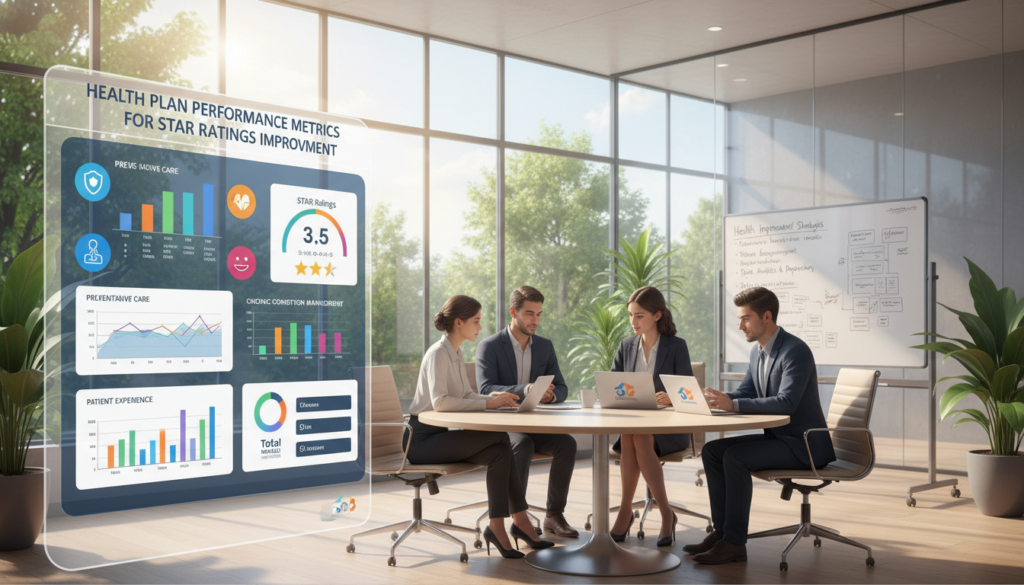
Medicare Part C and Part D Star Ratings use up to 45 unique quality measures. These ratings impact revenue, member retention, and reputation. The 2027 Medicare Part C Star Ratings will be posted in October 2026.
Our current efforts will shape outcomes for years to come.
“Quality is never an accident; it is always the result of intelligent effort.” — John Ruskin
Plans with 4 stars or above get CMS bonus payments. These ratings show trustworthiness to future members. Strong health plan performance metrics set leaders apart.
Strategies for Raising Your Scores
We can take steps now to improve under HEDIS measures 2026. The key is a centralized platform for health education, member data, and analytics.
- Integrate care management tools into a single dashboard for real-time tracking.
- Use predictive analytics to identify members at risk of gaps in care.
- Deploy targeted outreach campaigns tied to specific health plan performance metrics.
- Deliver consistent, reliable health information to build member trust.
- Train care teams on updated HEDIS measures 2026 specifications before reporting deadlines.
| Strategy | Target STAR Domain | Expected Impact |
|---|---|---|
| Centralized member data platform | Care coordination | Reduces duplicate outreach by 30% |
| Predictive gap-in-care alerts | Preventive screening | Increases closure rates by 20% |
| Personalized health education | Member experience | Boosts CAHPS survey scores |
| Staff training on 2026 updates | Clinical quality | Improves documentation accuracy |
Using these strategies with new preventive care and patient experience benchmarks will help us improve.
Focus on Patient Experience in 2026
Patient experience is key in healthcare quality metrics. In 2026, how patients feel about their care is as important as their health outcomes. We must listen to what patients say and build systems that hear them.
Patient Surveys and Feedback Mechanisms
The CAHPS 5.1H Survey Certification is our top tool for getting member feedback. The Consumer Assessment of Healthcare Providers and Systems (CAHPS) program uses surveys to measure satisfaction. For 2026, we’ll get the Validated Member-Level File Layout in January 2027.
McKinsey & Company found that members like digital healthcare. Our feedback tools need to be digital too. Tools like text messages and patient portals help us get feedback quickly and accurately.
Integrating Patient Experience into Care Strategies
Getting data is just the start. We must use patient feedback to improve care. Personalized care plans help members manage their health better. This is key for meeting HEDIS goals.
| Feedback Channel | Response Rate | Best Use Case |
|---|---|---|
| CAHPS Mail Survey | 25–35% | Annual satisfaction benchmarking |
| Patient Portal Survey | 40–50% | Post-visit experience tracking |
| SMS/Text Check-Ins | 50–60% | Real-time care gap identification |
| Phone-Based Outreach | 15–20% | Complex care follow-up |
Using different channels helps us understand the patient journey better. This improves our STAR ratings and helps us tackle health disparities. We’ll look at health disparities next.
Addressing Disparities in Healthcare
Health equity is key for NCQA and the 2026 HEDIS updates. Not all patients get the same care. Gaps exist based on race, income, where you live, and language.
We can find these gaps with healthcare data analysis. Then, we can take action to fix them.
New Metrics for Health Equity
NCQA now checks if measures are evidence-based, clinically meaningful, and feasible for all. The 2026 HEDIS updates include race and ethnicity in some core measures. This helps us see how care varies among different groups.
The Rules for Allowable Adjustments let us adjust HEDIS for different healthcare levels. These rules help us keep the clinical intent the same. NCQA’s HEDIS Value Set Directory gives us the codes we need for these adjustments.
Best Practices for Reducing Disparities
Starting quality improvement initiatives for equity needs solid data. Here are steps we suggest:
- Collect self-reported demographic data from patients at every touchpoint
- Stratify HEDIS performance results by race, ethnicity, and preferred language
- Set specific equity targets alongside overall quality goals
- Partner with community organizations that serve underrepresented groups
| Disparity Area | HEDIS Measure Example | Recommended Action |
|---|---|---|
| Diabetes management in rural areas | HbA1c Control (HBD) | Expand telehealth access and mobile clinics |
| Breast cancer screening in Black women | Breast Cancer Screening (BCS) | Targeted outreach and transportation support |
| Depression follow-up in Hispanic populations | Follow-Up After ED Visit (FUM) | Bilingual care coordinators and culturally adapted materials |
Through healthcare data analysis and quality improvement, we can close these gaps. Equity is more than a metric—it’s a promise to every patient.
Enhancing Preventive Care Measures
Preventive care is key to health plan success. By 2026, HEDIS will focus more on keeping people healthy before problems start. We’ll look at important services and why early action is vital.
Key Preventive Services for 2026
HEDIS now tracks important areas for older adults. These are through the Health Outcomes Survey (HOS). They shape how CMS rates health plans:
- Monitoring and encouraging physical activity in older adults
- Improving bladder control and managing urinary incontinence
- Reducing the risk of falling through proactive screening
For 2026, two measures return to Star Ratings. Improving or Maintaining Physical Health and Improving or Maintaining Mental Health are back. They use the Veterans RAND 12-Item Health Survey (VR-12) part of the HOS.
| Preventive Measure | Data Source | Star Ratings Impact |
|---|---|---|
| Physical Activity in Older Adults | HOS Survey Questions | Medicare Part C |
| Fall Risk Management | HOS Survey Questions | Medicare Part C |
| Urinary Incontinence Management | HOS Survey Questions | Medicare Part C |
| Maintaining Physical Health | VR-12 (HOS) | Returned for 2026 |
| Maintaining Mental Health | VR-12 (HOS) | Returned for 2026 |
Importance of Early Intervention
Early intervention is smart and effective. It helps catch issues early, keeping members safe. Plans that focus on early screenings do better overall.
Prevention is about reaching people at the right moment — before a fall, before a crisis, before a small issue becomes a big one.
Preventive care is a key tool for equity goals. Combining it with telehealth strategies offers a complete approach to wellness.
Adapting to Telehealth Trends
Telehealth has changed how we get and give care in the U.S. As HEDIS measures 2026 change, virtual care is now a key part of health plans. We must use digital tools to help members manage their health anytime, anywhere.
How Virtual Care Shapes Quality Measurement
Telehealth visits now help meet several HEDIS measures 2026. NCQA now counts virtual visits for screenings, behavioral health, and managing chronic conditions. This affects our healthcare quality scores and STAR ratings.
Apps and patient portals make it easy for members to see their health info. Self-management tools for diabetes, high blood pressure, and asthma help members stay on track. When members track their health, they’re more likely to follow recommended care.
Proven Approaches for Delivering Virtual Services
We can make our telehealth better by focusing on what works:
- Use easy-to-use platforms on phones, tablets, and computers
- Share digital self-management tools through outreach
- Train teams to record telehealth visits correctly for HEDIS
- Make sure all virtual tools are accessible and follow ADA rules
- Put telehealth data into our quality reports
Members who feel informed and empowered rate their health plans higher and stay more engaged in preventive care.
Telehealth is a strong tool for improving preventive care. By combining virtual visits with good data collection, we can make every interaction count. This helps us meet HEDIS measures 2026 and improve healthcare quality.
Data Collection and Reporting Techniques
Accurate data is key for quality improvement. Without good data, we can’t measure or improve our STAR Ratings. Let’s look at how to better collect and share HEDIS data in 2026.
Techniques for Accurate Data Collection
The HEDIS Technical Specifications guide us. Volume 2 covers nonsurvey measures and gives us rules for calculations and sampling. We must follow these rules closely to avoid missing data.
One mistake is like what happens in Medicare Risk Adjustment HCC coding. Conditions are listed in a problem list but not in the assessment and plan. This mistake affects RAF scores and HEDIS reporting. A structured review process can catch these errors early.
- Use NCQA’s National Drug Code Lists (provided by Cerner Multum, Inc.) for precise medication tracking
- Run prospective care-gap reports before each patient visit
- Conduct retrospective chart audits to catch missed diagnoses and codes
- Train staff on specificity — use the most detailed code available, not unspecified options
Leveraging Technology for Better Reporting
The HEDIS Electronic Clinical Data System (ECDS) is a big help. It lets us send clinical data electronically, reducing manual work and improving accuracy.
For Medicare Advantage Organizations, the HPMS HOS module offers Star Ratings Validation and Aggregate Score Analysis. These tools help us find and fix weaknesses quickly.
| Reporting Tool | Primary Function | Best Use Case |
|---|---|---|
| HEDIS ECDS | Electronic clinical data submission | Streamlining quality improvement initiatives reporting |
| HPMS HOS Module | Star Ratings validation and scoring | Tracking MAO performance trends |
| National Drug Code Lists | Medication data standardization | Pharmacy-related HEDIS measures |
| EHR Care-Gap Reports | Pre-visit condition identification | Closing documentation gaps in real time |
Using these digital tools with collaborative care approaches is powerful. It helps us keep improving.
Collaborative Care Approaches
Meeting HEDIS reporting needs in 2026 is a team effort. It needs everyone in your organization working together. When we combine different professionals, we make care better and data more accurate. Let’s see how teamwork can help you do better.

Benefits of Interdisciplinary Teams
Teams with doctors, nurses, and analysts bring special skills. Each person adds their own knowledge. This mix is like NCQA’s Committee on Performance Measurement, where multidisciplinary advisory panels guide measure development.
Here are the main benefits of team care:
- More accurate data analysis because everyone is accountable
- Faster finding of gaps in care
- Care plans better match patient needs
- Workflows for care managers improve
How to Foster Collaboration Among Providers
Creating a team culture starts with good communication. We need regular meetings, shared data, and EHR systems that show the full patient picture.
| Collaboration Strategy | Purpose | Impact on HEDIS Performance |
|---|---|---|
| Weekly care team huddles | Review high-risk patient lists | Closes care gaps faster |
| Shared analytics dashboards | Real-time healthcare data analysis | Improves reporting accuracy |
| Public comment participation | Engage with NCQA measure updates | Prepares teams for new HEDIS reporting requirements |
| Cross-department training sessions | Align clinical and administrative goals | Reduces documentation errors |
Demographic data should shape every care plan. Tailoring care to specific groups boosts engagement and results. This strategy is key to our next topic on training and education.
Training and Education for Healthcare Providers
Keeping up with HEDIS measures 2026 is a big job. Our teams need to learn new things all the time. Without the right training, even the best plans can fail.
Importance of Continuous Education
Quality measurement is always changing. NCQA updates its rules often. We must keep up.
Regular training helps our providers. They learn to collect data right and meet new standards. This is key for health plan success.
Staff who train often make fewer mistakes. They know what screenings are important and when. This helps us do well under HEDIS 2026.
Investing in provider education is investing in patient outcomes — the two are inseparable.
Available Resources for Provider Training
NCQA has many tools for us:
- Volume 1 (Narrative) — gives a full view of the measurement set and data use
- Volume 5 (Audit Standards) — shows how to audit HEDIS, including systems checks
- MyNCQA Platform — for questions and FAQs
- Certified HEDIS Compliance Auditor (CHCA) Standards — for auditor needs
| Resource | Purpose | Best For |
|---|---|---|
| Volume 1 Narrative | Measurement set overview | Clinical and quality teams |
| Volume 5 Audit Guide | Audit process and IS assessment | Compliance officers |
| MyNCQA Platform | FAQ access and question submission | All staff levels |
| CHCA Standards | Audit certification requirements | Internal and external auditors |
Using these resources, we build a team that knows health plan metrics. This gets us ready for future HEDIS changes.
Future Trends and Predictions in HEDIS
The world of healthcare quality metrics is always changing. NCQA is working hard to improve how we measure plan performance. Some measures, like Physical Functioning Activities of Daily Living, are being developed.
This means they’re not yet part of Star Ratings calculations. It shows that healthcare keeps evolving with new evidence and data.
Emerging Issues in Healthcare Measurement
NCQA is making the HPMS HOS module better. CMS is also improving its Quality Rating System. These changes mean we’ll have more accurate healthcare quality metrics.
We can expect measures to be updated or changed as the healthcare system grows. This keeps healthcare quality metrics sharp and relevant.
Preparing for Future HEDIS Changes
Staying ahead means watching trends early. The HEDIS Measure Library and Historical Data are free from NCQA. We should use these tools to keep track of changes in healthcare.
By looking at past data and current benchmarks, we can guess what’s next. This lets us adjust our strategies before new rules come in.
The key is simple: those who prepare now will do well in the future. Keep learning, measuring, and improving. The future of healthcare quality metrics rewards those who stay proactive.